

1 pound – South Australia
Add to wishlist
Australia
Context
Year: 1852
Country: Australia
Issuer: South Australia
Ruler: Victoria
Currency:
(1788—1900)
Total mintage: 50
Material
References
KM: #
Numista: #17315
Value
Bullion value: $1235.16
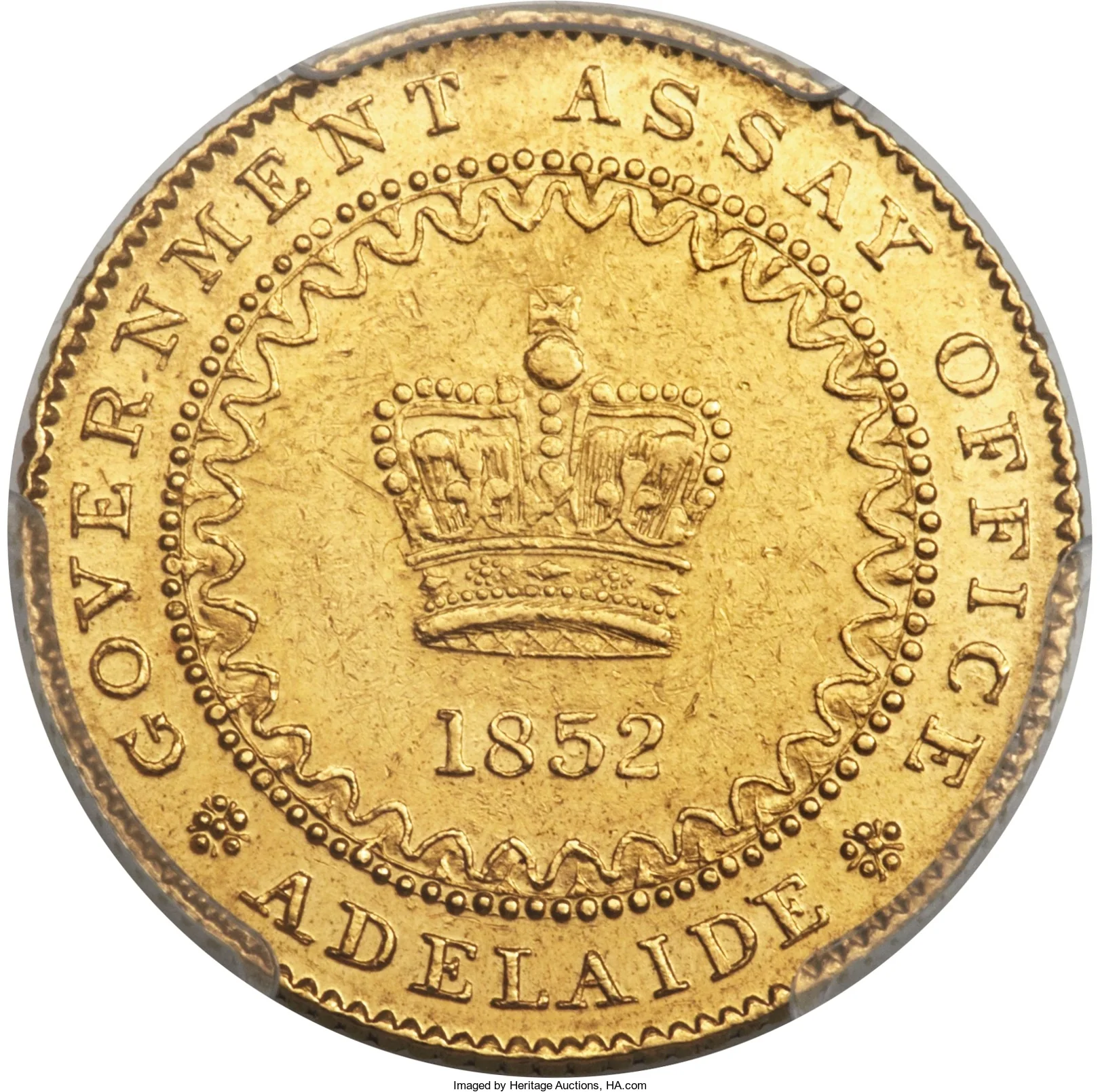
Obverse
Description:
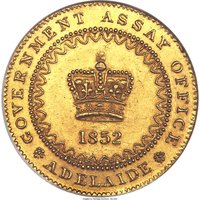
Crown above date within beaded circle.
Inscription:
GOVERNMENT ASSAY OFFICE
1852
ADELAIDE
1852
ADELAIDE
Translation:
GOVERNMENT ASSAY OFFICE
1852
ADELAIDE
1852
ADELAIDE
Script: Latin
Language: English
Designer: James Payne
Reverse
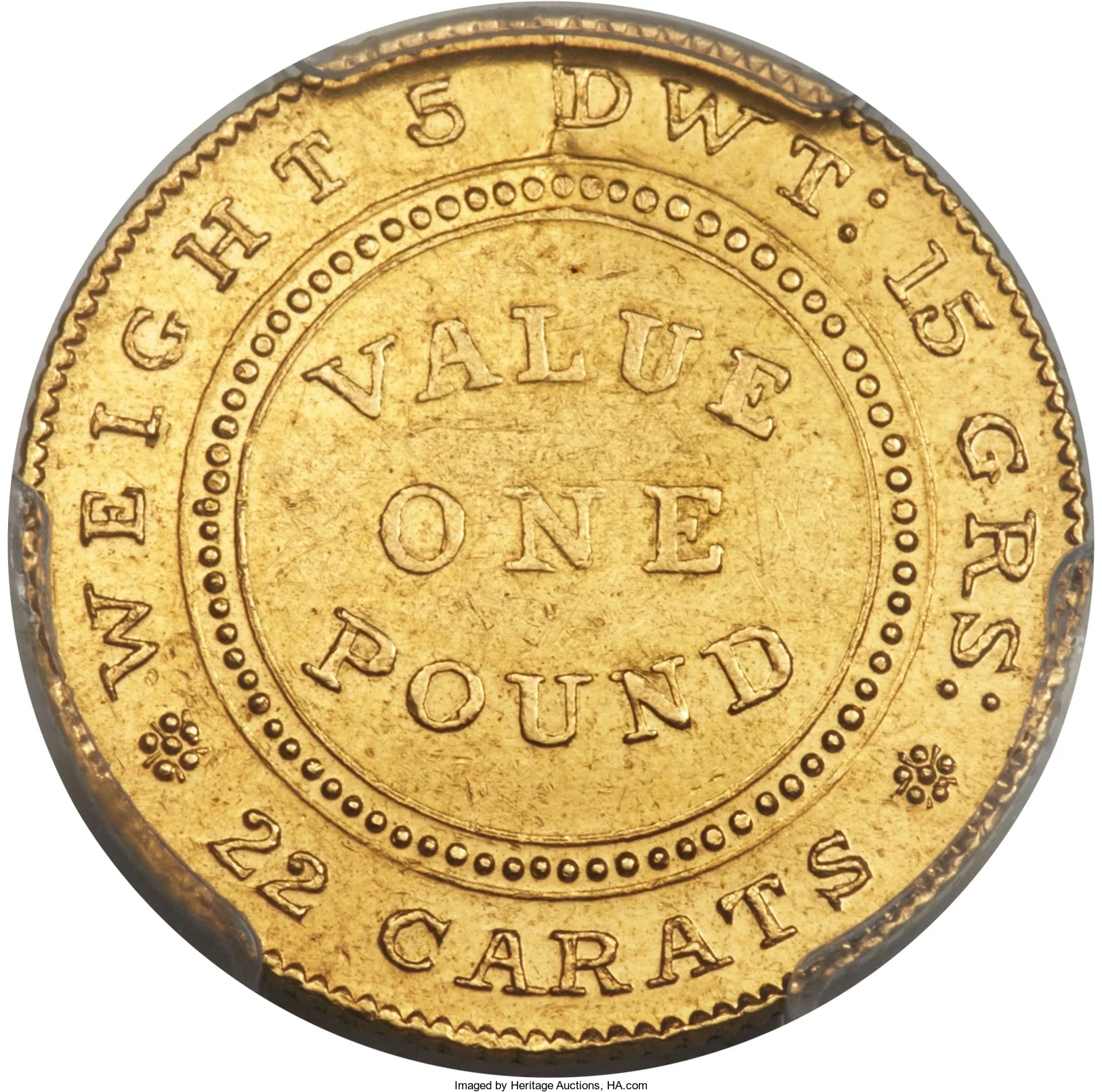
Description:
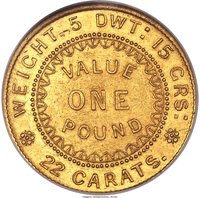
Value in beaded circle, weight and fineness around.
Inscription:
WEIGHT, 5 DWT: 15 GRS:
VALUE
ONE
POUND
22 CARATS.
VALUE
ONE
POUND
22 CARATS.
Script: Latin
Designer: James Payne
Edge
Mintings
| Year | Mint Mark | Mintage | Quality | Collection |
|---|---|---|---|---|
| 1852 | — | 50 |
Historical background
In 1852, South Australia was in the grip of a severe currency crisis, a direct consequence of the colony's remarkable economic boom following the discovery of copper at Burra in 1845 and, more explosively, gold in Victoria in 1851. The colony's hard currency—gold and silver coin—was rapidly drained away. Labourers and merchants alike shipped their specie to Melbourne to join the gold rushes or used it to purchase inflated imports, leaving the local economy starved of a reliable medium of exchange. This created a paradoxical situation of prosperity alongside monetary paralysis, threatening to stall commerce and wages.
The colonial government and banks responded with a patchwork of emergency measures. Banks issued and circulated promissory notes, often for small denominations, while the government attempted to introduce copper tokens and even briefly made the bullion and gold dust from the local Victorian goldfields legal tender. The most notable and successful intervention was the issuance of £1 and £5 "holey dollars" in 1852. These were Spanish dollars (eight reales coins) with a central plug removed, creating two separate tokens: the outer ring (the holey dollar) and the inner plug (the dump). This effectively doubled the number of coins in circulation and kept their value within the colony, as the mutilated coins were worthless elsewhere.
This chaotic period highlighted the inadequacy of the British monetary supply for a distant, rapidly growing economy. The crisis of 1852 was a pivotal moment that accelerated calls for a formalised and sufficient colonial currency. It demonstrated the necessity for a sovereign colonial government to control its own monetary system, paving the way for the eventual establishment of the Adelaide Mint in 1855 and more stable banking regulations that would underpin South Australia's continued development.
The colonial government and banks responded with a patchwork of emergency measures. Banks issued and circulated promissory notes, often for small denominations, while the government attempted to introduce copper tokens and even briefly made the bullion and gold dust from the local Victorian goldfields legal tender. The most notable and successful intervention was the issuance of £1 and £5 "holey dollars" in 1852. These were Spanish dollars (eight reales coins) with a central plug removed, creating two separate tokens: the outer ring (the holey dollar) and the inner plug (the dump). This effectively doubled the number of coins in circulation and kept their value within the colony, as the mutilated coins were worthless elsewhere.
This chaotic period highlighted the inadequacy of the British monetary supply for a distant, rapidly growing economy. The crisis of 1852 was a pivotal moment that accelerated calls for a formalised and sufficient colonial currency. It demonstrated the necessity for a sovereign colonial government to control its own monetary system, paving the way for the eventual establishment of the Adelaide Mint in 1855 and more stable banking regulations that would underpin South Australia's continued development.
💎 Extremely Rare