

20 Bahts (National Library) – Thailand
Non-circulating coins
Commemoration: 100th Anniversary of the National Library
Thailand
Context
Year: 2005
Thai Year: 2548
Issuer: Thailand 
Ruler: Bhumibol Adulyadej
Currency:
(since 1897)
Total mintage: 200,000
Material
Diameter: 32 mm
Weight: 15 g
Shape: Round
Composition: Copper-nickel
Technique: Milled
Alignment: Medal alignment
flip
References
Y: #Click to copy to clipboard471
Numista: #17220
Value
Exchange value: 20 THB = $0.64
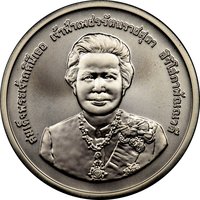
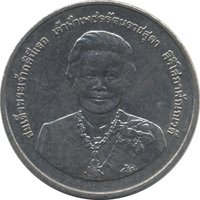
Obverse
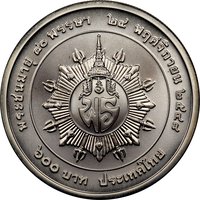
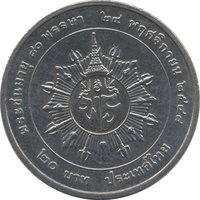
Reverse
Description:
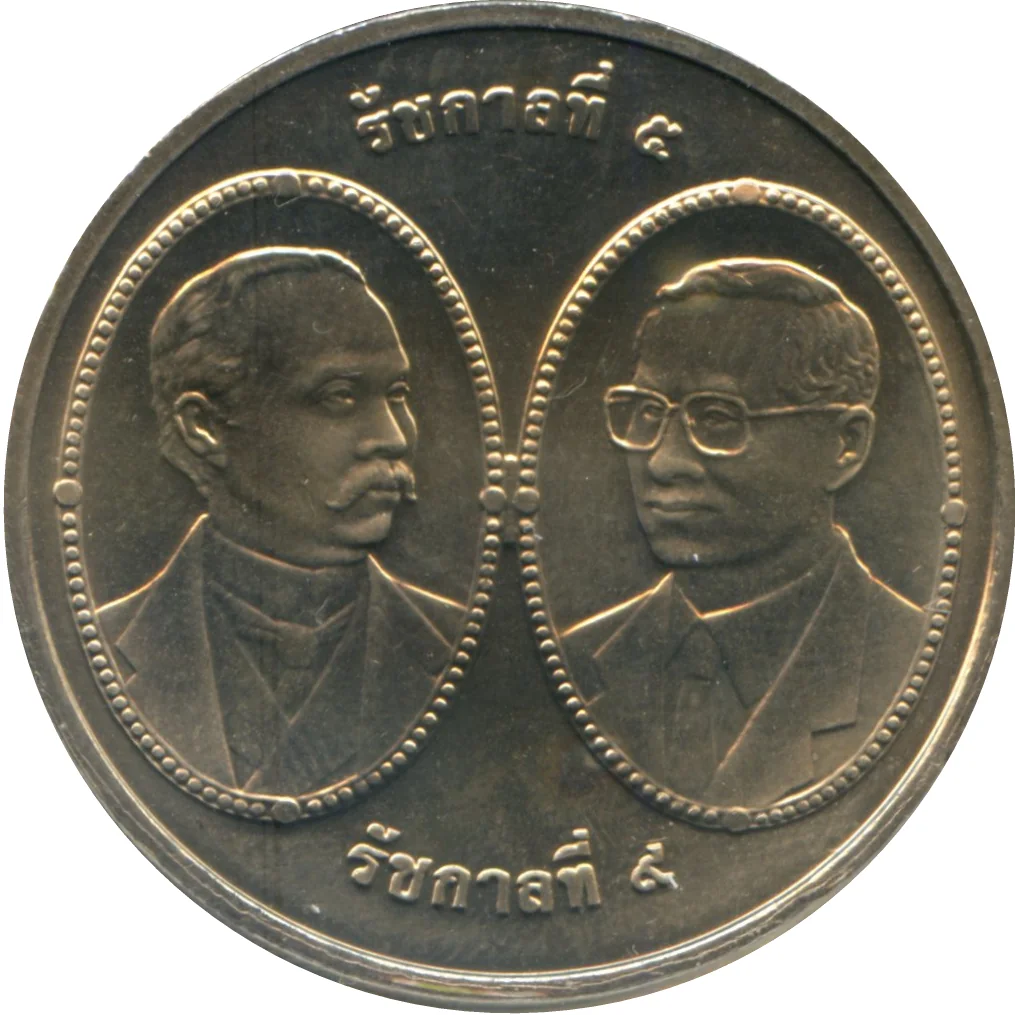
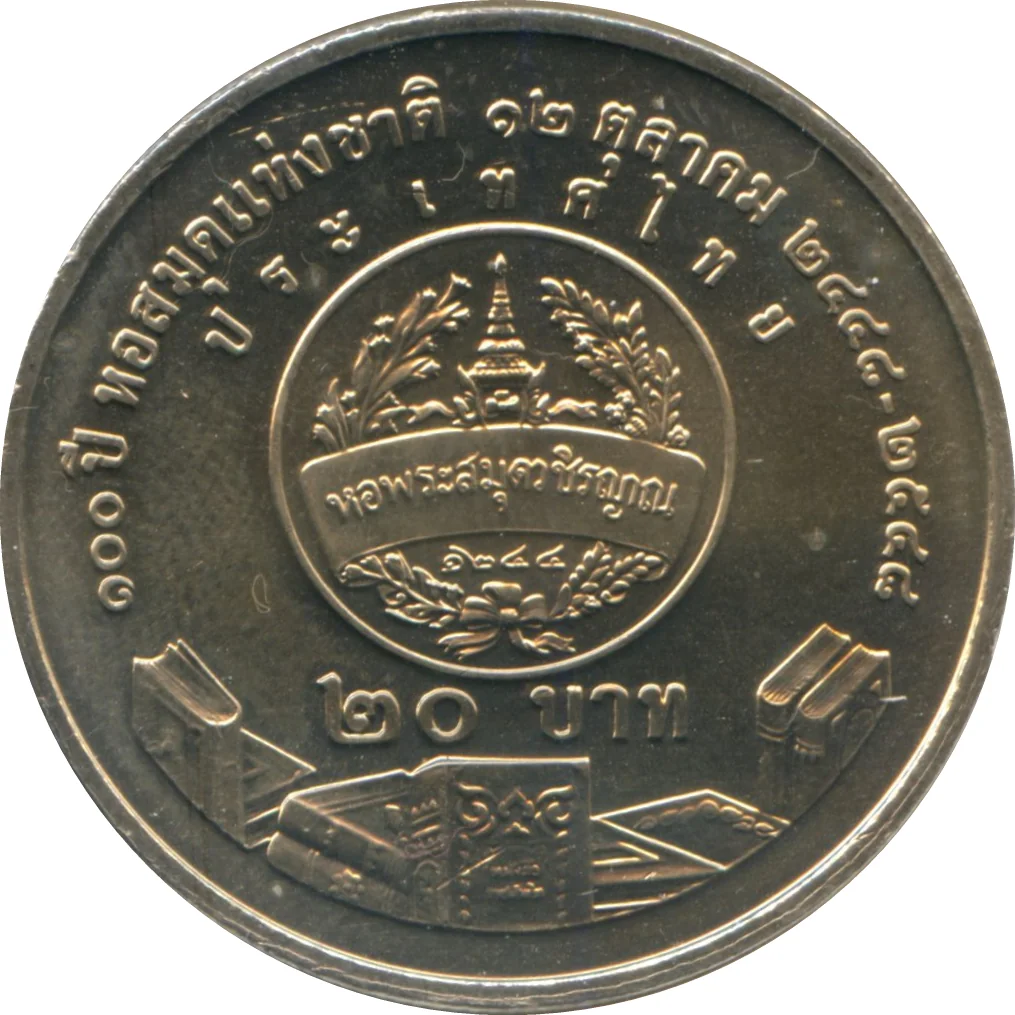
Reverse: The Great Crown of Victory above a ribbon with the library's Thai name, encircled by a wreath, with books below.
Inscription:
๑๐๐ ปี หอสมุดแห่งชาติ ๑๒ ตุลาคม ๒๔๔๘ - ๒๕๔๘
ประเทศไทย
หอพระสมุดวชิรญาณ
๑๒๔๔
๒๐ บาท
ประเทศไทย
หอพระสมุดวชิรญาณ
๑๒๔๔
๒๐ บาท
Translation:
100 Years National Library 12 October 1905 - 2005
Thailand
Vajirañāṇa Library
1244
20 Baht
Thailand
Vajirañāṇa Library
1244
20 Baht
Script: Thai
Language: Thai
Edge
Reeded.
Mintings
| Year | Mint Mark | Mintage | Quality | Collection |
|---|---|---|---|---|
| 2005 | — | 200,000 |
Historical background
In 2005, Thailand's currency situation was dominated by the management of the Thai baht (THB) in the aftermath of the 1997 Asian Financial Crisis, which had originated in the country. The Bank of Thailand (BoT) maintained a heavily managed float, intervening regularly in foreign exchange markets to prevent excessive volatility and rapid appreciation. This was driven by a desire to maintain export competitiveness, as a strong export sector was crucial for economic recovery and growth. The baht was relatively stable against the US dollar during this period, trading within a range of roughly 39 to 42 baht per dollar, reflecting controlled movement within the central bank's comfort zone.
The economy faced significant external pressures, notably high global oil prices and a substantial current account deficit, which created downward pressure on the currency. However, these were counterbalanced by strong capital inflows, particularly into the Thai stock market and property sector, which created appreciation pressure. The BoT's interventions to sterilize these inflows—buying dollars and selling baht—led to a rapid accumulation of foreign reserves, which grew to over $50 billion by year's end. This policy aimed to build a defensive buffer against future crises while managing the baht's value.
A key underlying tension was the conflict between the desire for a weak currency to help exports and the need to avoid fueling inflation, which was rising due to high energy costs. Furthermore, the capital inflows contributed to a domestic credit and consumption boom, raising concerns about economic overheating. The situation in 5 set the stage for future challenges, as the persistent intervention and accumulation of reserves would later lead to the imposition of capital controls in December 2006 in an attempt to curb speculative inflows and the baht's subsequent sharp appreciation.
The economy faced significant external pressures, notably high global oil prices and a substantial current account deficit, which created downward pressure on the currency. However, these were counterbalanced by strong capital inflows, particularly into the Thai stock market and property sector, which created appreciation pressure. The BoT's interventions to sterilize these inflows—buying dollars and selling baht—led to a rapid accumulation of foreign reserves, which grew to over $50 billion by year's end. This policy aimed to build a defensive buffer against future crises while managing the baht's value.
A key underlying tension was the conflict between the desire for a weak currency to help exports and the need to avoid fueling inflation, which was rising due to high energy costs. Furthermore, the capital inflows contributed to a domestic credit and consumption boom, raising concerns about economic overheating. The situation in 5 set the stage for future challenges, as the persistent intervention and accumulation of reserves would later lead to the imposition of capital controls in December 2006 in an attempt to curb speculative inflows and the baht's subsequent sharp appreciation.
⭐ Somewhat Rare