

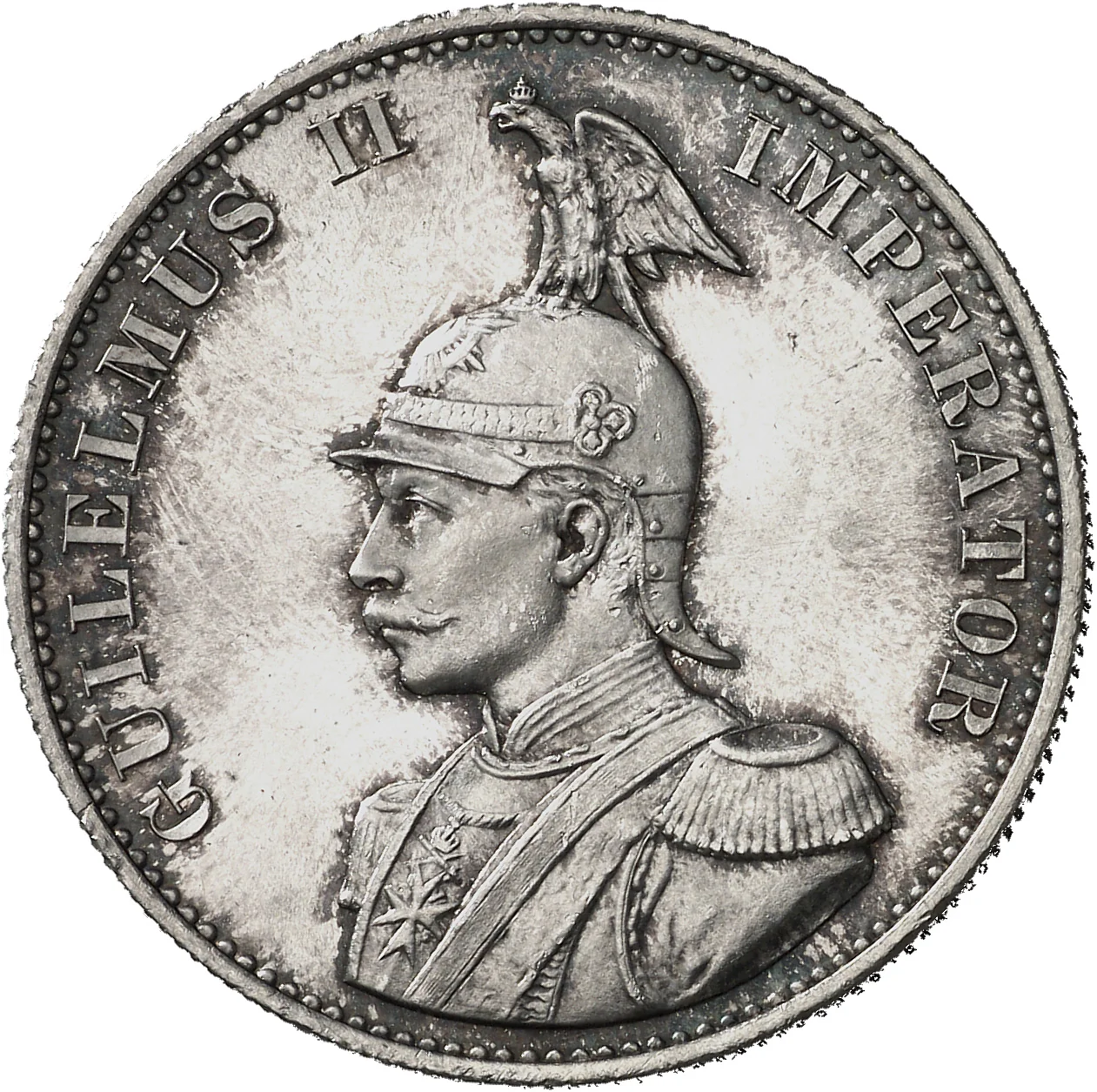
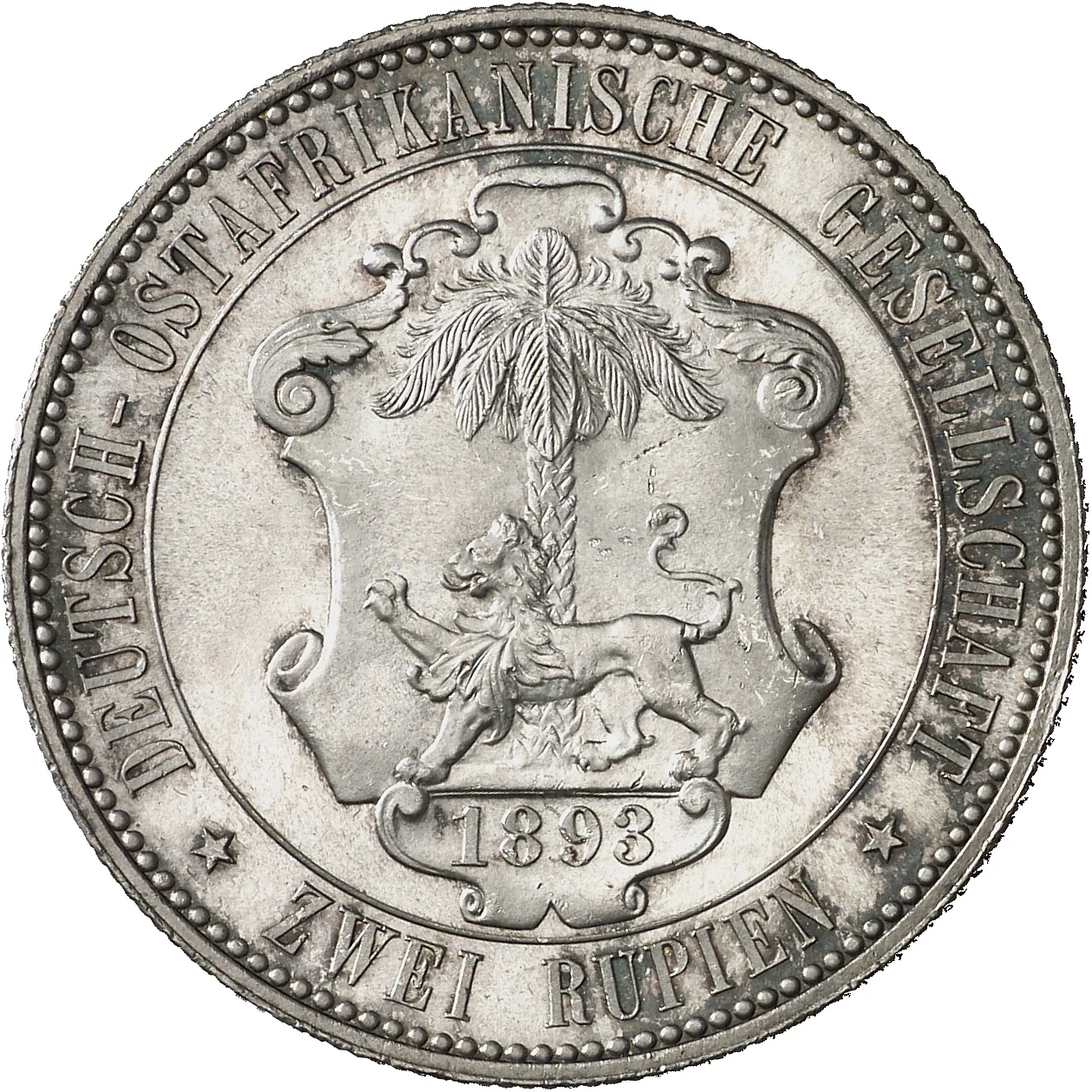
2 rupees – German East Africa
Add to wishlist
Tanzania
Context
Years: 1893–1894
Country: Tanzania
Issuer: German East Africa
Ruler: William II
Currency:
(1890—1904)
Demonetized: Yes
Total mintage: 50,854
Material
References
KM: #
Numista: #17045
Value
Bullion value: $54.64
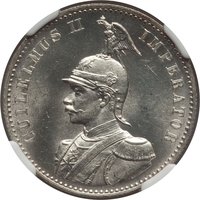
Obverse
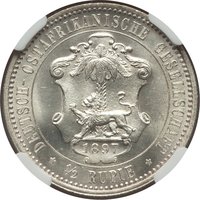
Reverse
Edge
Reeded
Categories
| Mustache/Beard |
| Animal> Feline |
| Object> Armour |
Mintings
| Year | Mint Mark | Mintage | Quality | Collection |
|---|---|---|---|---|
| 1893 | — | 32,854 | ||
| 1893 | — | — | Proof | |
| 1894 | — | 18,000 |
Historical background
In 1893, the currency situation in German East Africa was characterized by a complex and often chaotic coexistence of multiple monetary systems, reflecting both pre-colonial traditions and the disruptive influence of European colonialism. The primary circulating medium remained the Indian silver rupee and its smaller denominations (pesa and heller), a legacy of the region's deep-seated trade links across the Indian Ocean. Alongside this, traditional forms of value like cloth (merikani), brass wire, and cowrie shells continued to be used for local and regional transactions, especially in the interior, creating a multi-layered economy.
This monetary pluralism posed significant challenges for the German colonial administration, which sought to impose order and integrate the economy into the imperial system. The official currency was the German East African rupie, introduced in 1890 and pegged to the Indian rupee, but its circulation was largely confined to coastal areas, government transactions, and European enterprises. A critical problem was the severe shortage of small change, which stifled local trade and wage payments, leading to widespread use of makeshift alternatives and persistent friction between the colonial economy and indigenous markets.
Consequently, 1893 fell within a period of transitional instability. The administration was actively working to phase out the Indian currency in favor of its own coinage and to suppress traditional monies, aiming for a unified monetary system under German control. However, these efforts were only partially successful, and the territory effectively operated with a dual economy: a monetized coastal sector using silver coin and a vast interior still reliant on commodity currencies, a dichotomy that would persist for years.
This monetary pluralism posed significant challenges for the German colonial administration, which sought to impose order and integrate the economy into the imperial system. The official currency was the German East African rupie, introduced in 1890 and pegged to the Indian rupee, but its circulation was largely confined to coastal areas, government transactions, and European enterprises. A critical problem was the severe shortage of small change, which stifled local trade and wage payments, leading to widespread use of makeshift alternatives and persistent friction between the colonial economy and indigenous markets.
Consequently, 1893 fell within a period of transitional instability. The administration was actively working to phase out the Indian currency in favor of its own coinage and to suppress traditional monies, aiming for a unified monetary system under German control. However, these efforts were only partially successful, and the territory effectively operated with a dual economy: a monetized coastal sector using silver coin and a vast interior still reliant on commodity currencies, a dichotomy that would persist for years.
⭐ Somewhat Rare