

10 Cents (Independence) – Barbados
Non-circulating coins
Commemoration: 10th Anniversary of Independence
Barbados
Obverse
Description:
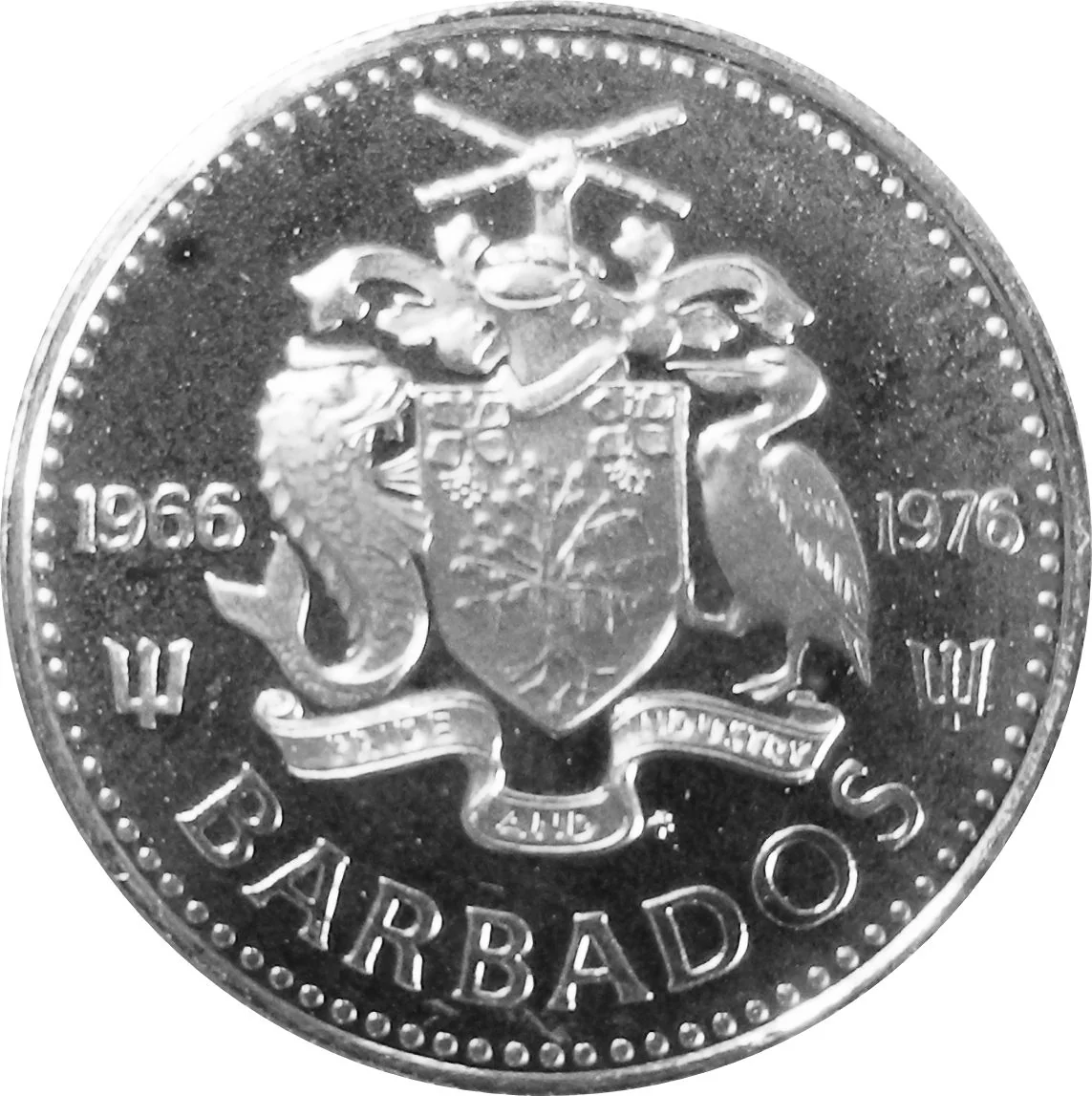
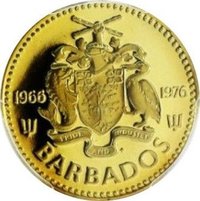
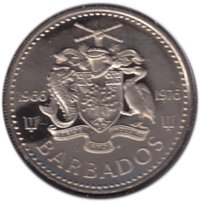
National coat of arms
Inscription:
1966 1976
PRIDE AND INDUSTRY
BARBADOS
PRIDE AND INDUSTRY
BARBADOS
Translation:
PRIDE AND INDUSTRY
BARBADOS
BARBADOS
Script: Latin
Language: English
Engraver: Philip Nathan
Reverse
Description:
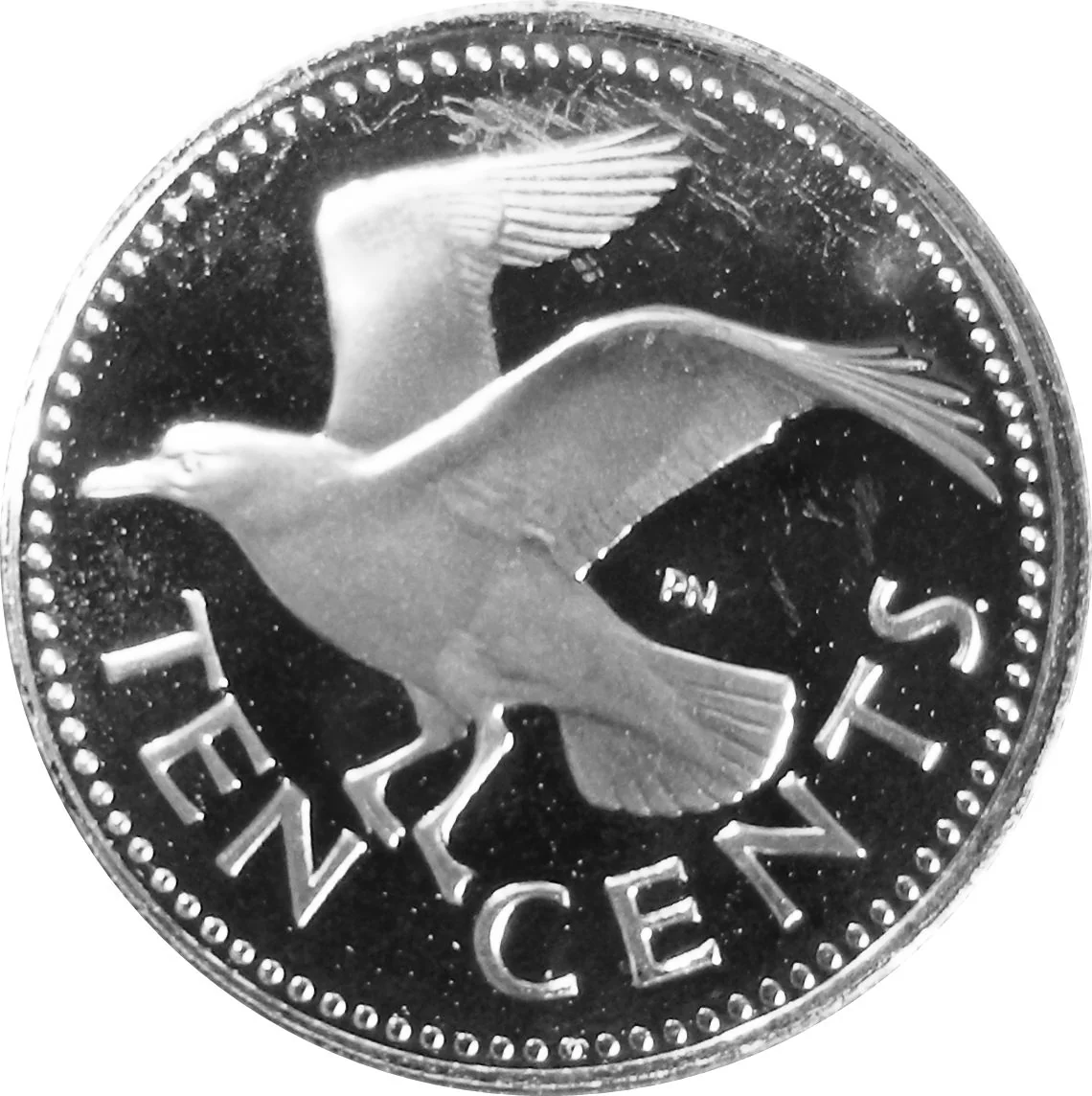
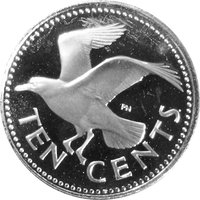
Gull (likely Laughing) flying left, value below.
Inscription:
TEN CENTS
Script: Latin
Engraver: Philip Nathan
Edge
Milled
Categories
| Animal> Bird |
| Event> Independence |
Mints
| Name | Mark |
|---|---|
| Franklin Mint | (FM) |
Mintings
| Year | Mint Mark | Mintage | Quality | Collection |
|---|---|---|---|---|
| 1976 | FM | 2,500 | Matte | |
| 1976 | FM | 12,000 | Proof | |
| 1976 | FM | 996 | Special Uncirculated |
Historical background
In 1976, Barbados was navigating a critical juncture in its monetary history, operating under a fixed exchange rate system pegged to the British Pound Sterling. This arrangement was a legacy of the colonial-era Eastern Caribbean Currency Authority (ECCA), which issued a common currency for several regional islands. However, this peg became increasingly strained following the United Kingdom's decision to float the pound in 1972 and its subsequent depreciation. For Barbados, a nation with deepening economic ties to North America and a growing tourism sector billed in US dollars, the Sterling peg was becoming an anachronism that introduced instability and misalignment with its major trading partners.
The economic pressures of the mid-1970s, including the global oil crisis which dramatically increased import costs, exposed the vulnerabilities of the existing system. Maintaining the Sterling peg required significant reserves and limited the government's ability to pursue independent monetary policy to address domestic economic challenges. There was a growing consensus among policymakers that a decisive change was necessary to ensure stability and better reflect the island's economic realities. The key question was not whether to change the currency arrangement, but rather what new anchor would best serve Barbados's sovereign future.
Consequently, 1976 served as the final year of the Sterling peg and set the stage for a monumental shift. After extensive planning, Barbados formally decimalized its currency and established a new, fixed exchange rate pegged to the US Dollar at a rate of BDS$2.00 to US$1.00, which took effect in 1977. Therefore, the background of 1976 is defined by preparation and transition—a year where Barbados moved decisively away from a colonial-era monetary system to adopt a stable, dollar-linked currency that would underpin its economic policy for decades to come.
The economic pressures of the mid-1970s, including the global oil crisis which dramatically increased import costs, exposed the vulnerabilities of the existing system. Maintaining the Sterling peg required significant reserves and limited the government's ability to pursue independent monetary policy to address domestic economic challenges. There was a growing consensus among policymakers that a decisive change was necessary to ensure stability and better reflect the island's economic realities. The key question was not whether to change the currency arrangement, but rather what new anchor would best serve Barbados's sovereign future.
Consequently, 1976 served as the final year of the Sterling peg and set the stage for a monumental shift. After extensive planning, Barbados formally decimalized its currency and established a new, fixed exchange rate pegged to the US Dollar at a rate of BDS$2.00 to US$1.00, which took effect in 1977. Therefore, the background of 1976 is defined by preparation and transition—a year where Barbados moved decisively away from a colonial-era monetary system to adopt a stable, dollar-linked currency that would underpin its economic policy for decades to come.
🌟 Limited