

1 cent – United States
Add to wishlist
United States
Context
Years: 1808–1814
Issuer: United States
Period:
(since 1776)
Currency:
(since 1785)
Total mintage: 3,682,222
Material
References
KM: #
Numista: #16947
Value
Exchange value: 0.01 USD = $0.01
Obverse
Description:
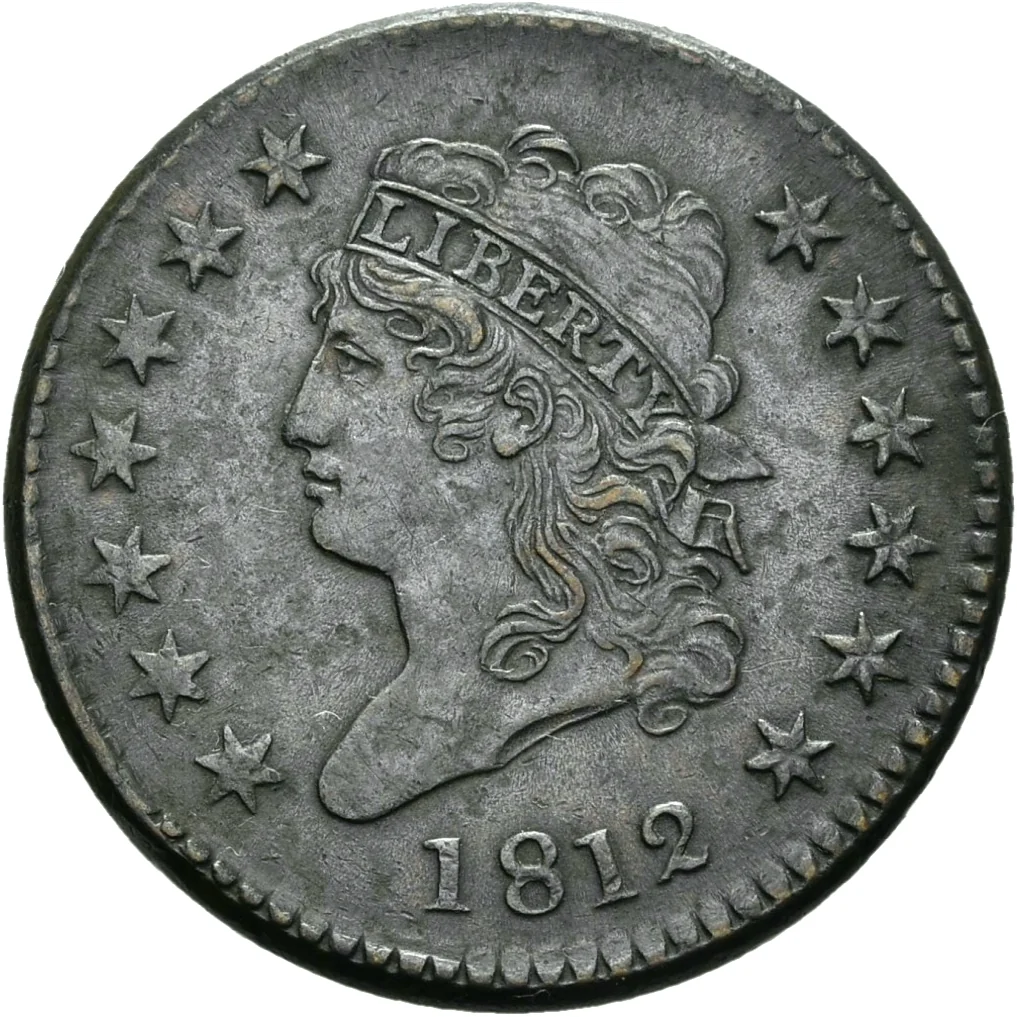
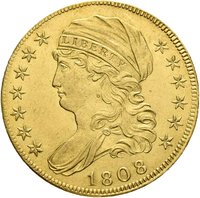
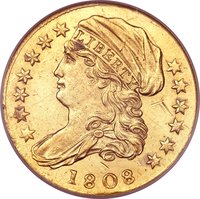
Liberty left, date below, 13 stars for the colonies.
Inscription:
1814
Script: Latin
Engraver: John Reich
Reverse
Description:
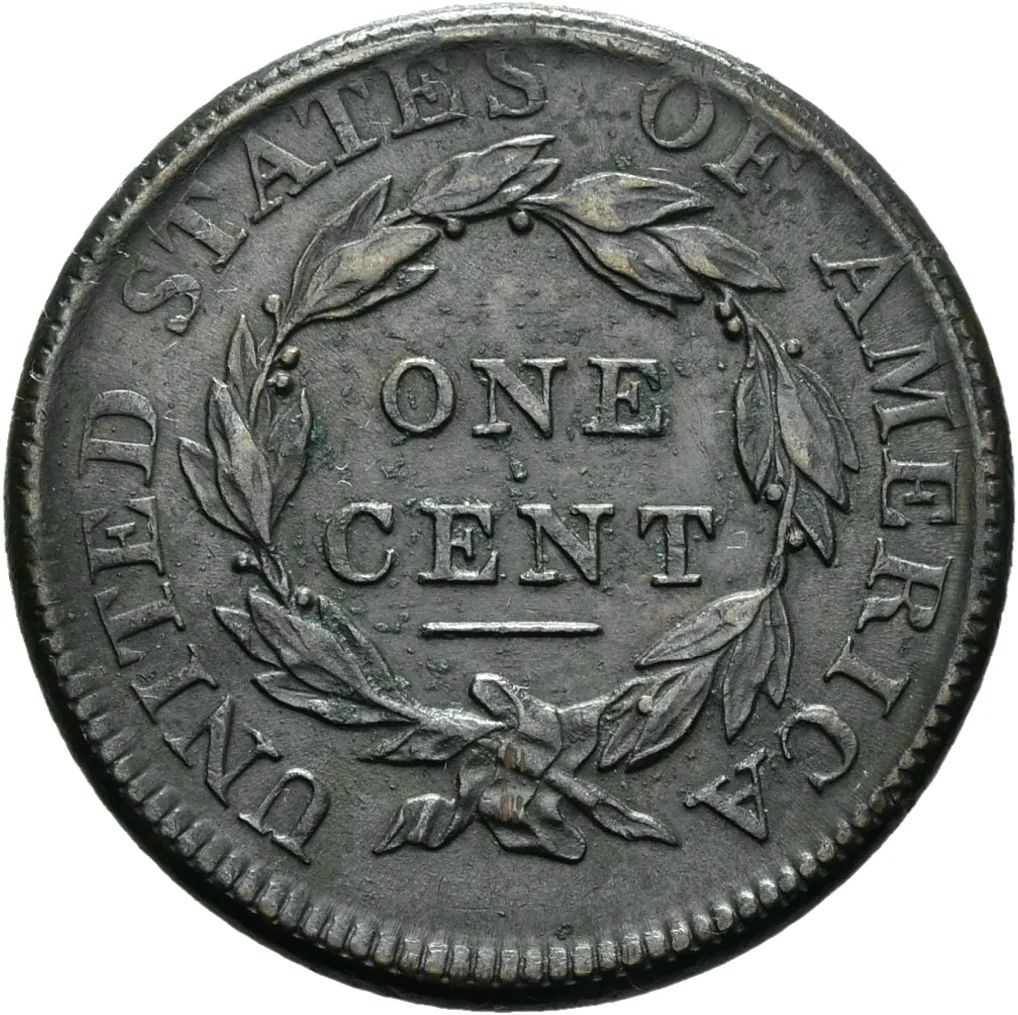
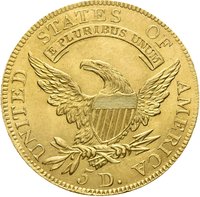
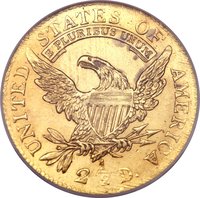
Central wreath with country name encircling rim.
Inscription:
UNITED STATES OF AMERICA
ONE CENT
ONE CENT
Script: Latin
Engraver: John Reich
Edge
Plain
Mints
| Name | Mark |
|---|---|
| United States Mint of Philadelphia | — |
Mintings
| Year | Mint Mark | Mintage | Quality | Collection |
|---|---|---|---|---|
| 1808 | — | 1,007,000 | ||
| 1809 | — | 222,867 | ||
| 1810 | — | 1,458,500 | ||
| 1811 | — | 218,025 | ||
| 1812 | — | — | ||
| 1813 | — | 418,000 | ||
| 1814 | — | 357,830 |
Historical background
In 1808, the United States operated without a central bank or a uniform national currency, creating a complex and often chaotic monetary landscape. The First Bank of the United States, which had provided some stability, saw its charter expire in 1811, leaving a void in financial regulation. Consequently, the primary "official" money consisted of gold and silver coins, but these were chronically scarce in circulation. To conduct everyday business, Americans relied heavily on a bewildering array of foreign coins—primarily Spanish dollars and fractional reales (pieces of eight)—alongside a proliferation of paper banknotes issued by hundreds of state-chartered private banks.
This reliance on private banknotes presented significant problems. These notes were promises to pay specie (gold or silver) upon demand, but many banks, especially in the frontier regions, issued far more paper than they could possibly redeem. This led to frequent bank failures and made the value of a banknote entirely dependent on the reputation and distance of the issuing bank. A note from a reputable city bank might trade at or near its face value locally, while notes from distant or unknown banks circulated at steep discounts, making commerce across state lines a speculative endeavor.
The situation was further strained by the ongoing geopolitical tensions of the Napoleonic Wars and the specific pressures of the Embargo Act of 1807. This attempt at economic coercion, which prohibited American ships from trading with foreign nations, severely disrupted commerce and reduced the flow of specie into the country. With international trade crippled, the domestic economy contracted, increasing the strain on banks and making their paper notes even more suspect. Thus, in 1808, the American monetary system was fragmented, unstable, and acutely vulnerable to the broader economic pressures that would soon culminate in the War of 1812.
This reliance on private banknotes presented significant problems. These notes were promises to pay specie (gold or silver) upon demand, but many banks, especially in the frontier regions, issued far more paper than they could possibly redeem. This led to frequent bank failures and made the value of a banknote entirely dependent on the reputation and distance of the issuing bank. A note from a reputable city bank might trade at or near its face value locally, while notes from distant or unknown banks circulated at steep discounts, making commerce across state lines a speculative endeavor.
The situation was further strained by the ongoing geopolitical tensions of the Napoleonic Wars and the specific pressures of the Embargo Act of 1807. This attempt at economic coercion, which prohibited American ships from trading with foreign nations, severely disrupted commerce and reduced the flow of specie into the country. With international trade crippled, the domestic economy contracted, increasing the strain on banks and making their paper notes even more suspect. Thus, in 1808, the American monetary system was fragmented, unstable, and acutely vulnerable to the broader economic pressures that would soon culminate in the War of 1812.
🌱 Fairly Common