

50 rials – Iran
Add to wishlist
Circulating commemorative coins
Commemoration: Oil and Agriculture
Iran
Context
Material
Diameter: 26 mm
Weight: 10.1 g
Thickness: 2.53 mm
Shape: Round
Composition: Aluminium bronze
Magnetic: No
Technique: Milled
Alignment: Coin alignment
flip
References
KM: #
Numista: #1686
Value
Exchange value: 50 IRR
Obverse
Description:
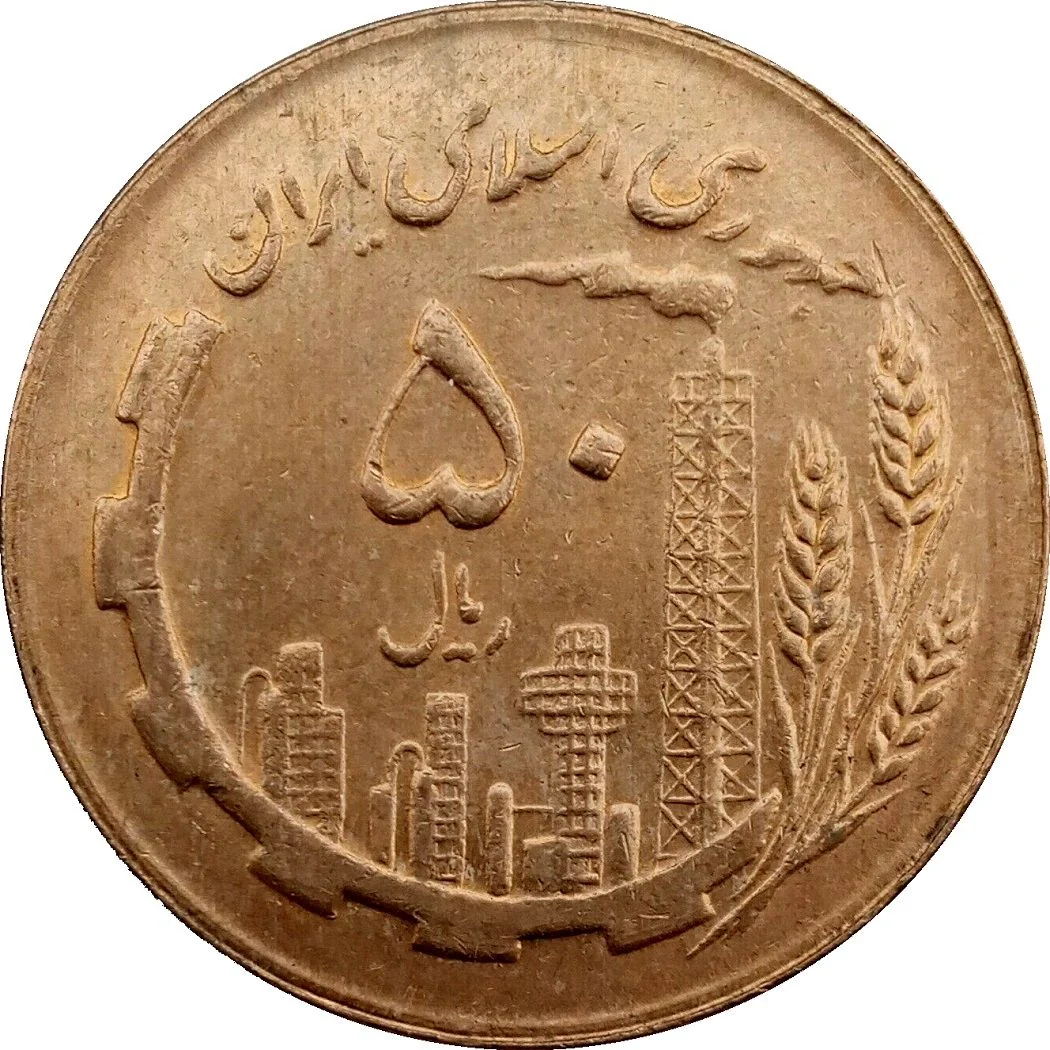
Gear, wheat, and refinery with value above. Lettering at top.
Inscription:
جمهوری اسلامی ايران
۵۰
ریال
۵۰
ریال
Translation:
Islamic Republic of Iran
50
Rials
50
Rials
Language: Persian
Reverse
Description:
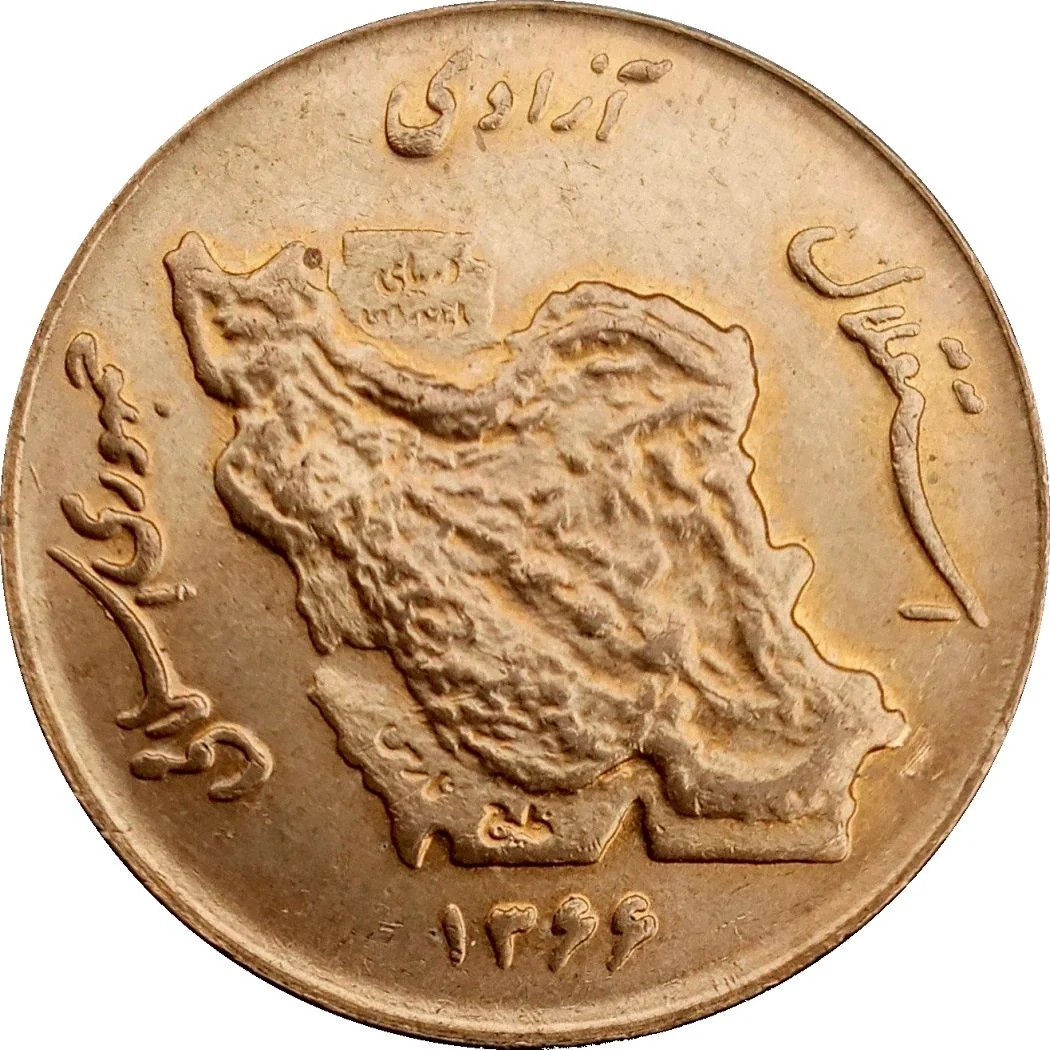
Relief map of Iran centered on the Persian Gulf and Caspian Sea, with the date below and state motto on three sides.
Inscription:
استقلال
آزادی
جمهوری اسلامی
١٣۶۶
دریای مازندران
خلیج فارس
آزادی
جمهوری اسلامی
١٣۶۶
دریای مازندران
خلیج فارس
Translation:
Independence
Freedom
Islamic Republic
1366
Caspian Sea
Persian Gulf
Freedom
Islamic Republic
1366
Caspian Sea
Persian Gulf
Language: Persian
Edge
Plain with incuse letteringNOTE: two varieties of edge lettering exist
Legend:
بانک مرکزی ايران بانک مرکزی ايران
or
بانک مرکزی جمهوری اسلامی ايران
or
بانک مرکزی جمهوری اسلامی ايران
Translation:
Central Bank of Iran Central Bank of Iran
or
Central Bank of the Islamic Republic of Iran
or
Central Bank of the Islamic Republic of Iran
Language: Persian
Categories
| Agriculture |
| Map |
| Industry |
Mintings
| Year | Mint Mark | Mintage | Quality | Collection |
|---|---|---|---|---|
| 1980 | — | — | ||
| 1981 | — | — | ||
| 1982 | — | — | ||
| 1983 | — | — | ||
| 1984 | — | — | ||
| 1985 | — | — | ||
| 1986 | — | — | ||
| 1987 | — | — | ||
| 1988 | — | — | ||
| 1989 | — | — |
Historical background
Following the 1979 Islamic Revolution, Iran's currency situation in 1980 was characterized by significant instability and transition, rooted in profound political and economic upheaval. The new revolutionary government, led by Ayatollah Khomeini, inherited an economy heavily dependent on oil revenues but now facing international isolation, capital flight, and the disruptive effects of nationalizing major industries. While the official currency remained the Iranian rial (IRR), its value came under immediate pressure due to a sharp decline in oil production, the freezing of Iranian assets abroad by the United States, and the outbreak of the Iran-Iraq War in September 1980, which triggered massive wartime expenditures and further disrupted economic output.
The government's initial response was a mix of ideological policy and practical control. It attempted to assert economic independence by removing the Shah's image from banknotes, replacing them with Islamic and revolutionary motifs, and promoting a discourse of economic self-sufficiency. However, in practice, strict currency controls were imposed to prevent capital outflow and conserve foreign reserves. A multi-tiered exchange rate system began to emerge, with an official government rate used for essential imports like food and medicine, and a much less favorable black-market rate that reflected the currency's true depreciating value. This disconnect created opportunities for corruption and a growing gap between official and real prices.
Consequently, 1980 marked the beginning of a sustained period of high inflation and rial devaluation. Wartime spending was financed largely by printing money, leading to rapid monetary expansion without corresponding economic growth. While the full hyperinflation of later years was not yet apparent, the foundational pressures were firmly in place. The currency's erosion became a tangible daily reality for Iranians, signaling the end of the relative stability of the previous era and the start of a long-term struggle with economic hardship, sanctions, and a declining standard of living that would define the decade.
The government's initial response was a mix of ideological policy and practical control. It attempted to assert economic independence by removing the Shah's image from banknotes, replacing them with Islamic and revolutionary motifs, and promoting a discourse of economic self-sufficiency. However, in practice, strict currency controls were imposed to prevent capital outflow and conserve foreign reserves. A multi-tiered exchange rate system began to emerge, with an official government rate used for essential imports like food and medicine, and a much less favorable black-market rate that reflected the currency's true depreciating value. This disconnect created opportunities for corruption and a growing gap between official and real prices.
Consequently, 1980 marked the beginning of a sustained period of high inflation and rial devaluation. Wartime spending was financed largely by printing money, leading to rapid monetary expansion without corresponding economic growth. While the full hyperinflation of later years was not yet apparent, the foundational pressures were firmly in place. The currency's erosion became a tangible daily reality for Iranians, signaling the end of the relative stability of the previous era and the start of a long-term struggle with economic hardship, sanctions, and a declining standard of living that would define the decade.
🌱 Very Common