

1 Salung – Thailand
Thailand
Context
Year: 1863
Issuer: Thailand 
Ruler: Phra Chom Klao
Currency:
(1869—1897)
Subdivision: 1 Salung = ¼ Baht
Demonetized: Yes
Material
References
Y: #Click to copy to clipboard9a
Numista: #166337
Value
Bullion value: $646.55
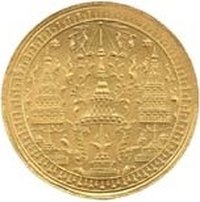
Obverse
Description:
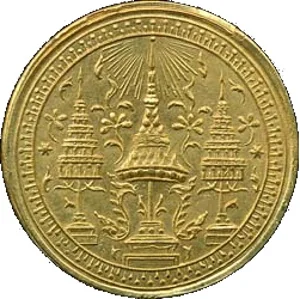
Mongkut, emblem of Rama IV.
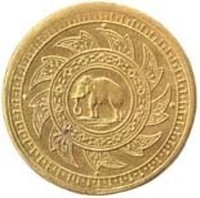
Reverse
Description:
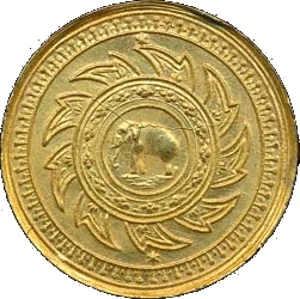
Elephant in Chakra, stars above and below.
Edge
Mintings
| Year | Mint Mark | Mintage | Quality | Collection |
|---|---|---|---|---|
| 1863 | — | — |
Historical background
In 1863, Thailand, then known as Siam, operated under a complex and fragmented monetary system characteristic of a pre-modern economy. The primary unit of account was the baht, which was not a physical coin but a weight of silver (approximately 15 grams). Actual transactions involved a bewildering array of physical currency: bullet-shaped silver ticals (the coin equivalent of a baht), gold chang and tamlung, cowrie shells in the south, and a multitude of foreign coins from neighboring regions and colonial powers, particularly Mexican and Spanish dollars (baht). This lack of standardization created significant challenges for both domestic trade and international commerce, as exchange rates between these different forms of money fluctuated constantly.
The reign of King Mongkut (Rama IV, 1851-1868) was a period of intense Western pressure and modernization, making monetary reform a pressing issue. The Bowring Treaty of 1855 had forced Siam to fix its import duties and opened the kingdom to foreign trade, highlighting the inefficiency of its currency system for international merchants. By 1863, the government had begun taking tentative steps toward centralization. It had initiated the machine-striking of flat, round silver ticals at the royal mint in Bangkok to gradually replace the old bullet coins, and was asserting more control over the issuance of copper p ae ng (subsidiary coinage). However, these reforms were partial and slow to permeate the entire kingdom.
Thus, the currency situation in 1863 was one of transition and coexistence. While the royal court in Bangkok was actively laying the groundwork for a unified, decimalized system—a process that would culminate under King Chulalongkorn with the introduction of the decimal baht and satang in 1897—the everyday reality across Siam remained a patchwork of old and new, domestic and foreign. The economy was caught between a traditional, weight-based silver standard and the emerging necessity for a modern, state-issued national currency to secure both sovereignty and economic integration.
The reign of King Mongkut (Rama IV, 1851-1868) was a period of intense Western pressure and modernization, making monetary reform a pressing issue. The Bowring Treaty of 1855 had forced Siam to fix its import duties and opened the kingdom to foreign trade, highlighting the inefficiency of its currency system for international merchants. By 1863, the government had begun taking tentative steps toward centralization. It had initiated the machine-striking of flat, round silver ticals at the royal mint in Bangkok to gradually replace the old bullet coins, and was asserting more control over the issuance of copper p ae ng (subsidiary coinage). However, these reforms were partial and slow to permeate the entire kingdom.
Thus, the currency situation in 1863 was one of transition and coexistence. While the royal court in Bangkok was actively laying the groundwork for a unified, decimalized system—a process that would culminate under King Chulalongkorn with the introduction of the decimal baht and satang in 1897—the everyday reality across Siam remained a patchwork of old and new, domestic and foreign. The economy was caught between a traditional, weight-based silver standard and the emerging necessity for a modern, state-issued national currency to secure both sovereignty and economic integration.
✨ Legendary