

1⁄12 anna – India - British
Add to wishlist
India
Context
Years: 1835–1848
Country: India
Issuer: India - British
Issuing organization: East India Company
Ruler: Victoria
Currency:
(1770—1947)
Demonetized: Yes
Total mintage: 14,380,000
Material
References
KM: #
Numista: #16616
Obverse
Description:
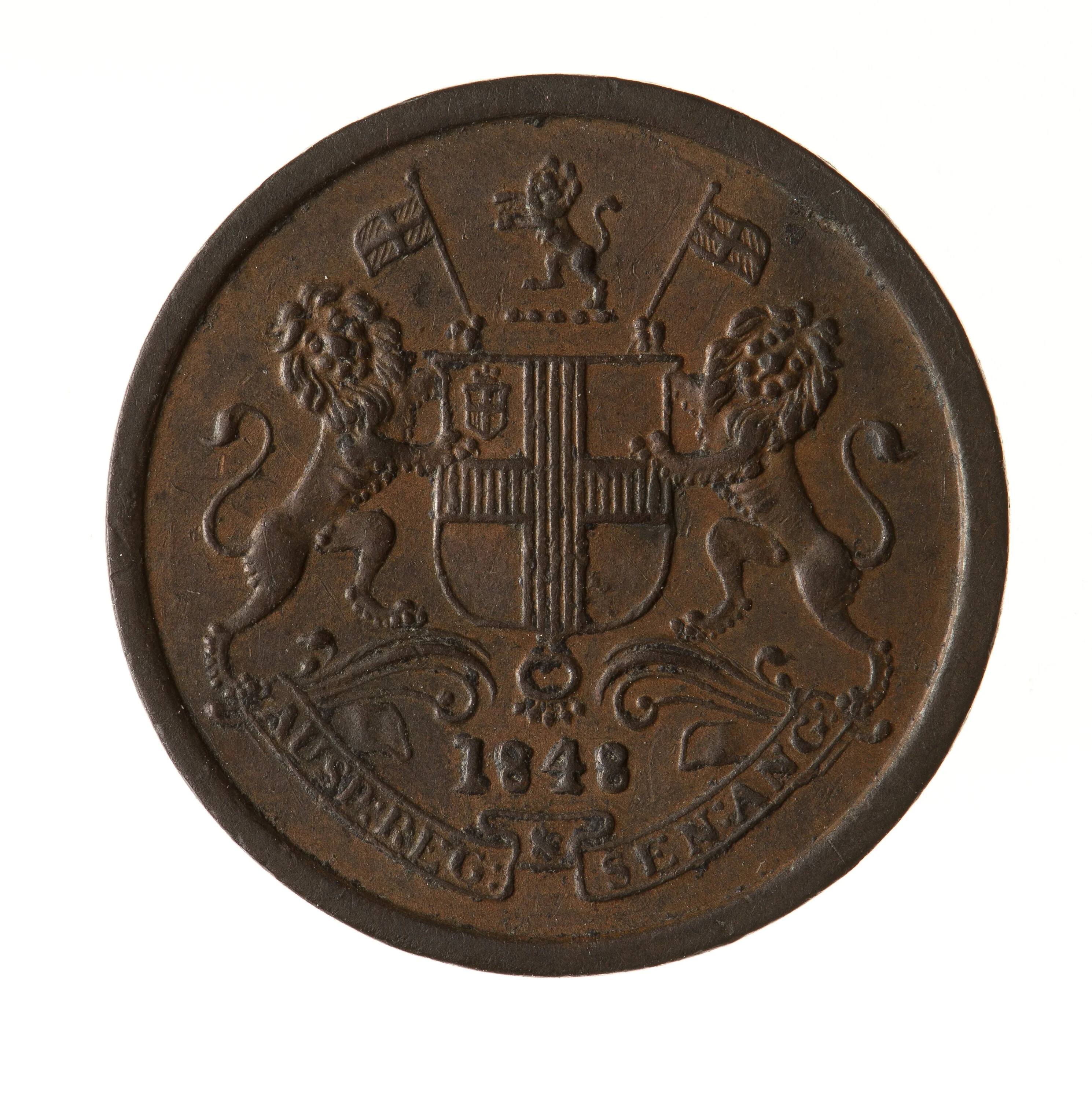
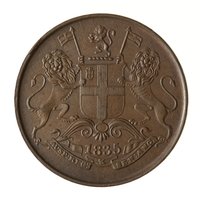
King William IV & Queen Victoria. East India Company arms: two lions, crest and flags with St George's cross, motto "AUSP: REG: SEN: ANG:". Plain rim.
Inscription:
1848
AUSP: REG: & SEN: ANG:
AUSP: REG: & SEN: ANG:
Translation:
By Decree of the King and the Senate of the English.
Language: Latin
Reverse
Edge
Plain
Categories
| Symbols> Coat of Arms |
Mints
| Name | Mark |
|---|---|
| Chennai / Madras | — |
| Kolkata / Calcutta / Murshidabad | — |
| Mumbai / Bombay | — |
Mintings
| Year | Mint Mark | Mintage | Quality | Collection |
|---|---|---|---|---|
| 1835 | b | — | ||
| 1835 | m | — | ||
| 1835 | (b) | — | ||
| 1848 | c | 14,380,000 |
Historical background
By 1835, the currency situation in British India was one of deliberate unification and imperial consolidation following the Charter Act of 1833. The East India Company, having secured political dominance, moved to standardise a chaotic monetary system that featured a bewildering variety of gold, silver, and copper coins from the Mughal era, various Indian princely states, and even other European trading companies. The primary goal was to create a single, uniform currency to facilitate administrative efficiency, trade, and revenue collection across its territories.
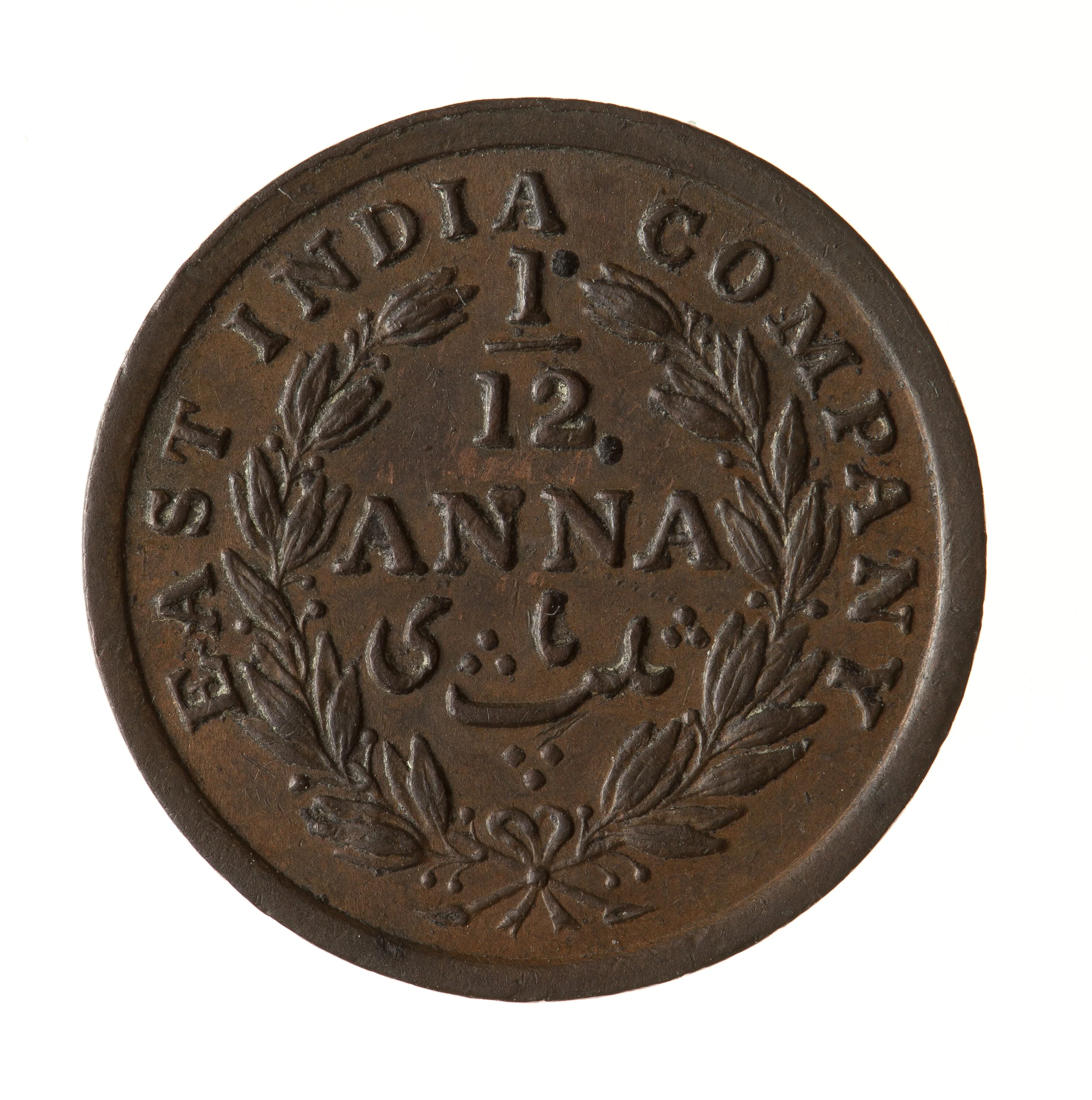
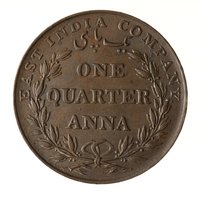
The centrepiece of this reform was the Coinage Act of 1835, which introduced the British India rupee as the sole legal tender. This new rupee was a silver coin of standard weight and fineness (180 grains, 91.7% pure), bearing the image of the reigning British monarch, William IV, thereby symbolically asserting imperial sovereignty. Crucially, it established a mono-metallic silver standard, officially demonetising the gold mohur and aiming to replace all existing regional varieties. The design famously featured the effigy of the monarch on one side and the denomination in English, Persian, and later Nagri script on the other.
This reform successfully created a uniform currency for Company territories, streamlining commerce and administration. However, it also firmly subordinated India's monetary system to British economic interests, ultimately linking it to the international fluctuations of silver. The mid-19th century discovery of vast silver deposits, particularly in the Americas, led to a steady depreciation of silver against gold, which would later create severe fiscal challenges for the colonial government, especially in making "Home Charges" (payments to Britain) which were demanded in gold. Thus, the 1835 system, while orderly, laid the groundwork for future economic vulnerabilities tied directly to imperial priorities.
The centrepiece of this reform was the Coinage Act of 1835, which introduced the British India rupee as the sole legal tender. This new rupee was a silver coin of standard weight and fineness (180 grains, 91.7% pure), bearing the image of the reigning British monarch, William IV, thereby symbolically asserting imperial sovereignty. Crucially, it established a mono-metallic silver standard, officially demonetising the gold mohur and aiming to replace all existing regional varieties. The design famously featured the effigy of the monarch on one side and the denomination in English, Persian, and later Nagri script on the other.
This reform successfully created a uniform currency for Company territories, streamlining commerce and administration. However, it also firmly subordinated India's monetary system to British economic interests, ultimately linking it to the international fluctuations of silver. The mid-19th century discovery of vast silver deposits, particularly in the Americas, led to a steady depreciation of silver against gold, which would later create severe fiscal challenges for the colonial government, especially in making "Home Charges" (payments to Britain) which were demanded in gold. Thus, the 1835 system, while orderly, laid the groundwork for future economic vulnerabilities tied directly to imperial priorities.
🌱 Common