

2 kronor – Sweden
Add to wishlist
Sweden
Context
Years: 1968–1971
Issuer: Sweden
Ruler: Gustaf VI Adolf
Currency:
(since 1873)
Demonetization: 30 June 2017
Total mintage: 4,691,250
Material
References
KM: #
Numista: #16615
Value
Exchange value: 2 SEK
Inflation-adjusted value: 22.77 SEK
Obverse
Description:
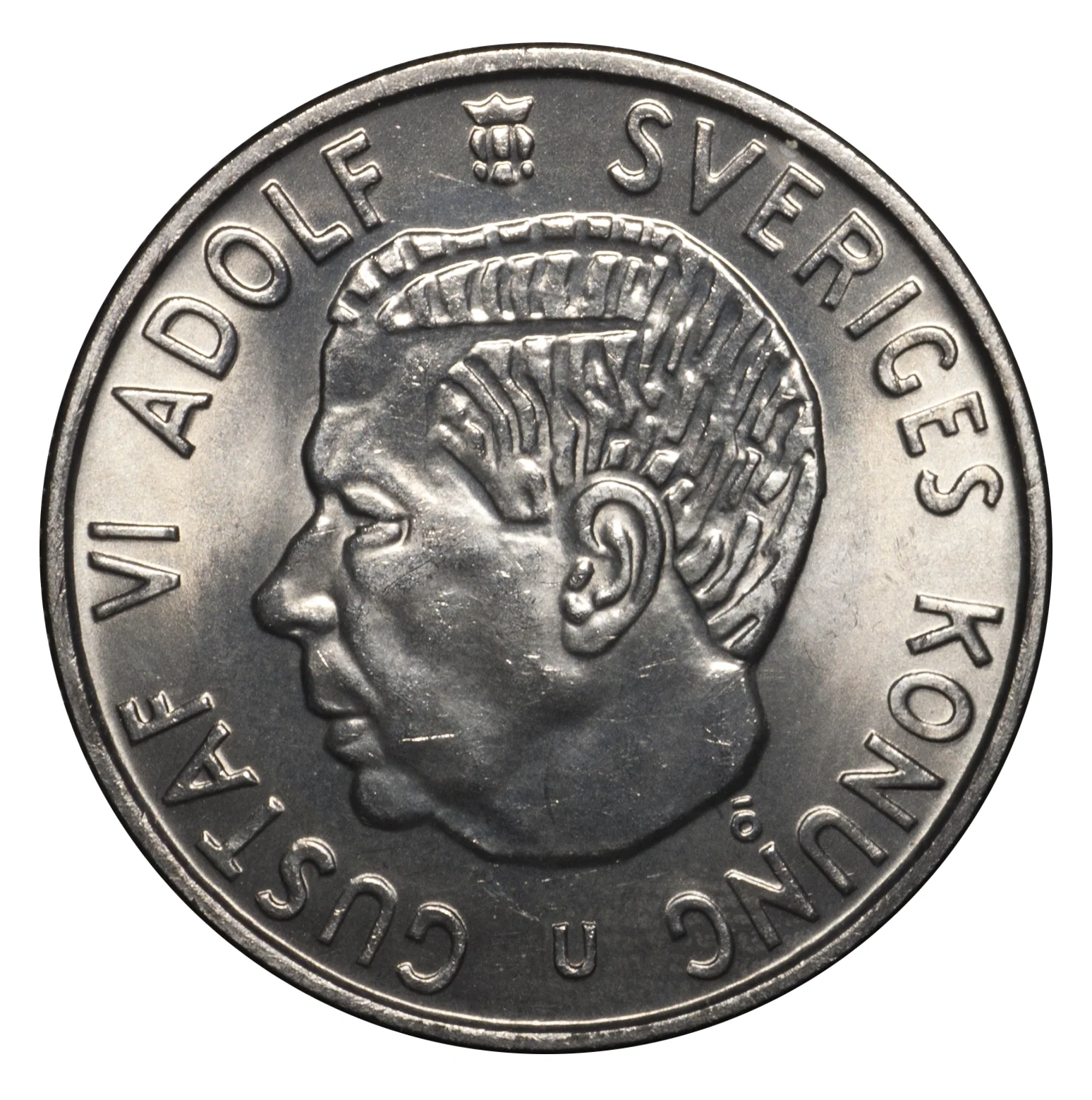
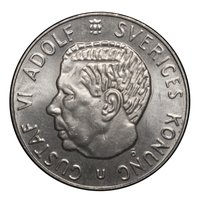
Stylized left-facing king portrait. Below, mintmaster initials.
Inscription:
GUSTAF VI ADOLF SVERIGES KONUNG
ö
U
ö
U
Translation:
GUSTAF VI ADOLF SWEDEN'S KING
ö
U
ö
U
Script: Latin
Language: Swedish
Engraver: Edvin Öhrström
Reverse
Edge
Reeded
Mints
| Name | Mark |
|---|---|
| Kungliga Myntet | — |
Mintings
| Year | Mint Mark | Mintage | Quality | Collection |
|---|---|---|---|---|
| 1968 | — | 1,170,750 | ||
| 1969 | — | 1,148,250 | ||
| 1970 | — | 1,159,000 | ||
| 1971 | — | 1,213,250 |
Historical background
In 1968, Sweden's currency situation was defined by its participation in the Bretton Woods system of fixed exchange rates, which pegged the Swedish krona to the US dollar. This system required the Riksbank, Sweden's central bank, to maintain the krona's value within a narrow band. However, the period was one of significant economic strain, marked by persistent domestic inflation and a growing current account deficit. These internal pressures created a constant tension, as the fixed exchange rate limited the government's ability to use monetary policy to cool the overheated economy, leading to a reliance on fiscal tightening and occasional credit controls.
Internationally, the Bretton Woods system itself was under mounting stress, casting doubt on the stability of all participating currencies, including the krona. While the Swedish economy was strong in terms of industrial output and employment, its competitiveness was being eroded by inflation rates that were higher than those of its major trading partners. This "cost crisis" (kostnadskrisen) fueled speculation about a possible devaluation of the krona to restore export competitiveness, a move that had been successfully employed in the past but was politically contentious.
Consequently, 1968 was a year of precarious balance. The government, led by Prime Minister Tage Erlander, was publicly committed to defending the krona's parity, implementing restrictive budgets to curb demand and inflation. Yet, beneath this official stance, intense debate raged among economists, unions, and industry leaders about the sustainability of the fixed rate. The situation remained unresolved by year's end, setting the stage for the major political and economic upheaval that would follow in 1969-70, when the pressure ultimately led to a divisive debate over devaluation.
Internationally, the Bretton Woods system itself was under mounting stress, casting doubt on the stability of all participating currencies, including the krona. While the Swedish economy was strong in terms of industrial output and employment, its competitiveness was being eroded by inflation rates that were higher than those of its major trading partners. This "cost crisis" (kostnadskrisen) fueled speculation about a possible devaluation of the krona to restore export competitiveness, a move that had been successfully employed in the past but was politically contentious.
Consequently, 1968 was a year of precarious balance. The government, led by Prime Minister Tage Erlander, was publicly committed to defending the krona's parity, implementing restrictive budgets to curb demand and inflation. Yet, beneath this official stance, intense debate raged among economists, unions, and industry leaders about the sustainability of the fixed rate. The situation remained unresolved by year's end, setting the stage for the major political and economic upheaval that would follow in 1969-70, when the pressure ultimately led to a divisive debate over devaluation.
🌱 Common