

20 Bahts (Reign) – Thailand
Non-circulating coins
Commemoration: 60th Anniversary of Reign
Thailand
Context
Year: 2006
Thai Year: 2549
Issuer: Thailand 
Ruler: Bhumibol Adulyadej
Currency:
(since 1897)
Total mintage: 2,696,000
Material
Diameter: 32 mm
Weight: 15 g
Thickness: 2.5 mm
Shape: Round
Composition: Copper-nickel (75% Copper)
Technique: Milled
Alignment: Medal alignment
flip
References
Y: #Click to copy to clipboard407
Numista: #16597
Value
Exchange value: 20 THB = $0.64
Obverse
Description:
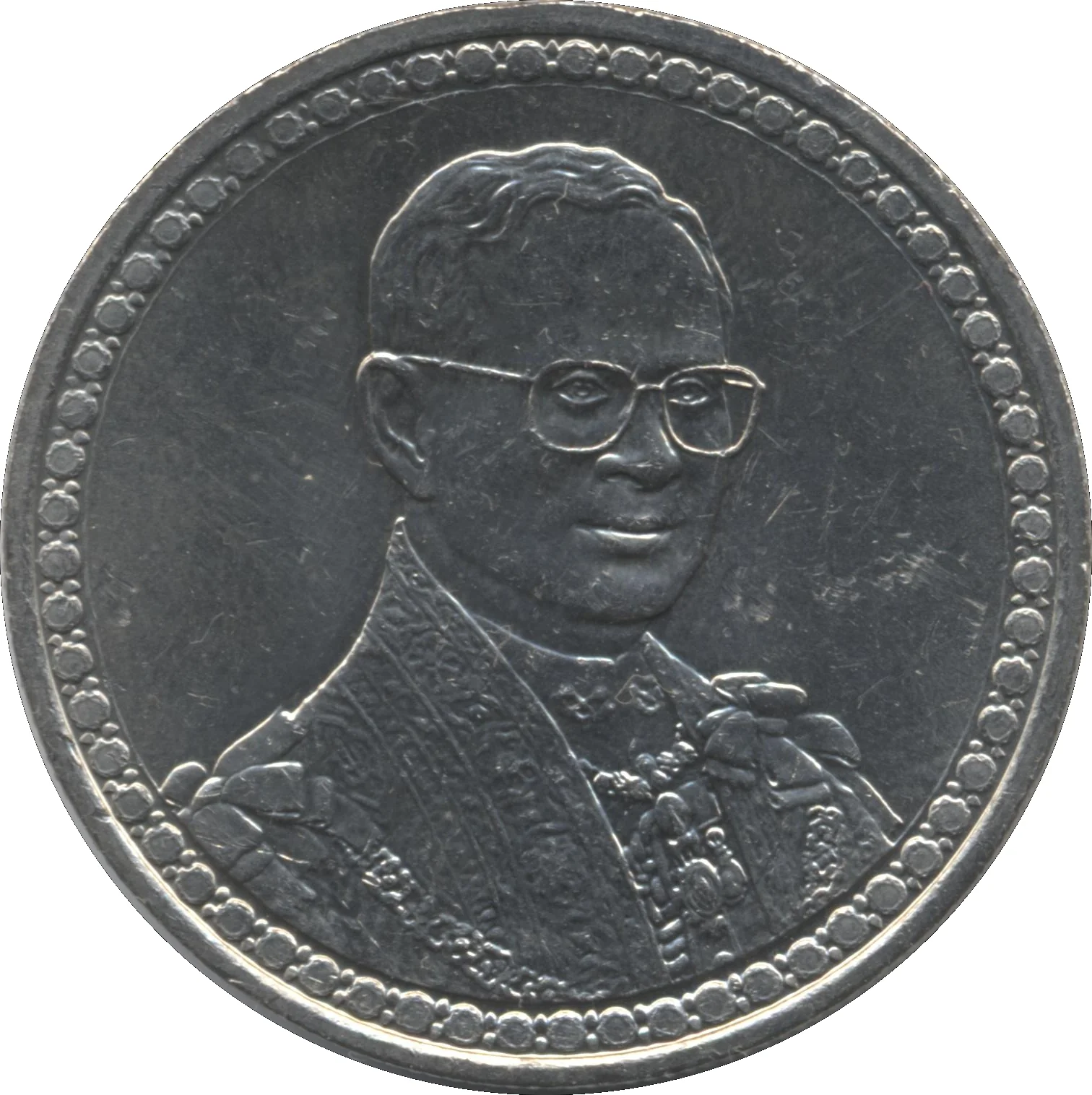
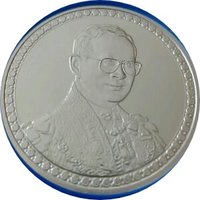
Bust of King Bhumibol Adulyadej in royal regalia, wearing the Order of the Royal House of Chakri and the Order of Chula Chom Klao collar. The coin's rim features sixty diamonds.
Reverse
Description:
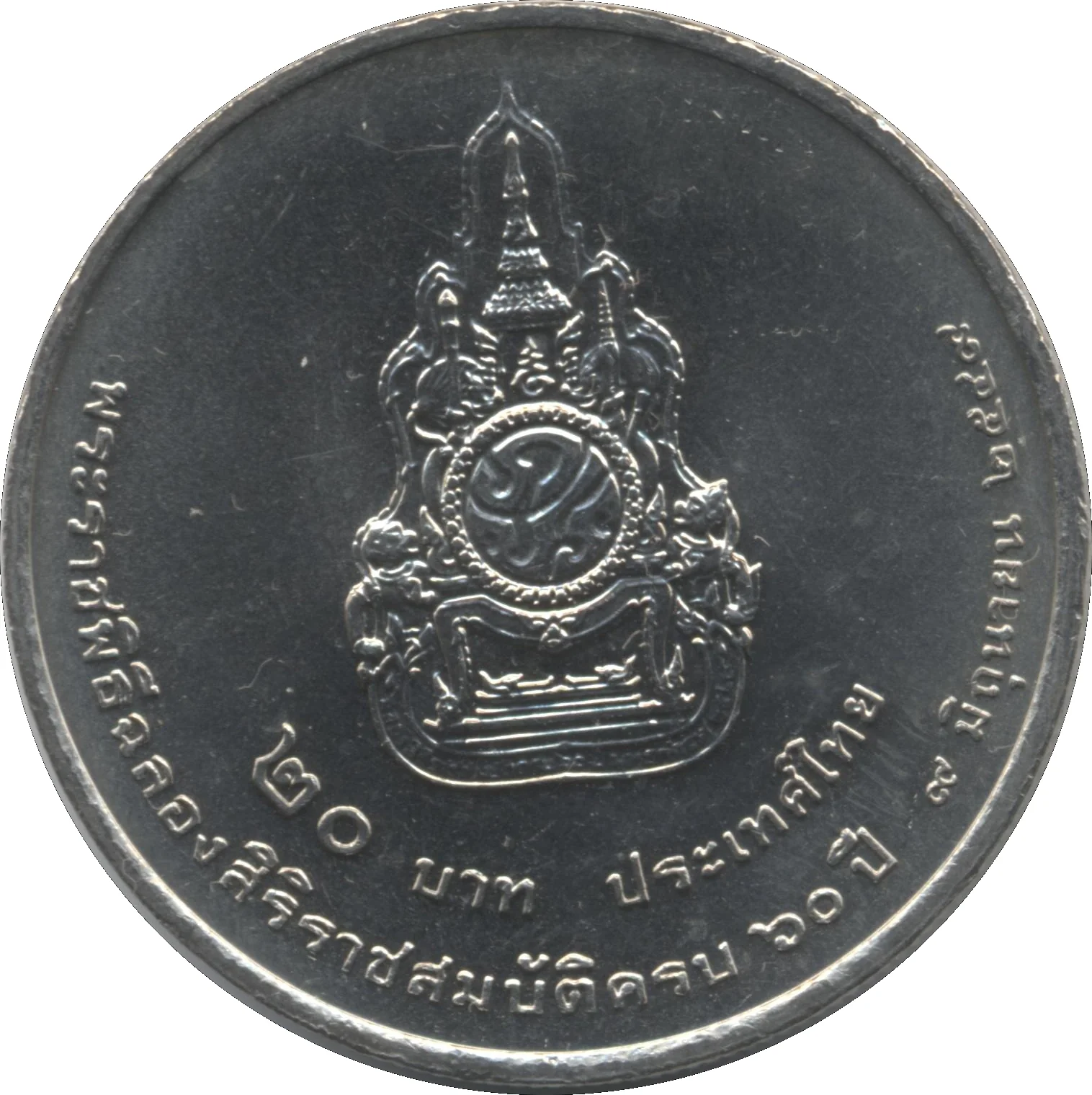
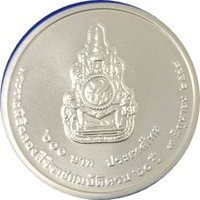
The ceremony's emblem features the King's diamond-encircled cypher on the Bhatarabidha Throne beneath the Great Crown of Victory and the letter "U." Flanking the throne are the Sword of Victory and Fly-whisk on the left, and the Royal Staff and Fan on the right, with the Royal Slippers below. Phra Krutpah and Krabidhuch hold a border inscribed with the ceremony's name.
Inscription:
๒๐ บาท ประเทศไทย
พระราชพิธีฉลองสิริราชสมบัติครบ ๖๐ ปี ๙ มิถุนายน ๒๕๔๙
พระราชพิธีฉลองสิริราชสมบัติครบ ๖๐ ปี ๙ มิถุนายน ๒๕๔๙
Translation:
Twenty Baht, Thailand
Royal Ceremony Celebrating the 60th Anniversary of the Reign, 9th June 2006
Royal Ceremony Celebrating the 60th Anniversary of the Reign, 9th June 2006
Script: Thai
Language: Thai
Edge
Reeded.
Mintings
| Year | Mint Mark | Mintage | Quality | Collection |
|---|---|---|---|---|
| 2006 | — | 2,600,000 | ||
| 2006 | — | 96,000 | Proof |
Historical background
In 2006, Thailand's currency, the baht (THB), was in a period of significant appreciation and volatility, largely driven by global macroeconomic forces and domestic political uncertainty. The baht strengthened considerably against the US dollar, reaching its highest level in nearly a decade. This surge was primarily fueled by large and persistent capital inflows into the Thai stock and bond markets, as foreign investors sought higher yields in emerging Asia. Furthermore, Thailand was running a substantial current account surplus, bolstered by strong exports, which increased demand for the baht and added to upward pressure on its value.
The appreciating currency posed a serious policy dilemma for the Bank of Thailand (BOT). While a strong baht helped contain import costs and inflation, it threatened to erode the competitiveness of Thailand's crucial export sector, a key driver of economic growth. In response, the BOT intervened heavily in foreign exchange markets throughout the year, buying US dollars to slow the baht's rise, which led to a rapid accumulation of foreign reserves. However, these interventions also created excess liquidity in the domestic financial system, complicating monetary policy.
The situation reached a critical point in December 2006, when the BOT, alarmed by speculative inflows, imposed controversial capital controls in an attempt to stabilize the currency. A key measure required banks to hold a 30% reserve requirement on most new foreign currency inflows, which was not paid interest and could not be used for a year. This drastic move triggered a sharp, one-day 15% stock market crash as foreign investors fled, forcing the authorities to quickly exempt equity investments from the rules. The episode highlighted the challenges of managing an open economy amid volatile global capital flows and cast a shadow over Thailand's financial stability just as the country was grappling with the aftermath of a military coup in September 2006.
The appreciating currency posed a serious policy dilemma for the Bank of Thailand (BOT). While a strong baht helped contain import costs and inflation, it threatened to erode the competitiveness of Thailand's crucial export sector, a key driver of economic growth. In response, the BOT intervened heavily in foreign exchange markets throughout the year, buying US dollars to slow the baht's rise, which led to a rapid accumulation of foreign reserves. However, these interventions also created excess liquidity in the domestic financial system, complicating monetary policy.
The situation reached a critical point in December 2006, when the BOT, alarmed by speculative inflows, imposed controversial capital controls in an attempt to stabilize the currency. A key measure required banks to hold a 30% reserve requirement on most new foreign currency inflows, which was not paid interest and could not be used for a year. This drastic move triggered a sharp, one-day 15% stock market crash as foreign investors fled, forcing the authorities to quickly exempt equity investments from the rules. The episode highlighted the challenges of managing an open economy amid volatile global capital flows and cast a shadow over Thailand's financial stability just as the country was grappling with the aftermath of a military coup in September 2006.
🌱 Fairly Common