

50 dinars – Yugoslavia
Add to wishlist
Context
Year: 1932
Issuer: Yugoslavia
Ruler: Alexander I
Currency:
(1918—1941)
Demonetization: 16 March 1940
Total mintage: 5,500,000
Material
References
KM: #
Numista: #16520
Value
Bullion value: $43.87
Obverse
Description:
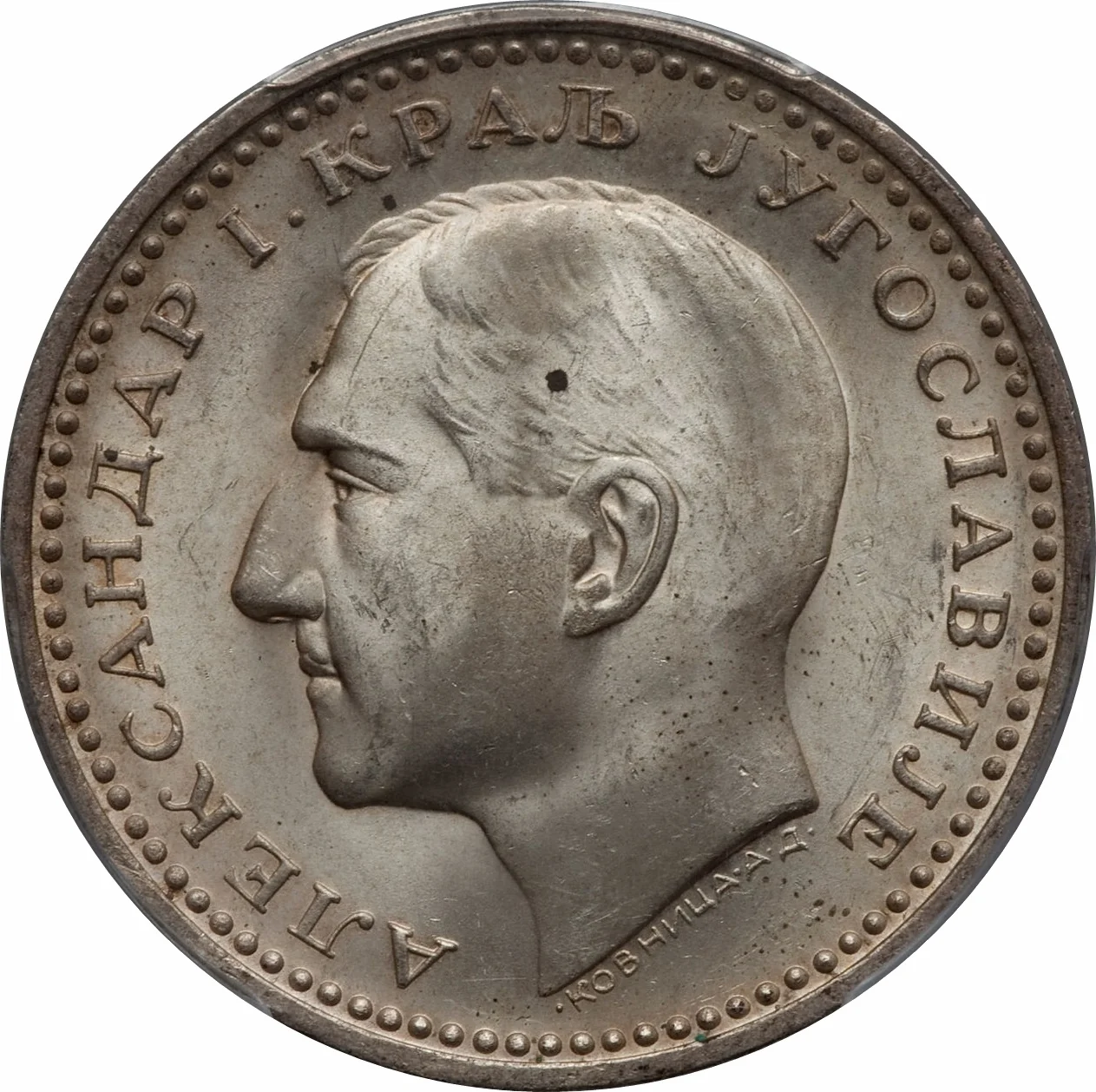
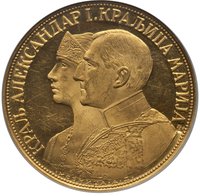
King Aleksandar I, left-facing portrait
Inscription:
АЛЕКСАНДАР I. КРАЉ ЈУГОСЛАВИЈЕ
·КОВНИЦА·А·Д·
·КОВНИЦА·А·Д·
Translation:
ALEXANDER I. KING OF YUGOSLAVIA
·MINT·A·D·
·MINT·A·D·
Script: Cyrillic
Language: Serbian
Engraver: Percy Metcalfe
Reverse
Description:
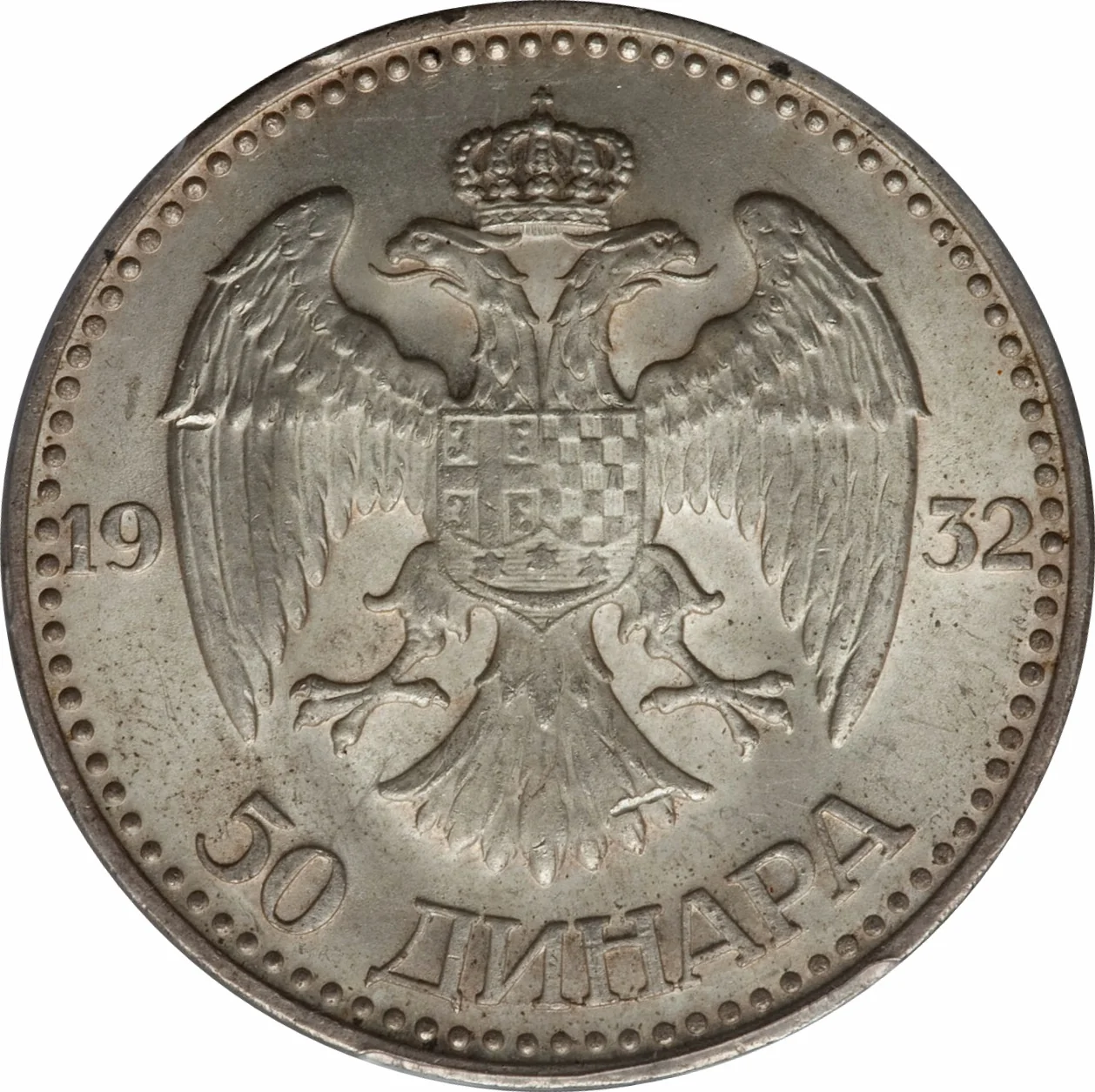
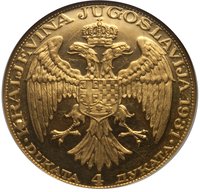
Yugoslavian coat of arms with value.
Inscription:
19 32
50 ДИНАРА
50 ДИНАРА
Translation:
19 32
50 DINARA
50 DINARA
Language: Serbian
Engraver: Percy Metcalfe
Edge
Categories
| Animal> Bird |
| Person> Monarch |
| Symbol> Crown |
| Symbols> Coat of Arms |
| Symbol> Double-headed eagle |
Mints
| Name | Mark |
|---|---|
| Belgrade | — |
| Royal Mint (Tower Hill) | — |
Mintings
| Year | Mint Mark | Mintage | Quality | Collection |
|---|---|---|---|---|
| 1932 | — | 5,500,000 | ||
| 1932 | — | — | Proof |
Historical background
In 1932, the Kingdom of Yugoslavia was grappling with the severe global repercussions of the Great Depression, which had devastated its primarily agrarian economy. The collapse of international agricultural prices, particularly for its key exports like grain and livestock, crippled the nation's foreign exchange earnings and led to widespread rural poverty. This economic shock created a massive balance of payments crisis, draining the country's gold and foreign currency reserves and placing immense pressure on the official currency, the Yugoslav dinar.
The government, led by Prime Minister Vojislav Marinković, responded with a policy of strict deflation and adherence to the gold standard, which pegged the dinar to gold at a high, pre-Depression parity. This orthodox approach, intended to maintain international credibility, proved disastrous domestically. It made Yugoslav exports even less competitive, forced drastic cuts in public spending and wages, and led to a severe internal credit crunch. The rigid dinar was effectively overvalued, but authorities prioritized its stability over devaluation, fearing a loss of confidence and inflationary spiral.
Consequently, the official currency situation masked a deeper economic reality. While the dinar's formal exchange rate was maintained, the domestic economy was characterized by plummeting incomes, falling prices (deflation), and a sharp decline in economic activity. The government's austerity measures failed to resolve the fundamental issues, leading to social unrest and political instability. This tense and deteriorating environment set the stage for the eventual abandonment of the gold standard in 1933 and a shift toward more interventionist economic policies, including currency controls and bilateral trade agreements.
The government, led by Prime Minister Vojislav Marinković, responded with a policy of strict deflation and adherence to the gold standard, which pegged the dinar to gold at a high, pre-Depression parity. This orthodox approach, intended to maintain international credibility, proved disastrous domestically. It made Yugoslav exports even less competitive, forced drastic cuts in public spending and wages, and led to a severe internal credit crunch. The rigid dinar was effectively overvalued, but authorities prioritized its stability over devaluation, fearing a loss of confidence and inflationary spiral.
Consequently, the official currency situation masked a deeper economic reality. While the dinar's formal exchange rate was maintained, the domestic economy was characterized by plummeting incomes, falling prices (deflation), and a sharp decline in economic activity. The government's austerity measures failed to resolve the fundamental issues, leading to social unrest and political instability. This tense and deteriorating environment set the stage for the eventual abandonment of the gold standard in 1933 and a shift toward more interventionist economic policies, including currency controls and bilateral trade agreements.
🌟 Uncommon