


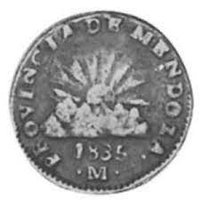
Obverse
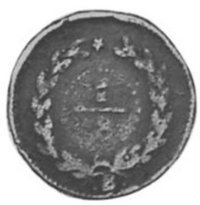
Reverse
Description:
Fraction in wreath
Inscription:
PROVINCIA DE MENDOZA
1/8
1/8
Edge
Plain
Mintings
| Year | Mint Mark | Mintage | Quality | Collection |
|---|---|---|---|---|
| 1835 | — | — |
Historical background
In 1835, Mendoza, like much of the Argentine Confederation, was mired in a profound monetary crisis characterized by a chaotic proliferation of currencies and a severe lack of specie (hard coin). The collapse of the central authority following the dissolution of the national government in 1820 meant each province, including Mendoza under the caudillo Juan Rego, issued its own paper money. These provincial notes, known as billetes de curso forzoso (legal tender notes), were printed with little to no metallic backing, leading to rapid depreciation and deep public distrust. The economy operated on a fragile system of credit and barter, with the state often paying officials and suppliers in its own depreciating paper.
The situation was further complicated by the circulation of a vast array of foreign coins, primarily from Bolivia, Chile, and Peru, which held more stable value due to their silver and gold content. These foreign coins became the preferred medium for significant transactions and external trade, particularly for Mendoza's vital wine and brandy exports. This created a dual monetary system: international trade and large-scale commerce relied on scarce foreign specie, while daily local transactions and state finances were conducted in devalued provincial paper, causing price distortions and economic instability.
Consequently, the provincial government of Mendoza faced chronic fiscal shortfalls. With its paper money constantly losing purchasing power, it struggled to finance public works and maintain the militia. The monetary anarchy stifled internal trade, discouraged investment, and placed a heavy burden on the local populace. This financial disarray was a direct reflection of the broader political fragmentation of the Confederation, where economic sovereignty was exercised at the provincial level with disastrous results for currency stability and unified commerce.
The situation was further complicated by the circulation of a vast array of foreign coins, primarily from Bolivia, Chile, and Peru, which held more stable value due to their silver and gold content. These foreign coins became the preferred medium for significant transactions and external trade, particularly for Mendoza's vital wine and brandy exports. This created a dual monetary system: international trade and large-scale commerce relied on scarce foreign specie, while daily local transactions and state finances were conducted in devalued provincial paper, causing price distortions and economic instability.
Consequently, the provincial government of Mendoza faced chronic fiscal shortfalls. With its paper money constantly losing purchasing power, it struggled to finance public works and maintain the militia. The monetary anarchy stifled internal trade, discouraged investment, and placed a heavy burden on the local populace. This financial disarray was a direct reflection of the broader political fragmentation of the Confederation, where economic sovereignty was exercised at the provincial level with disastrous results for currency stability and unified commerce.

✨ Legendary