

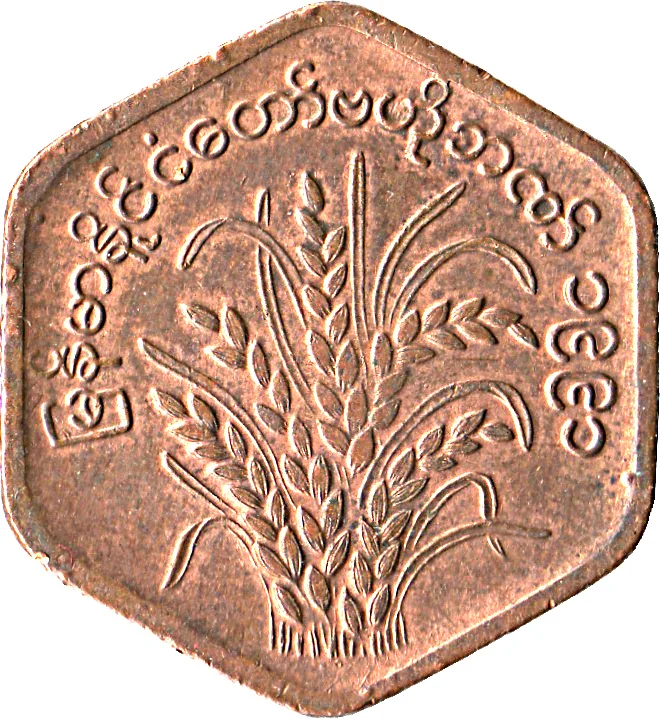
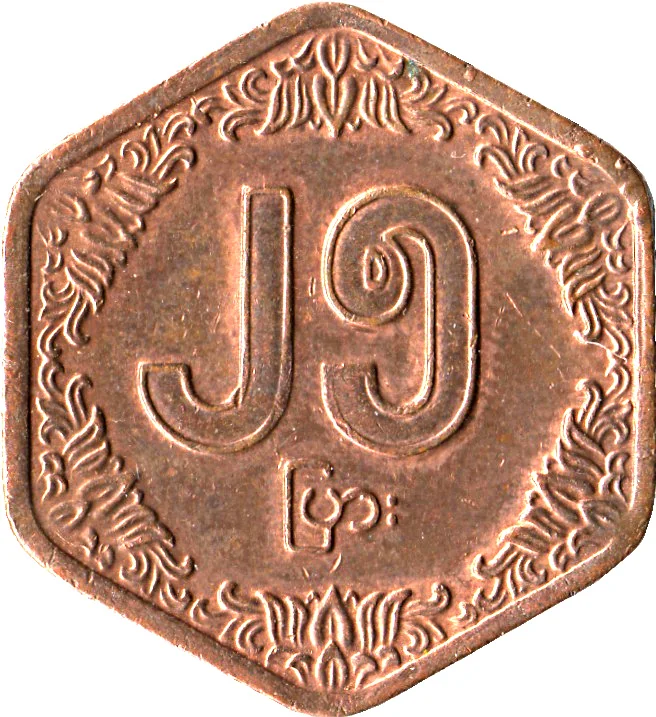
25 Pyas – Myanmar
Circulating commemorative coins
Commemoration: F.A.O.
Myanmar

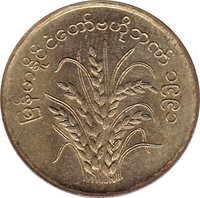
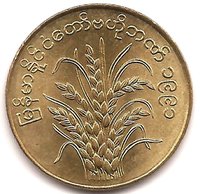
Obverse
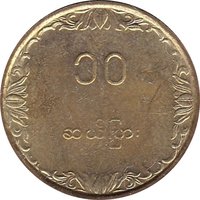
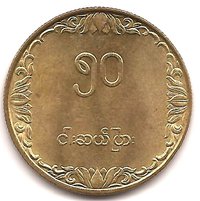
Reverse
Edge
Plain
Categories
| Organization> FAO |
Mints
| Name | Mark |
|---|---|
| Security Printing Works Factory | — |
Mintings
| Year | Mint Mark | Mintage | Quality | Collection |
|---|---|---|---|---|
| 1991 | — | — |
Historical background
In 1991, Myanmar's currency situation was characterized by a complex and dysfunctional multi-tier exchange rate system, a legacy of the socialist isolation under General Ne Win's "Burmese Way to Socialism." The official exchange rate, set by the government, was a grossly overvalued 6 kyat to 1 US dollar. However, this rate was purely notional, used only for government accounting and a limited number of official transactions. The real value of the kyat was determined by a thriving black market, where the rate was approximately 100 to 120 kyat per dollar, reflecting the severe economic mismanagement and scarcity of foreign exchange.
This disparity created a distorted economy. Legitimate exporters were forced to surrender their foreign currency earnings at the artificial official rate, effectively taxing them heavily and discouraging formal trade. Meanwhile, access to the prized official rate was a source of patronage and corruption, reserved for state-owned enterprises and the military elite. The vast majority of the population and private businesses had to rely on the black market for any foreign exchange needs, embedding illegality into the core of the economy and widening the gap between the state and the real commercial activities of the people.
The situation was further strained by the political crisis following the 1988 pro-democracy uprising and the 1990 election, which the military nullified. International condemnation and economic sanctions limited foreign investment and aid, exacerbating the foreign currency shortage. Consequently, in 1991, Myanmar's currency regime was not merely an economic issue but a central pillar of a controlled, opaque, and struggling state, insulating the ruling junta from some external pressures while crippling the nation's productive capacity and fueling inflation and widespread poverty.
This disparity created a distorted economy. Legitimate exporters were forced to surrender their foreign currency earnings at the artificial official rate, effectively taxing them heavily and discouraging formal trade. Meanwhile, access to the prized official rate was a source of patronage and corruption, reserved for state-owned enterprises and the military elite. The vast majority of the population and private businesses had to rely on the black market for any foreign exchange needs, embedding illegality into the core of the economy and widening the gap between the state and the real commercial activities of the people.
The situation was further strained by the political crisis following the 1988 pro-democracy uprising and the 1990 election, which the military nullified. International condemnation and economic sanctions limited foreign investment and aid, exacerbating the foreign currency shortage. Consequently, in 1991, Myanmar's currency regime was not merely an economic issue but a central pillar of a controlled, opaque, and struggling state, insulating the ruling junta from some external pressures while crippling the nation's productive capacity and fueling inflation and widespread poverty.
🌱 Common