

1 Real – Santiago del Estero
Argentina
Context
Year: 1836
Country: Argentina 
Issuer: Santiago del Estero
Period:
(1810—1831)
Currency:
(1823—1836)
Demonetized: Yes
Material
References
KM: #Click to copy to clipboard6
Numista: #164870
Obverse
Reverse
Description:
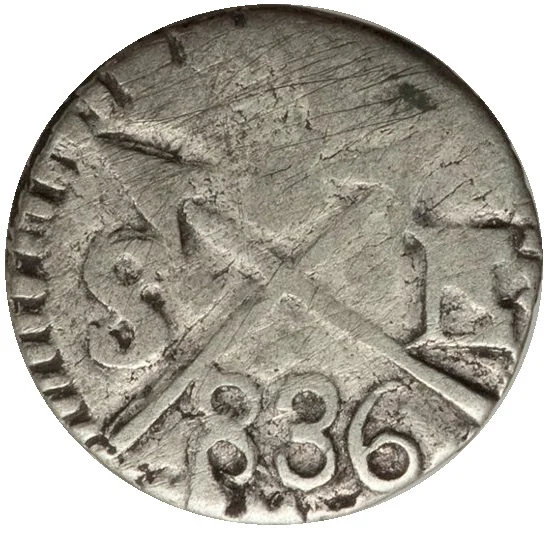
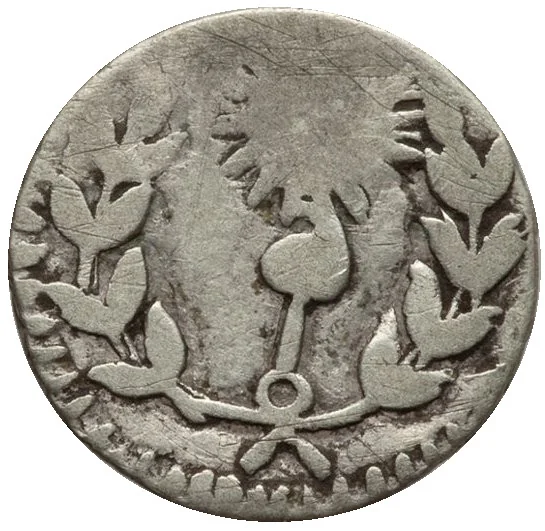
Radiant sun with a face above a liberty cap on a pole, encircled by a wreath.
Edge
Plain
Mintings
| Year | Mint Mark | Mintage | Quality | Collection |
|---|---|---|---|---|
| 1836 | — | — |
Historical background
In 1836, Santiago del Estero, like much of the Argentine interior, operated within a complex and fragmented monetary landscape following the collapse of central authority after independence. The province lacked a standardized, universally accepted currency. The national coinage from the Buenos Aires mint was scarce and often hoarded, while older Spanish colonial coins, such as pesos fuertes (strong pesos) and reales, still circulated but were in limited and diminishing supply. This scarcity of hard currency severely constrained commercial transactions and economic development within the province.
To address this chronic shortage, Santiago del Estero, along with other provincial governments, resorted to issuing its own paper money. These were typically billetes de ley (legal tender notes) or vales (promissory notes), authorized by the provincial treasury and intended to facilitate local trade and pay government employees and suppliers. However, these notes were not backed by specie (gold or silver) and their value was entirely dependent on public confidence in the provincial government's ability to eventually redeem them, which was often tenuous. Consequently, they circulated at a steep discount, especially outside the province's borders.
The monetary situation was further complicated by the circulation of currencies from neighboring provinces, each with its own fluctuating value, and by the widespread use of primitive credit instruments and barter for everyday transactions, particularly in rural areas. This environment of multiple, competing currencies with unstable values created significant obstacles for merchants, fostered price instability, and reflected the broader political and economic disunity of the Argentine Confederation during the rule of Juan Manuel de Rosas, where provincial autonomy often came at the cost of national economic integration.
To address this chronic shortage, Santiago del Estero, along with other provincial governments, resorted to issuing its own paper money. These were typically billetes de ley (legal tender notes) or vales (promissory notes), authorized by the provincial treasury and intended to facilitate local trade and pay government employees and suppliers. However, these notes were not backed by specie (gold or silver) and their value was entirely dependent on public confidence in the provincial government's ability to eventually redeem them, which was often tenuous. Consequently, they circulated at a steep discount, especially outside the province's borders.
The monetary situation was further complicated by the circulation of currencies from neighboring provinces, each with its own fluctuating value, and by the widespread use of primitive credit instruments and barter for everyday transactions, particularly in rural areas. This environment of multiple, competing currencies with unstable values created significant obstacles for merchants, fostered price instability, and reflected the broader political and economic disunity of the Argentine Confederation during the rule of Juan Manuel de Rosas, where provincial autonomy often came at the cost of national economic integration.

✨ Legendary