

1 Decimo de Real – Mendoza
Argentina

Obverse
Description:
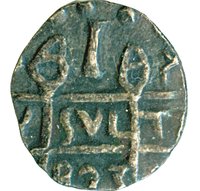
Within a vine wreath: "MENDOZA UN DECIMO" encircling the date 1823.
Inscription:
MENDOZA
1823
UN DECIMO
1823
UN DECIMO
Translation:
MENDOZA
1823
ONE TENTH
1823
ONE TENTH
Language: Spanish
Reverse
Description:
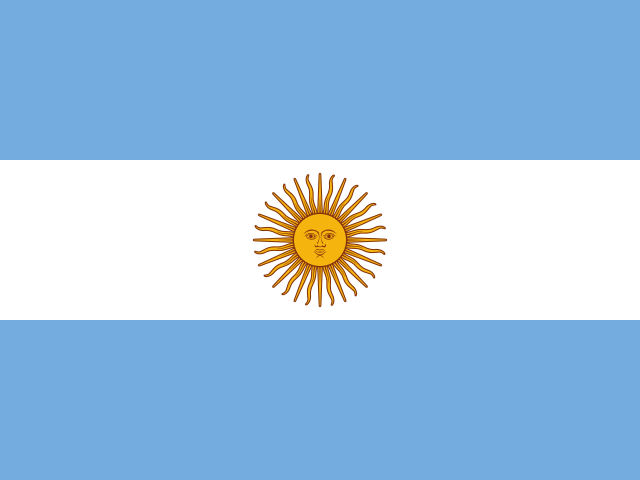
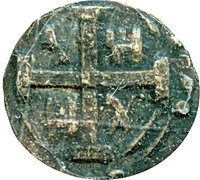
The national shield features a sun above and laurel branches tied with a ribbon below.
Edge
Plain
Mintings
| Year | Mint Mark | Mintage | Quality | Collection |
|---|---|---|---|---|
| 1823 | — | — |
Historical background
In 1823, Mendoza, like much of the newly independent United Provinces of the Río de la Plata, was grappling with a profound monetary crisis. The collapse of Spanish colonial authority had severed the region from the established silver peso, while successive revolutionary governments had resorted to printing vast quantities of paper money (billetes) to finance the Wars of Independence. This led to rampant inflation and a severe loss of public confidence in paper currency. By the early 1820s, the national paper peso had depreciated drastically against the old Spanish silver coin, creating a chaotic system of multiple, fluctuating exchange rates.
The situation in Mendoza was exacerbated by its specific economic and geographic position. As a key transit point for trade across the Andes to Chile, the province operated in a practical monetary duality. While the devalued paper money circulated for local transactions and government payments, much of its vital commercial life—especially the lucrative cattle and wine exports—relied on hard currency. Chilean silver pesos and gold coins, alongside the remaining Spanish silver, became the preferred mediums for significant trade, effectively creating a parallel economy. This scarcity of specie (hard coin) within Mendoza crippled larger commercial ventures and state finances.
Provincial authorities, under the governance of Pedro Molina, faced the immense challenge of stabilizing commerce and securing revenue. Their efforts were largely reactive, attempting to set official exchange rates between paper and silver to curb the worst abuses, but with limited success. The fundamental problem was a lack of centralized monetary authority and fiscal discipline at the national level. Consequently, Mendoza’s 1823 currency landscape was defined by instability: a depreciating and distrusted paper currency for daily use, a critical reliance on foreign and colonial specie for external trade, and a provincial government struggling to mediate between the two in a fragile post-war economy.
The situation in Mendoza was exacerbated by its specific economic and geographic position. As a key transit point for trade across the Andes to Chile, the province operated in a practical monetary duality. While the devalued paper money circulated for local transactions and government payments, much of its vital commercial life—especially the lucrative cattle and wine exports—relied on hard currency. Chilean silver pesos and gold coins, alongside the remaining Spanish silver, became the preferred mediums for significant trade, effectively creating a parallel economy. This scarcity of specie (hard coin) within Mendoza crippled larger commercial ventures and state finances.
Provincial authorities, under the governance of Pedro Molina, faced the immense challenge of stabilizing commerce and securing revenue. Their efforts were largely reactive, attempting to set official exchange rates between paper and silver to curb the worst abuses, but with limited success. The fundamental problem was a lack of centralized monetary authority and fiscal discipline at the national level. Consequently, Mendoza’s 1823 currency landscape was defined by instability: a depreciating and distrusted paper currency for daily use, a critical reliance on foreign and colonial specie for external trade, and a provincial government struggling to mediate between the two in a fragile post-war economy.
✨ Legendary