

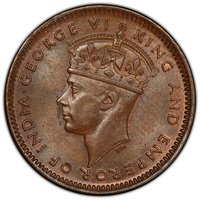
Obverse
Description:
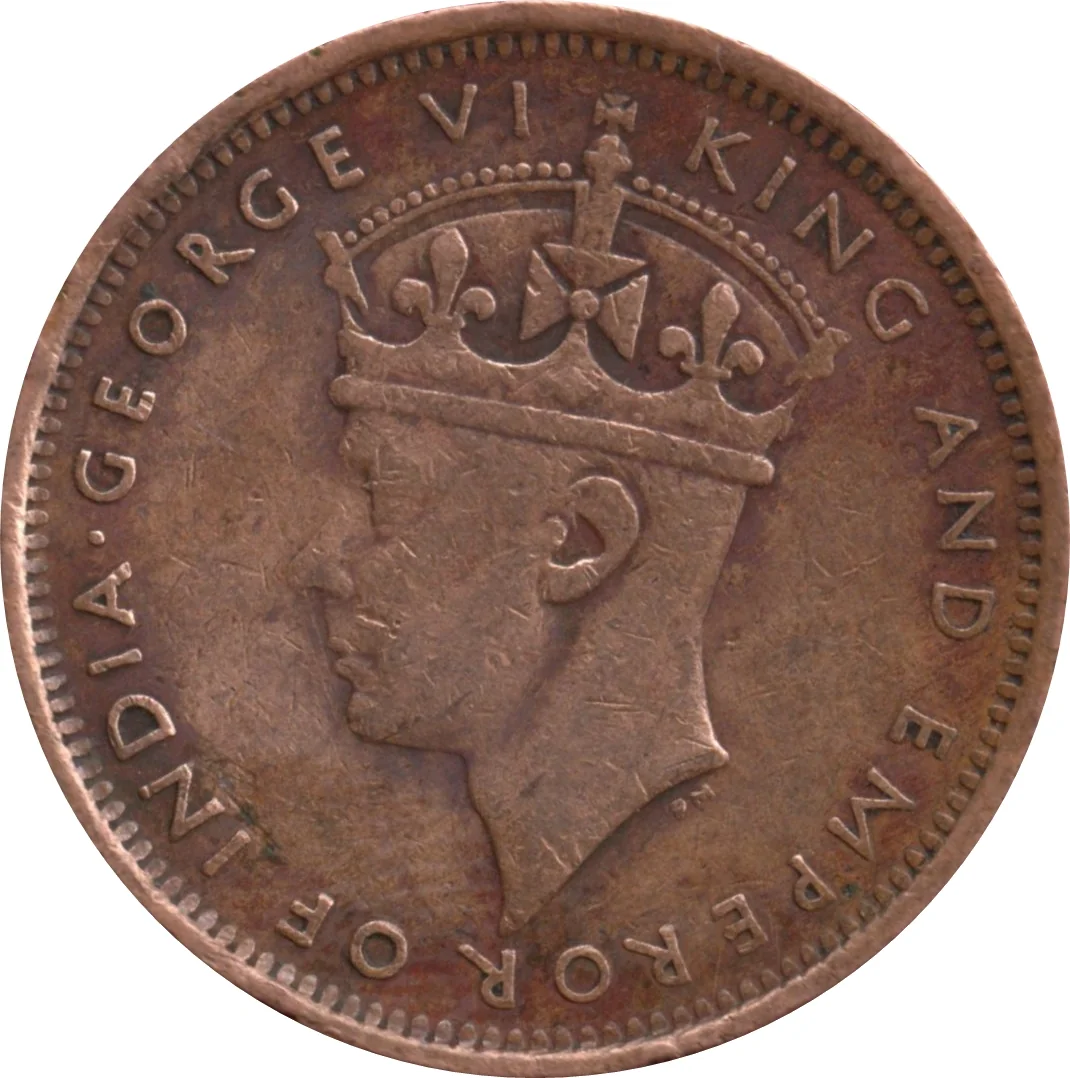
King George VI, facing left.
Inscription:
·GEORGE VI KING AND EMPEROR OF INDIA
PM
PM
Translation:
GEORGE VI KING AND EMPEROR OF INDIA
PM
PM
Script: Latin
Language: English
Engraver: Percy Metcalfe
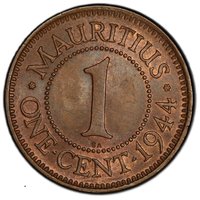
Reverse
Edge
Plain
Mints
| Name | Mark |
|---|---|
| Pretoria | SA |
Mintings
Historical background
In 1943, Mauritius was a British colony, and its currency situation was entirely dictated by the exigencies of the Second World War. The Mauritian rupee, established in 1877, remained the official unit of account, but its value and issuance were strictly controlled through a Currency Board system linked to sterling. The colony’s economy was heavily impacted by the war, with the vital sugar industry facing severe disruption to its export markets and shipping routes. This created inflationary pressures, as imports became scarce and expensive, while the need to finance local wartime expenditures increased the money supply.
To manage these pressures and prevent capital flight, Mauritius operated under strict exchange controls as part of the wider Sterling Area bloc. All foreign exchange earnings, primarily from sugar sales, were pooled in London, and access to foreign currency for imports was rationed. The Mauritius Currency Board ensured the rupee remained pegged to sterling at the fixed, pre-war rate of 1 rupee = 1 shilling 6 pence (or 13.33 rupees = £1). This peg provided stability but also meant the colony’s monetary policy was entirely subordinate to British needs, with currency issuance backed by sterling securities held in London.
Consequently, the currency situation in 1943 was one of constrained stability. The rupee was not freely convertible outside the Sterling Area, and its value was an administrative fact rather than a market-determined one. The system prioritized supporting the British war effort and maintaining financial order, but it did so at the cost of economic autonomy for Mauritius. The wartime controls and sterling link would define the island's monetary landscape long after the conflict ended, setting the stage for future debates about decimalization and central banking independence.
To manage these pressures and prevent capital flight, Mauritius operated under strict exchange controls as part of the wider Sterling Area bloc. All foreign exchange earnings, primarily from sugar sales, were pooled in London, and access to foreign currency for imports was rationed. The Mauritius Currency Board ensured the rupee remained pegged to sterling at the fixed, pre-war rate of 1 rupee = 1 shilling 6 pence (or 13.33 rupees = £1). This peg provided stability but also meant the colony’s monetary policy was entirely subordinate to British needs, with currency issuance backed by sterling securities held in London.
Consequently, the currency situation in 1943 was one of constrained stability. The rupee was not freely convertible outside the Sterling Area, and its value was an administrative fact rather than a market-determined one. The system prioritized supporting the British war effort and maintaining financial order, but it did so at the cost of economic autonomy for Mauritius. The wartime controls and sterling link would define the island's monetary landscape long after the conflict ended, setting the stage for future debates about decimalization and central banking independence.
🌱 Fairly Common