

Obverse
Description:
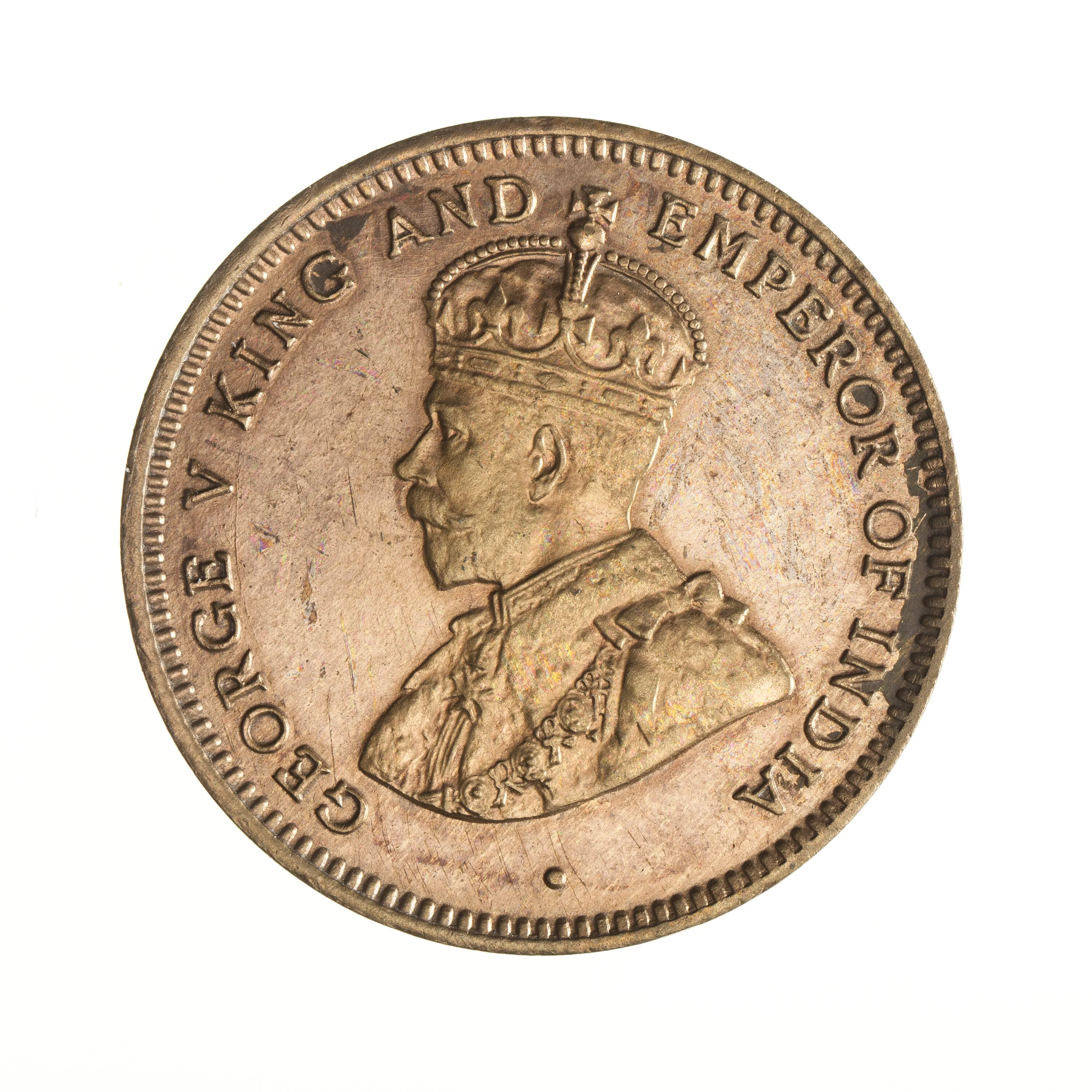
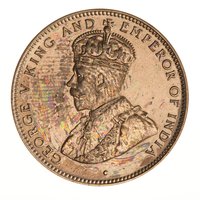
Portrait of King George V, facing left.
Inscription:
· GEORGE V KING AND EMPEROR OF INDIA
B.M.
B.M.
Translation:
GEORGE V KING AND EMPEROR OF INDIA
B.M.
B.M.
Script: Latin
Language: English
Engraver: Edgar Bertram MacKennal
Reverse
Edge
Plain
Mints
| Name | Mark |
|---|---|
| Royal Mint (Tower Hill) | — |
Mintings
| Year | Mint Mark | Mintage | Quality | Collection |
|---|---|---|---|---|
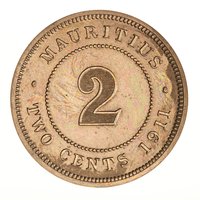
| 1911 | — | 1,000,000 | ||
| 1912 | — | 500,000 | ||
| 1917 | — | 500,000 | ||
| 1920 | — | 500,000 | ||
| 1921 | — | 500,000 | ||
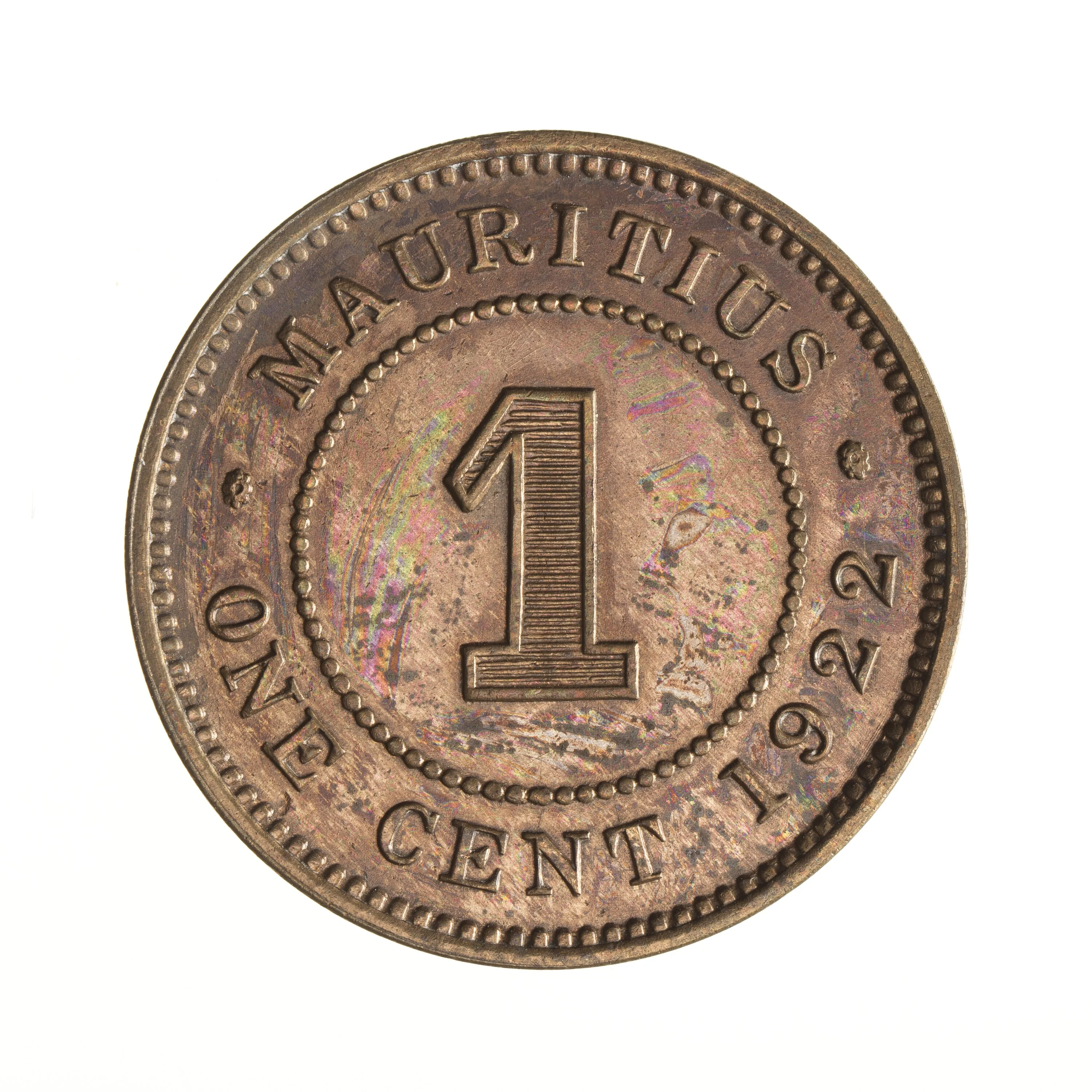
| 1922 | — | 1,800,000 | ||
| 1923 | — | 200,000 | ||
| 1924 | — | 200,000 |
Historical background
In 1911, the currency situation in Mauritius was firmly under the British colonial monetary system, having transitioned from the earlier French livre following the British takeover in 1810. The official currency was the Mauritian rupee, which was pegged to and directly interchangeable with British sterling at a fixed rate of 1 rupee = 1 shilling 6 pence (or 10 rupees = 1 pound). This sterling exchange standard ensured stability for international trade, primarily the all-important sugar exports to the United Kingdom and other markets, by eliminating exchange rate fluctuations with the imperial power.
The currency was issued by a private commercial institution, the Mauritius Commercial Bank (MCB), which held the government's note-issuing privilege. This meant that both government-issued silver coins and MCB-issued paper notes circulated as legal tender. While this system was generally stable, it tied the colony's money supply closely to its holdings of sterling reserves, limiting independent monetary policy. Furthermore, the reliance on a commercial bank for currency issuance was a point of occasional debate, reflecting concerns about the blend of private and public interests in the management of the island's money.
Economically, this period was one of consolidation after the abolition of slavery and the introduction of indentured labour, with sugar dominating the export economy. The fixed sterling link facilitated the predictable flow of capital and remittances. However, it also meant that Mauritius was vulnerable to economic shifts in Britain and the global gold standard. The year 1911 itself was quiet monetarily, but it sat on the precipice of significant change; the outbreak of World War I in 1914 would soon disrupt the gold standard and test the resilience of this colonial currency board-style arrangement.
The currency was issued by a private commercial institution, the Mauritius Commercial Bank (MCB), which held the government's note-issuing privilege. This meant that both government-issued silver coins and MCB-issued paper notes circulated as legal tender. While this system was generally stable, it tied the colony's money supply closely to its holdings of sterling reserves, limiting independent monetary policy. Furthermore, the reliance on a commercial bank for currency issuance was a point of occasional debate, reflecting concerns about the blend of private and public interests in the management of the island's money.
Economically, this period was one of consolidation after the abolition of slavery and the introduction of indentured labour, with sugar dominating the export economy. The fixed sterling link facilitated the predictable flow of capital and remittances. However, it also meant that Mauritius was vulnerable to economic shifts in Britain and the global gold standard. The year 1911 itself was quiet monetarily, but it sat on the precipice of significant change; the outbreak of World War I in 1914 would soon disrupt the gold standard and test the resilience of this colonial currency board-style arrangement.
🌟 Uncommon