

5 shillings – South Africa
Add to wishlist
South Africa
Context
Year: 1947
Issuer: South Africa
Ruler: George VI
Currency:
(1825—1961)
Demonetization: 31 March 1961
Total mintage: 305,600
Material
References
KM: #
Numista: #10629
Value
Bullion value: $55.06
Obverse
Description:
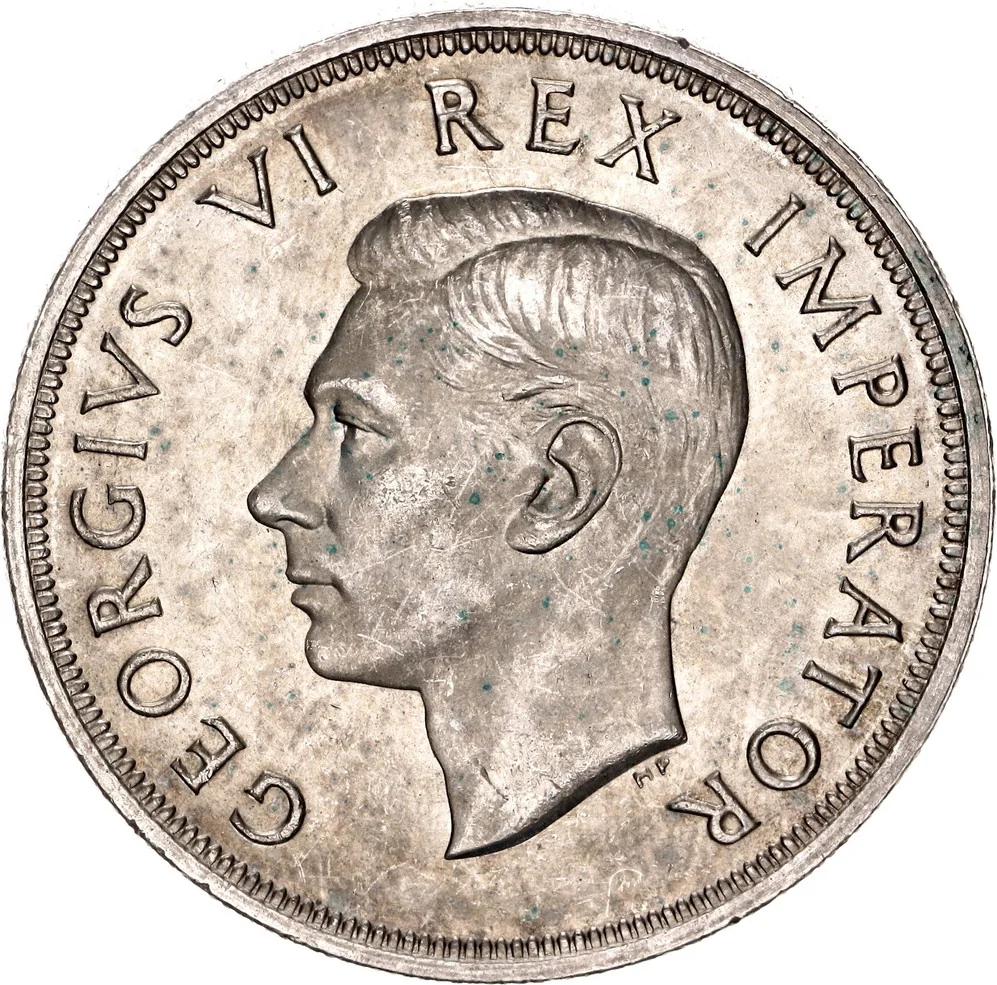
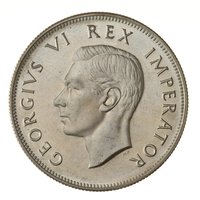
King George VI left-facing portrait, legend around, engraver's initials below.
Inscription:
GEORGIVS VI REX IMPERATOR
HP
HP
Translation:
George VI King Emperor
Script: Latin
Language: Latin
Engraver: Thomas Humphrey Paget
Reverse
Description:
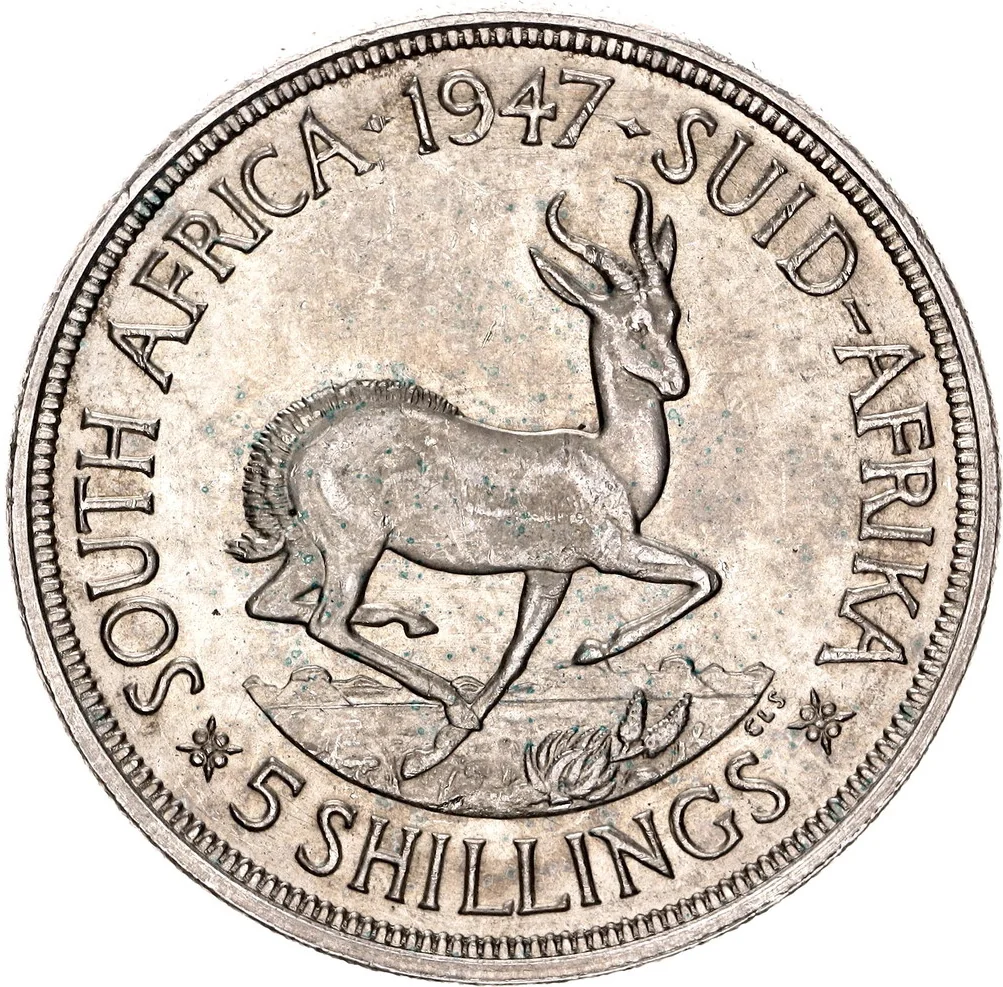
Springbok running right, surrounded by legend, date above, denomination below, engraver's initials at lower right.
Inscription:
SOUTH AFRICA·1947·SUID-AFRICA
CLS
5 SHILLINGS
CLS
5 SHILLINGS
Script: Latin
Engraver: Coert Laurens Steynberg
Edge
Reeded
Mintings
| Year | Mint Mark | Mintage | Quality | Collection |
|---|---|---|---|---|
| 1947 | — | 300,000 | ||
| 1947 | — | 5,600 | Proof |
Historical background
In 1947, South Africa's currency situation was defined by its position within the Sterling Area and the immediate aftermath of the Second World War. As a member of the Sterling Area, the South African pound was pegged to the British pound sterling, and its reserves were held predominantly in London. This arrangement facilitated trade with Britain, the country's dominant economic partner, but also tied South Africa's monetary policy and financial stability to the United Kingdom's economic fortunes. The post-war period saw a global shortage of U.S. dollars, and South Africa, like other Sterling Area nations, faced strict exchange controls to conserve hard currency and support the sterling's fixed exchange rate.
The year was particularly significant due to a major crisis of confidence. A massive current account deficit, driven by a surge in imports for post-war reconstruction and consumer goods, led to a rapid drain of gold and foreign exchange reserves. This was exacerbated by speculative capital outflows, as some investors feared a devaluation of the South African pound or sought opportunities outside the Sterling Area. By mid-1947, the reserve situation had become so dire that the government was forced to implement severe import restrictions and tighten exchange controls even further to avert a financial collapse and remain within the Sterling Area's rules.
These events of 1947 set the stage for a pivotal shift in South African economic policy. The crisis highlighted the vulnerabilities of dependency on sterling and intensified the debate about monetary sovereignty. It directly contributed to the victory of the National Party in the 1948 election, which campaigned on economic independence. The new government would subsequently move to establish a central bank (the South African Reserve Bank gained greater autonomy) and, in 1961, replace the South African pound with the rand, symbolizing a break from the sterling system and a move towards a managed currency aligned with the domestic economy and the nation's vast gold production.
The year was particularly significant due to a major crisis of confidence. A massive current account deficit, driven by a surge in imports for post-war reconstruction and consumer goods, led to a rapid drain of gold and foreign exchange reserves. This was exacerbated by speculative capital outflows, as some investors feared a devaluation of the South African pound or sought opportunities outside the Sterling Area. By mid-1947, the reserve situation had become so dire that the government was forced to implement severe import restrictions and tighten exchange controls even further to avert a financial collapse and remain within the Sterling Area's rules.
These events of 1947 set the stage for a pivotal shift in South African economic policy. The crisis highlighted the vulnerabilities of dependency on sterling and intensified the debate about monetary sovereignty. It directly contributed to the victory of the National Party in the 1948 election, which campaigned on economic independence. The new government would subsequently move to establish a central bank (the South African Reserve Bank gained greater autonomy) and, in 1961, replace the South African pound with the rand, symbolizing a break from the sterling system and a move towards a managed currency aligned with the domestic economy and the nation's vast gold production.
🌱 Common