

Peru
Context

Material
References
KM: #Click to copy to clipboard226
Numista: #16385
Value
Exchange value: 0.10 PEH
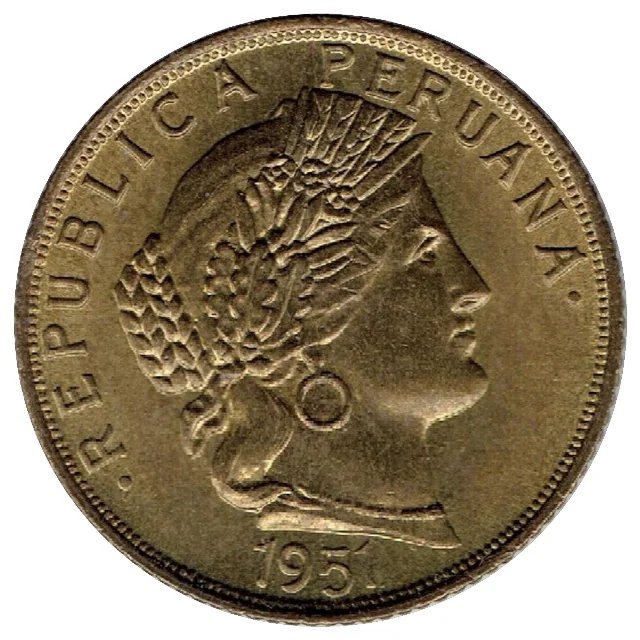
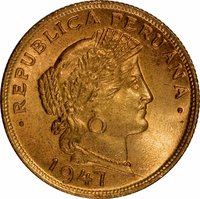
Obverse
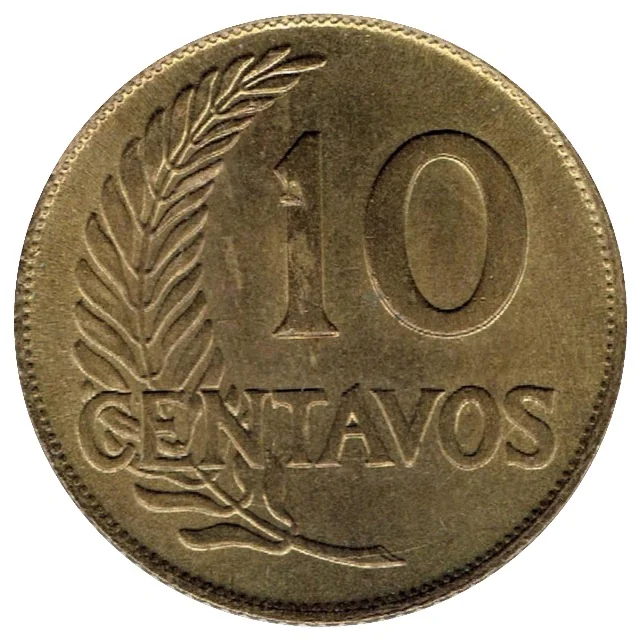
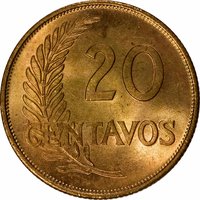
Reverse
Edge
Reeded
Mintings
| Year | Mint Mark | Mintage | Quality | Collection |
|---|---|---|---|---|
| 1947 | — | 6,806,000 | ||
| 1948 | — | 5,771,000 | ||
| 1949 | — | 4,730,000 | ||
| 1950 | — | 5,298,000 | ||
| 1950 | AFP | — | ||
| 1951 | — | 7,324,000 | ||
| 1951 | AFP | — |
Historical background
In 1947, Peru's currency situation was characterized by mounting instability and inflationary pressures, largely a legacy of the economic policies pursued during World War II. The government of President José Luis Bustamante y Rivero inherited a complex financial landscape. During the war, Peru had accumulated substantial foreign exchange reserves by exporting raw materials to Allied nations. However, this influx of dollars was met with strict import controls, leading to a pent-up domestic demand for foreign goods and a growing black market for U.S. dollars, where the sol traded at a significant premium over the official rate.
The core of the problem was a multi-tiered, overvalued exchange rate system. The government maintained an official fixed rate, but a complex web of preferential rates for different transactions created distortions and encouraged corruption. This overvaluation made Peruvian exports less competitive just as global prices for key commodities like copper and cotton began to soften post-war, putting pressure on the balance of payments. Simultaneously, Bustamante y Rivero’s administration, facing political pressures, increased public spending and money supply, fueling domestic inflation which further eroded the sol's real value.
By late 1947, the currency regime was unsustainable. Foreign reserves were being rapidly depleted as the Central Bank intervened to support the official rate, while economic growth stalled. The situation created intense conflict between the government, which sought to maintain controls, and export-oriented business elites who demanded devaluation and liberalization. This economic crisis became a key factor in the political instability that culminated in the 1948 military coup led by General Manuel A. Odría, who would subsequently implement a sharp devaluation and move toward a more market-oriented exchange policy.
The core of the problem was a multi-tiered, overvalued exchange rate system. The government maintained an official fixed rate, but a complex web of preferential rates for different transactions created distortions and encouraged corruption. This overvaluation made Peruvian exports less competitive just as global prices for key commodities like copper and cotton began to soften post-war, putting pressure on the balance of payments. Simultaneously, Bustamante y Rivero’s administration, facing political pressures, increased public spending and money supply, fueling domestic inflation which further eroded the sol's real value.
By late 1947, the currency regime was unsustainable. Foreign reserves were being rapidly depleted as the Central Bank intervened to support the official rate, while economic growth stalled. The situation created intense conflict between the government, which sought to maintain controls, and export-oriented business elites who demanded devaluation and liberalization. This economic crisis became a key factor in the political instability that culminated in the 1948 military coup led by General Manuel A. Odría, who would subsequently implement a sharp devaluation and move toward a more market-oriented exchange policy.
🌱 Common