

10 Paise – India
Circulating commemorative coins
Commemoration: FAO - Planned Families
India
Context

Material
References
KM: #Click to copy to clipboard28
Numista: #1637
Value
Exchange value: 0.10 INR = $0.00
Inflation-adjusted value: 4.04 INR
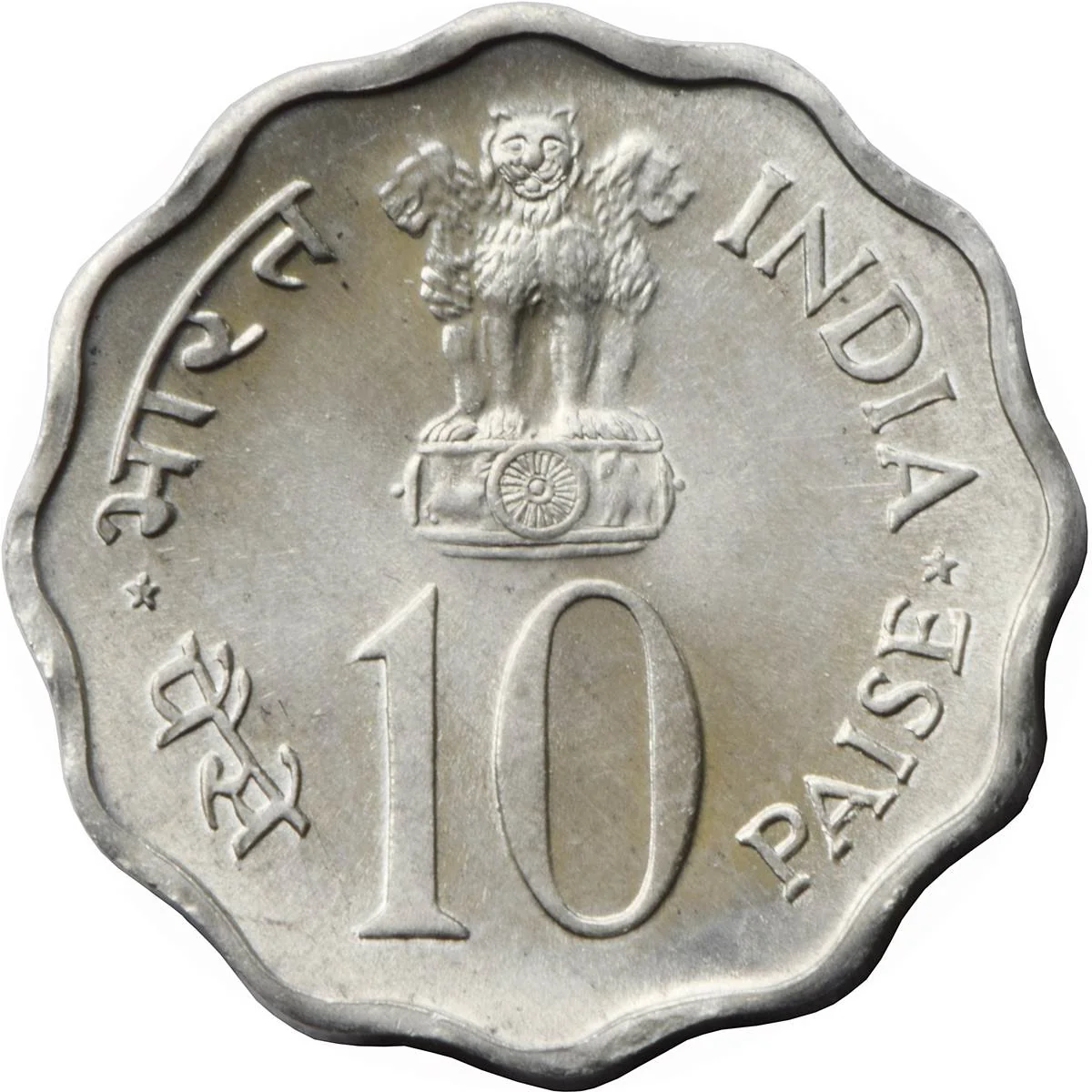
Obverse
Description:
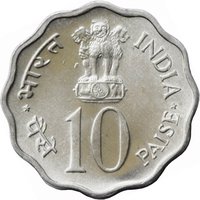
Asoka capital with lion, value beneath.
Inscription:
भारत INDIA
पैसे 10 PAISE
पैसे 10 PAISE
Translation:
India
Ten Paise
Ten Paise
Scripts: Devanagari, Latin
Reverse
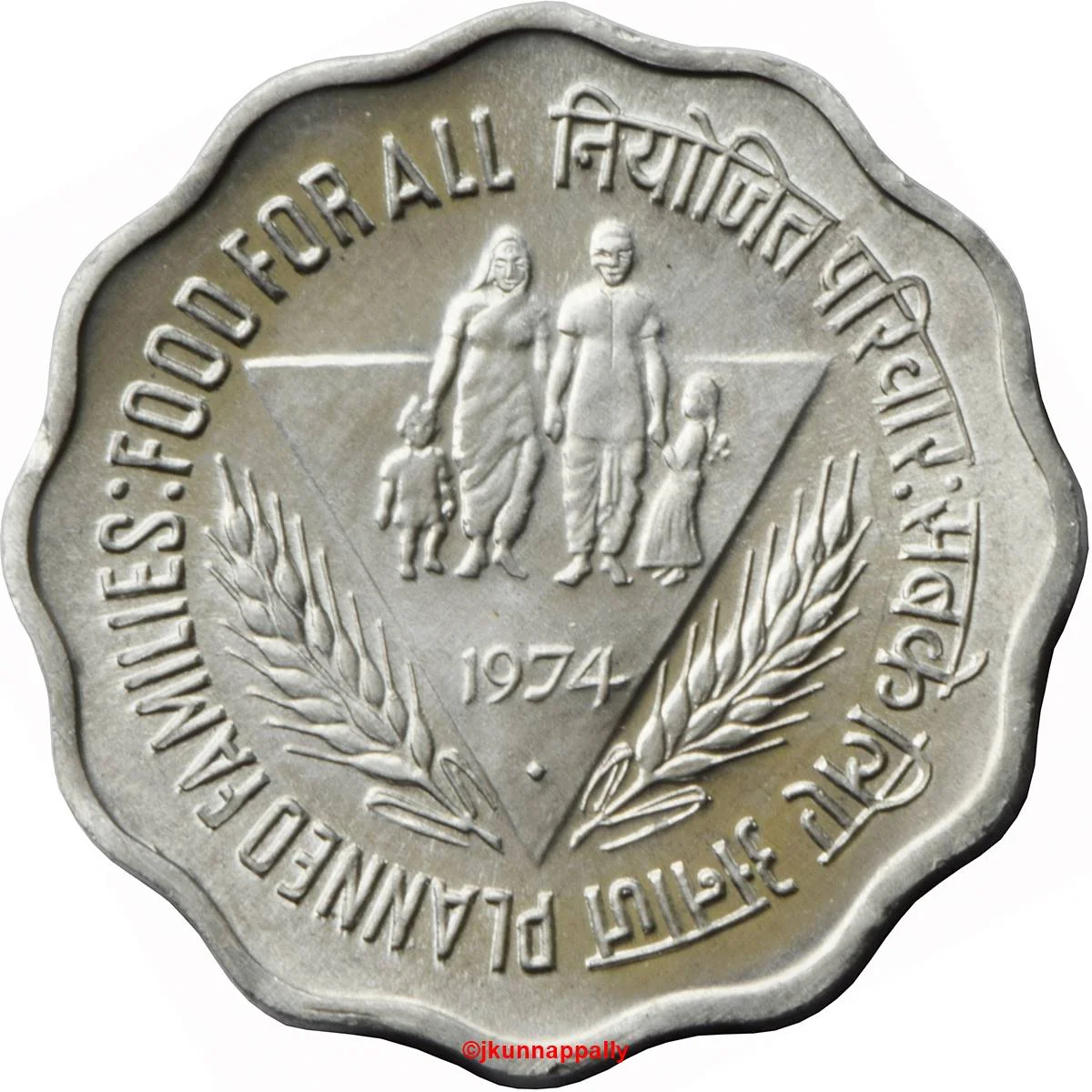
Description:
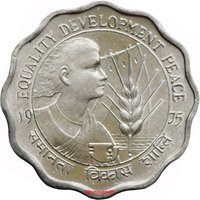
Family over date in triangle, flanked by grain sprigs. Mintmarks: ♦ or B = Mumbai, none = Calcutta Proof, * = Hyderabad.
Inscription:
PLANNED FAMILIES:FOOD FOR ALL
नियोजित परिवार:सबको लिए अनाज
1974
नियोजित परिवार:सबको लिए अनाज
1974
Translation:
Planned Families: Food For All
Planned Families: Food For All
1974
Planned Families: Food For All
1974
Scripts: Devanagari, Latin
Edge
Plain
Categories
| Symbols> Coat of Arms |
| Organization> FAO |
Mintings
| Year | Mint Mark | Mintage | Quality | Collection |
|---|---|---|---|---|
| 1974 | * | 10,010,000 | ||
| 1974 | ♦ | 146,070,000 | ||
| 1974 | B | — | Proof | |
| 1974 | — | 168,500,000 |
Historical background
In 1974, India's currency situation was deeply intertwined with the nation's broader economic crisis, characterized by high inflation, stagnant growth, and severe fiscal pressures. The period followed the 1971 war with Pakistan, the 1973 global oil shock, and successive monsoon failures, which collectively strained the economy. Inflation soared to over 20%, eroding the rupee's purchasing power and creating significant hardship for the populace. The government's expansive deficit financing—printing money to fund its budget—further fueled inflationary fires, while foreign exchange reserves remained perilously low, limiting the ability to import essential goods.
The Indian rupee, pegged to the British pound until 1971 and then to a basket of currencies, faced sustained pressure. However, unlike a dramatic devaluation, the official exchange rate was maintained through stringent capital controls and a complex system of import licensing. The real adjustment occurred domestically through high inflation rather than a formal external devaluation of the rupee. This period underscored the limitations of the "License Raj," where administrative controls, rather than market mechanisms, managed the currency and economy, often leading to shortages and a thriving black market for foreign exchange.
Overall, the currency situation in 1974 reflected a economy in distress, with the rupee's stability being artificially preserved at the cost of internal price stability and growth. It set the stage for the political and economic turmoil of the mid-1970s, culminating in the Emergency of 1975. The experience highlighted the urgent need for structural reforms, though such significant liberalization would not begin in earnest until the balance of payments crisis of 1991.
The Indian rupee, pegged to the British pound until 1971 and then to a basket of currencies, faced sustained pressure. However, unlike a dramatic devaluation, the official exchange rate was maintained through stringent capital controls and a complex system of import licensing. The real adjustment occurred domestically through high inflation rather than a formal external devaluation of the rupee. This period underscored the limitations of the "License Raj," where administrative controls, rather than market mechanisms, managed the currency and economy, often leading to shortages and a thriving black market for foreign exchange.
Overall, the currency situation in 1974 reflected a economy in distress, with the rupee's stability being artificially preserved at the cost of internal price stability and growth. It set the stage for the political and economic turmoil of the mid-1970s, culminating in the Emergency of 1975. The experience highlighted the urgent need for structural reforms, though such significant liberalization would not begin in earnest until the balance of payments crisis of 1991.
🌱 Very Common