

50 centavos (Discovery) – Portuguese Guinea
Add to wishlist
Circulating commemorative coins
Commemoration: 500th Anniversary of Discovery
Guinea-Bissau
Context
Year: 1946
Country: Guinea-Bissau
Issuer: Portuguese Guinea
Period:
(1910—1951)
Currency:
(1914—1975)
Demonetized: Yes
Material
References
KM: #
Numista: #10606
Obverse
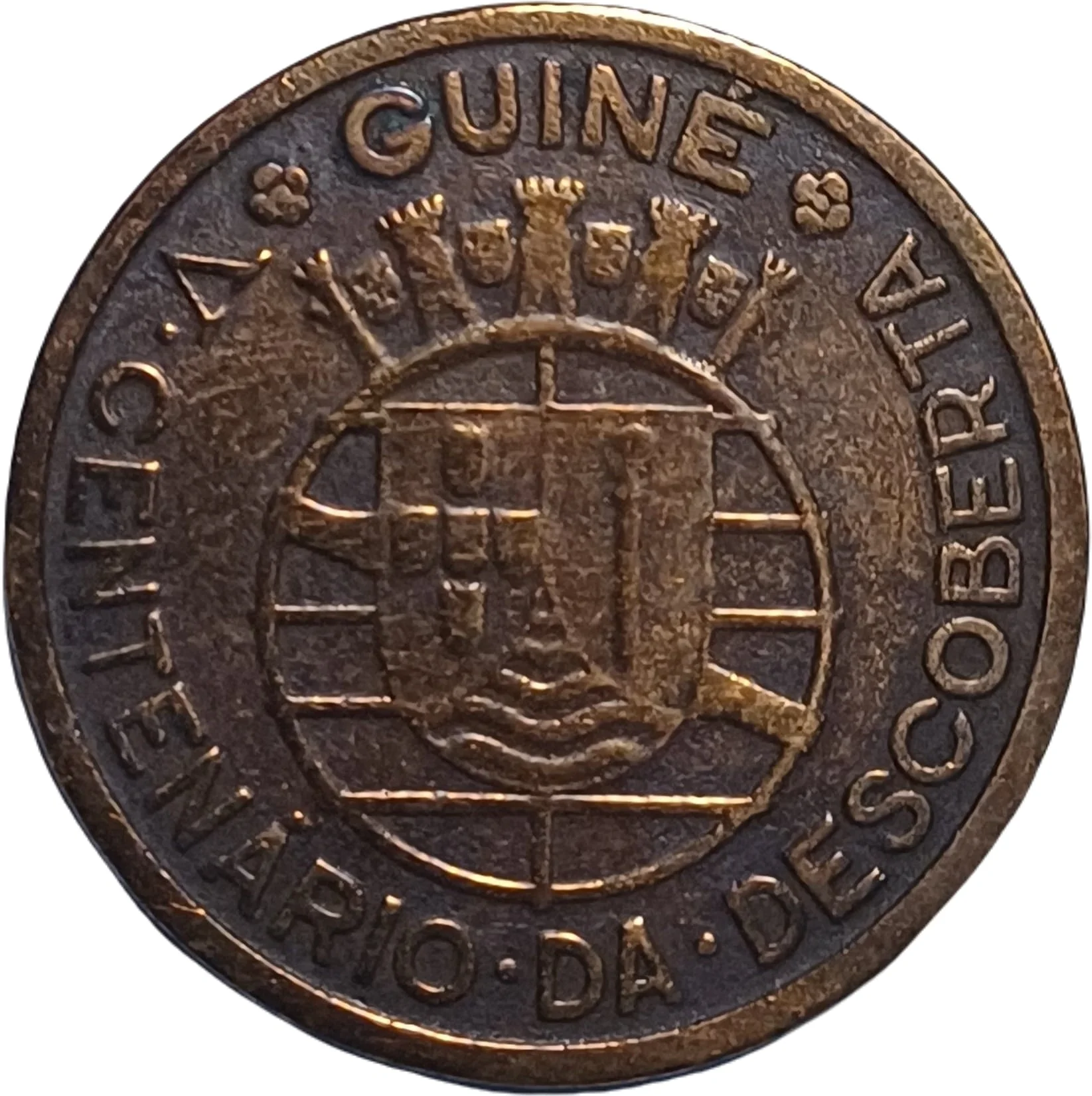
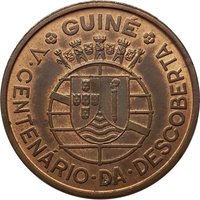
Description:
Heraldic emblem
Inscription:
GUINÉ
V·CENTENÁRIO·DA·DESCOBERTA
V·CENTENÁRIO·DA·DESCOBERTA
Translation:
Guinea
Fifth Centenary of the Discovery
Fifth Centenary of the Discovery
Script: Latin
Language: Portuguese
Reverse
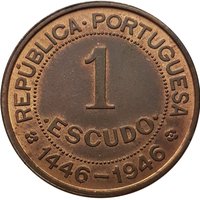
Description:
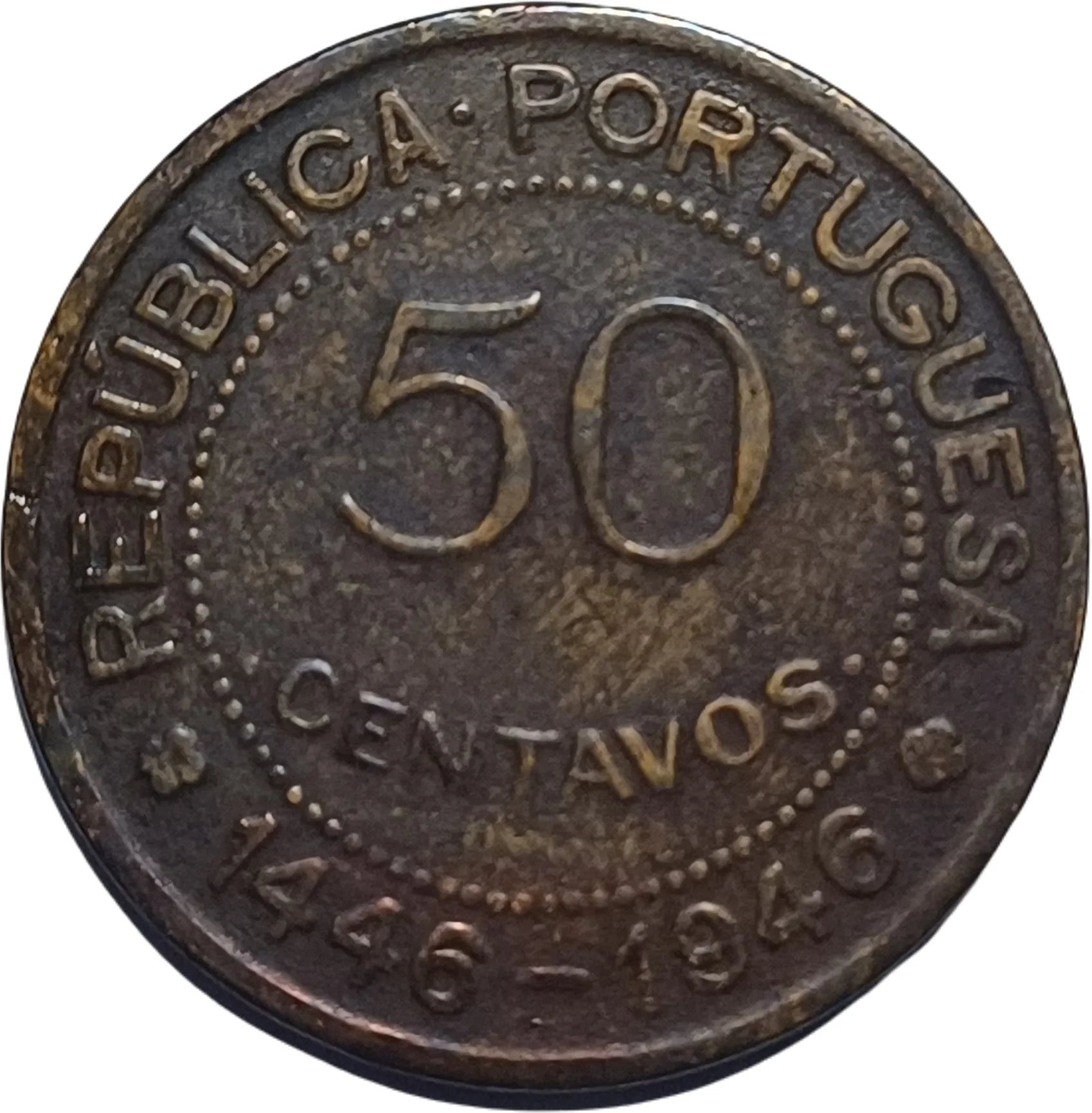
Face value centered, dates encircling.
Inscription:
REPÚBLICA·PORTUGUESA
50
CENTAVOS
1446-1946
50
CENTAVOS
1446-1946
Translation:
PORTUGUESE REPUBLIC
50
CENTS
1446-1946
50
CENTS
1446-1946
Script: Latin
Language: Portuguese
Edge
Plain
Categories
| Symbols> Coat of Arms |
Mints
| Name | Mark |
|---|---|
| Imprensa Nacional - Casa da Moeda | — |
Mintings
| Year | Mint Mark | Mintage | Quality | Collection |
|---|---|---|---|---|
| 1946 | — | — |
Historical background
In 1946, Portuguese Guinea (present-day Guinea-Bissau) operated under a currency system fully integrated into Portugal’s colonial monetary framework. The official currency was the Portuguese Guinea escudo, which had replaced the real in 1914 and was at parity with the metropolitan Portuguese escudo. This system was designed to tightly bind the colony’s economy to Lisbon, facilitating trade and financial control. Banknotes and coins were issued specifically for the colony by the Banco Nacional Ultramarino (BNU), which acted as the central bank for Portugal's overseas territories. These notes, though legally distinct, were interchangeable with those of metropolitan Portugal, ensuring a unified monetary zone.
The economy was overwhelmingly agrarian and subsistence-based, with a limited cash sector centered on the export of key commodities like peanuts, palm products, and timber. The circulation of currency was largely confined to the administrative capital of Bissau, other coastal towns, and areas surrounding Portuguese trading posts (feitorias). For the vast majority of the rural population, barter and traditional forms of exchange remained prevalent. Furthermore, the monetary economy was stratified along racial and social lines, with Portuguese settlers, colonial administrators, and a small urbanized African elite primarily engaged in cash transactions.
This formal currency situation, however, masked underlying economic fragility and discontent. The fixed exchange system and BNU's policies primarily served Portuguese commercial interests, often to the detriment of local producers. Additionally, the escudo's value and supply were entirely dictated by Lisbon, leaving the colony with no monetary autonomy. While not yet at a crisis point in 1946, this centralized control was part of a broader structure of economic exploitation that would fuel growing anti-colonial sentiment in the decades that followed, culminating in the armed struggle for independence launched in 1963.
The economy was overwhelmingly agrarian and subsistence-based, with a limited cash sector centered on the export of key commodities like peanuts, palm products, and timber. The circulation of currency was largely confined to the administrative capital of Bissau, other coastal towns, and areas surrounding Portuguese trading posts (feitorias). For the vast majority of the rural population, barter and traditional forms of exchange remained prevalent. Furthermore, the monetary economy was stratified along racial and social lines, with Portuguese settlers, colonial administrators, and a small urbanized African elite primarily engaged in cash transactions.
This formal currency situation, however, masked underlying economic fragility and discontent. The fixed exchange system and BNU's policies primarily served Portuguese commercial interests, often to the detriment of local producers. Additionally, the escudo's value and supply were entirely dictated by Lisbon, leaving the colony with no monetary autonomy. While not yet at a crisis point in 1946, this centralized control was part of a broader structure of economic exploitation that would fuel growing anti-colonial sentiment in the decades that followed, culminating in the armed struggle for independence launched in 1963.
🌱 Common