

10 Paise – India
Circulating commemorative coins
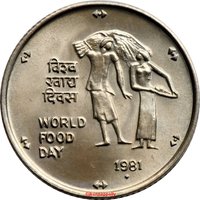
Commemoration: FAO - World Food Day
India
Context

Material
References
KM: #Click to copy to clipboard36
Numista: #1636
Value
Exchange value: 0.10 INR = $0.00
Inflation-adjusted value: 2.44 INR
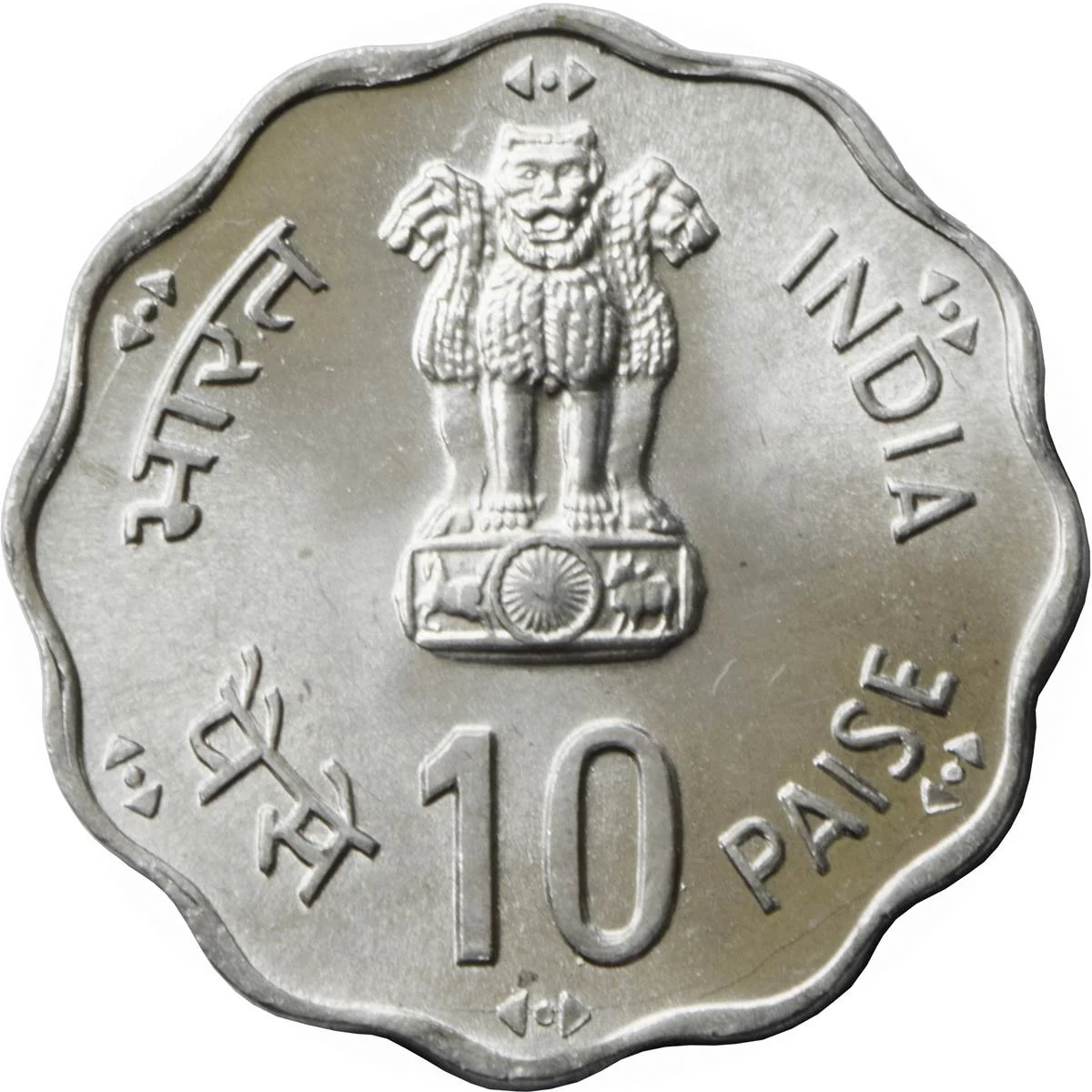
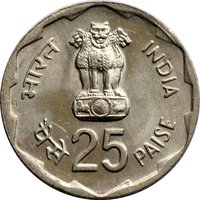
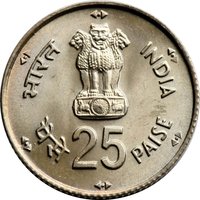
Obverse
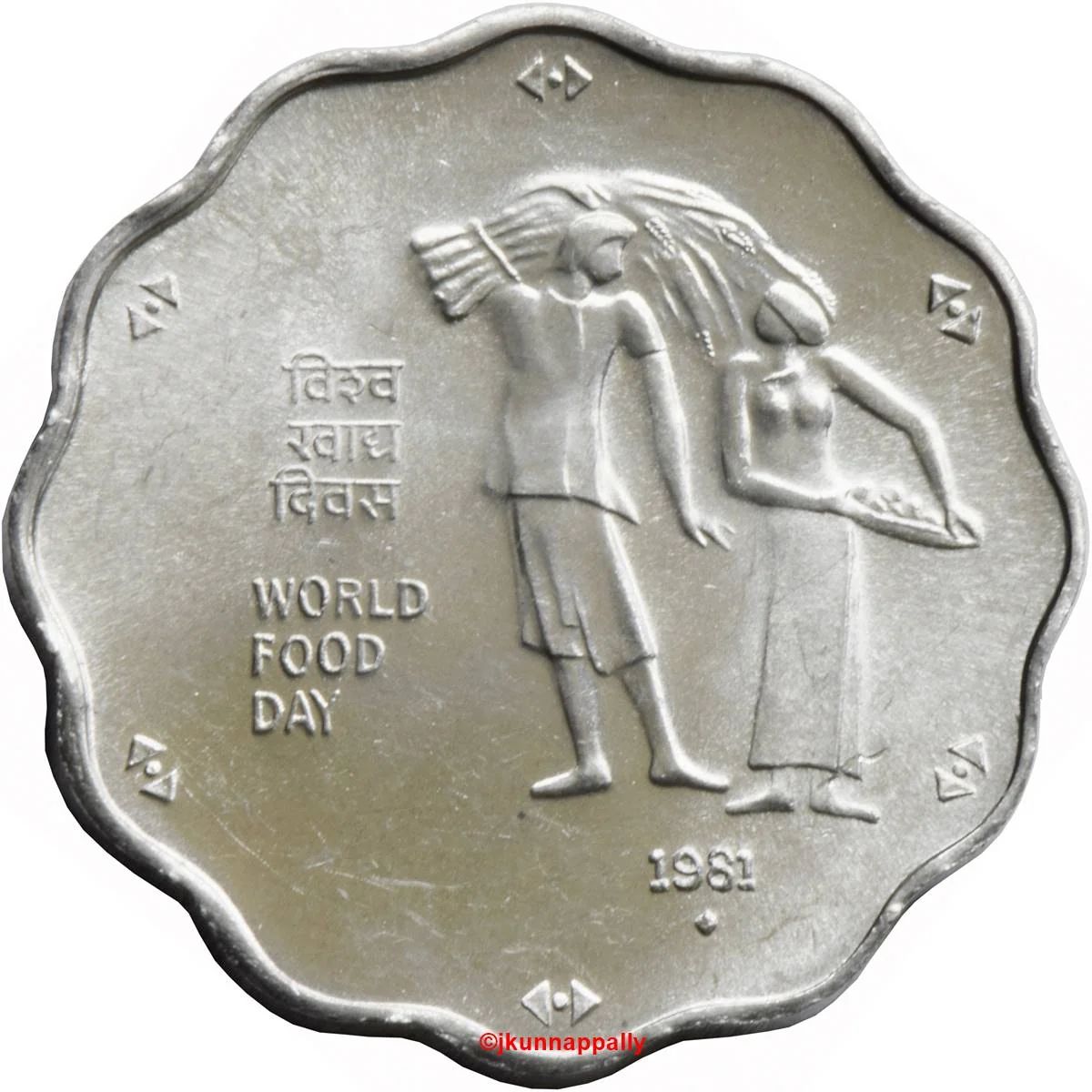
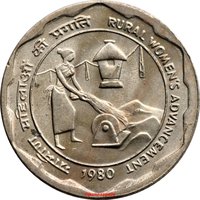
Reverse
Edge
Plain
Categories
| Organization> FAO |
Mintings
| Year | Mint Mark | Mintage | Quality | Collection |
|---|---|---|---|---|
| 1981 | — | 33,930,000 | ||
| 1981 | ♦ | 83,280,000 | ||
| 1981 | B | — | Proof |
Historical background
In 1981, India's currency situation was characterised by a tightly controlled and complex exchange rate regime under the broader framework of a planned economy. The Indian Rupee (INR) was pegged to a basket of currencies of its major trading partners, though the composition and weights were not publicly disclosed by the Reserve Bank of India (RBI). This managed peg aimed to provide stability but often led to an overvaluation of the rupee, which, combined with stringent import restrictions and capital controls, perpetuated a chronic balance of payments pressure. The external sector was fragile, with foreign exchange reserves being perilously low, often covering only a few weeks of imports, which constrained economic policy and left the economy vulnerable to external shocks.
The decade began under the shadow of the second oil shock of 1979, which severely worsened India's terms of trade and inflated its import bill. While worker remittances from the Gulf region provided a crucial inflow of foreign exchange, the fundamental structural issues remained. The government and the RBI maintained a multi-tier exchange rate system, including a dominant official rate and a limited, legalised parallel market for certain transactions (like the Hundi market), which created distortions. The emphasis was on conservation of scarce foreign exchange through extensive licensing (the "Licence Raj") rather than on achieving a market-driven equilibrium for the rupee.
Overall, the currency situation in 1981 reflected a system straining against the limits of inward-looking economic policies. The overvalued exchange rate acted as a disincentive to exports while encouraging smuggling and black-market currency dealings. This environment set the stage for the gradual and cautious liberalisation measures that would follow later in the 1980s, culminating in the major balance of payments crisis and subsequent landmark economic reforms of 1991, which dismantled the pegged system and moved India towards a market-determined exchange rate.
The decade began under the shadow of the second oil shock of 1979, which severely worsened India's terms of trade and inflated its import bill. While worker remittances from the Gulf region provided a crucial inflow of foreign exchange, the fundamental structural issues remained. The government and the RBI maintained a multi-tier exchange rate system, including a dominant official rate and a limited, legalised parallel market for certain transactions (like the Hundi market), which created distortions. The emphasis was on conservation of scarce foreign exchange through extensive licensing (the "Licence Raj") rather than on achieving a market-driven equilibrium for the rupee.
Overall, the currency situation in 1981 reflected a system straining against the limits of inward-looking economic policies. The overvalued exchange rate acted as a disincentive to exports while encouraging smuggling and black-market currency dealings. This environment set the stage for the gradual and cautious liberalisation measures that would follow later in the 1980s, culminating in the major balance of payments crisis and subsequent landmark economic reforms of 1991, which dismantled the pegged system and moved India towards a market-determined exchange rate.
🌱 Very Common