

1 lats – Latvia
Add to wishlist
Latvia
Context
Material
Diameter: 21.75 mm
Weight: 4.8 g
Thickness: 1.8 mm
Shape: Round
Composition: Copper-nickel
Technique: Milled
Alignment: Medal alignment
flip
References
KM: #
Numista: #16280
Value
Exchange value: 1 LVL
Inflation-adjusted value: 1.56 LVL
Obverse
Description:
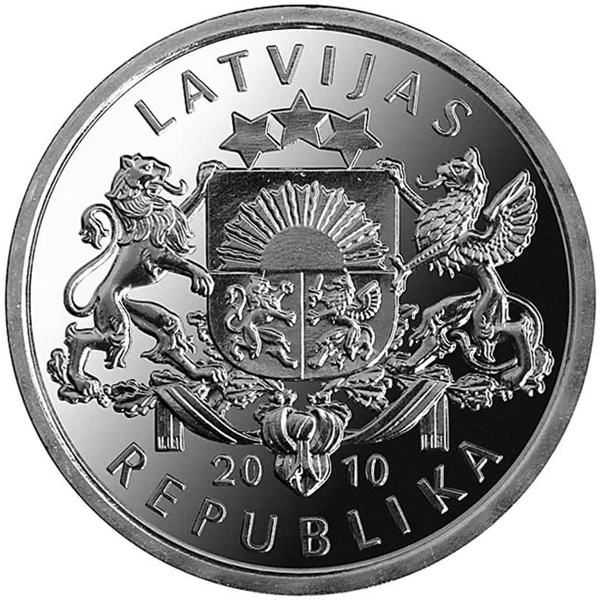
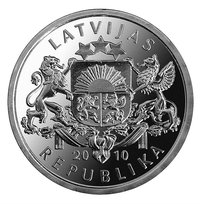
The Latvian coat of arms with "2010" below is centered, with "LATVIJAS" arched above and "REPUBLIKA" arched below.
Inscription:
LATVIJAS
20 10
REPUBLIKA
20 10
REPUBLIKA
Translation:
REPUBLIC OF LATVIA
20 10
20 10
Script: Latin
Language: Latvian
Engraver: Jānis Strupulis
Designer: Edgars Folks
Reverse
Description:
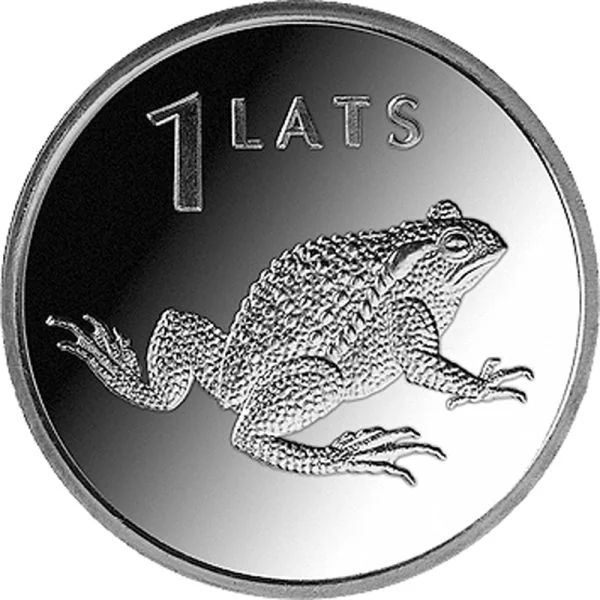
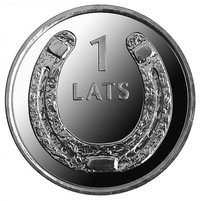
A central toad with "1 LATS" above.
Inscription:
1 LATS
Script: Latin
Engraver: Jānis Strupulis
Designer: Edgars Folks
Edge
Two inscriptions LATVIJAS BANKA (Bank of Latvia), separated by rhombic dots.
Legend:
LATVIJAS BANKA ♦ LATVIJAS BANKA ♦
Translation:
LATVIJAS BANKA ♦ LATVIJAS BANKA ♦
Language: Latvian
Mints
| Name | Mark |
|---|---|
| Berlin | — |
Mintings
| Year | Mint Mark | Mintage | Quality | Collection |
|---|---|---|---|---|
| 2010 | — | 1,000,000 |
Historical background
In 2010, Latvia was in the final phase of a severe economic and currency crisis, navigating the aftermath of the 2008-2009 global financial meltdown which had hit the small, open economy particularly hard. The country had experienced a dramatic GDP contraction of over 20% between 2008 and 2009, one of the deepest recessions in the world. Throughout this period, the government maintained a strict peg of the national currency, the Latvian lats (LVL), to the euro, a cornerstone of its economic policy since 2005 aimed at eventual Eurozone accession. This commitment to the fixed exchange rate was unwavering, despite immense pressure that included speculative attacks and the need for a €7.5 billion international bailout led by the EU and IMF in late 2008.
The government's strategy, often termed "internal devaluation," was a painful alternative to devaluing the lats. It involved severe austerity measures—deep cuts to public sector wages and pensions, tax increases, and radical reductions in government spending—to restore competitiveness and adjust the economy without breaking the peg. This approach was politically and socially difficult, sparking significant public protest, but it was deemed essential to maintain the path toward euro adoption. By 2010, these harsh measures were beginning to show results; the economy stabilized, the current account deficit narrowed, and international confidence slowly returned, setting the stage for a fragile recovery.
Consequently, the currency situation in 2010 was one of tense stability. The lats peg held firm, successfully defended by the Bank of Latvia through interventions and supported by the conditional bailout funds. The year marked a turning point from crisis management to preparation for Eurozone integration, with the government formally applying to join the ERM II mechanism (the "euro waiting room") in March 2010. This move signaled Latvia's unwavering commitment to replacing the lats with the euro, a goal ultimately achieved on January 1, 2014, with the crisis of 2008-2010 forming the brutal proving ground for that eventual transition.
The government's strategy, often termed "internal devaluation," was a painful alternative to devaluing the lats. It involved severe austerity measures—deep cuts to public sector wages and pensions, tax increases, and radical reductions in government spending—to restore competitiveness and adjust the economy without breaking the peg. This approach was politically and socially difficult, sparking significant public protest, but it was deemed essential to maintain the path toward euro adoption. By 2010, these harsh measures were beginning to show results; the economy stabilized, the current account deficit narrowed, and international confidence slowly returned, setting the stage for a fragile recovery.
Consequently, the currency situation in 2010 was one of tense stability. The lats peg held firm, successfully defended by the Bank of Latvia through interventions and supported by the conditional bailout funds. The year marked a turning point from crisis management to preparation for Eurozone integration, with the government formally applying to join the ERM II mechanism (the "euro waiting room") in March 2010. This move signaled Latvia's unwavering commitment to replacing the lats with the euro, a goal ultimately achieved on January 1, 2014, with the crisis of 2008-2010 forming the brutal proving ground for that eventual transition.
🌱 Common