

30 euro – Slovenia
Add to wishlist
Non-circulating coins
Commemoration: World Ski Jumping Championships, Planica
Slovenia
Context
Material
References
KM: #
Numista: #16239
Value
Exchange value: 30 EUR
Bullion value: $35.45
Inflation-adjusted value: 42.94 EUR
Obverse
Description:
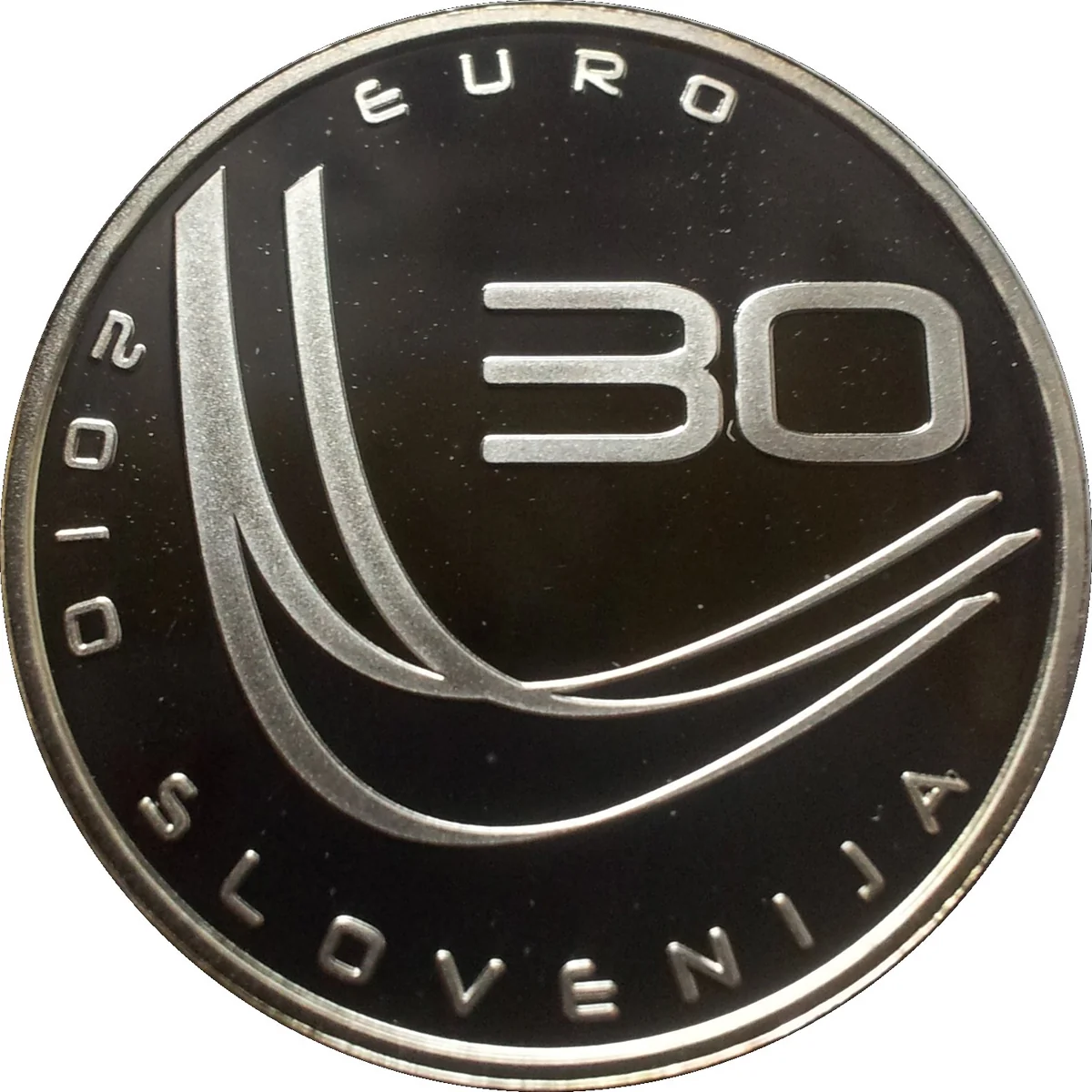
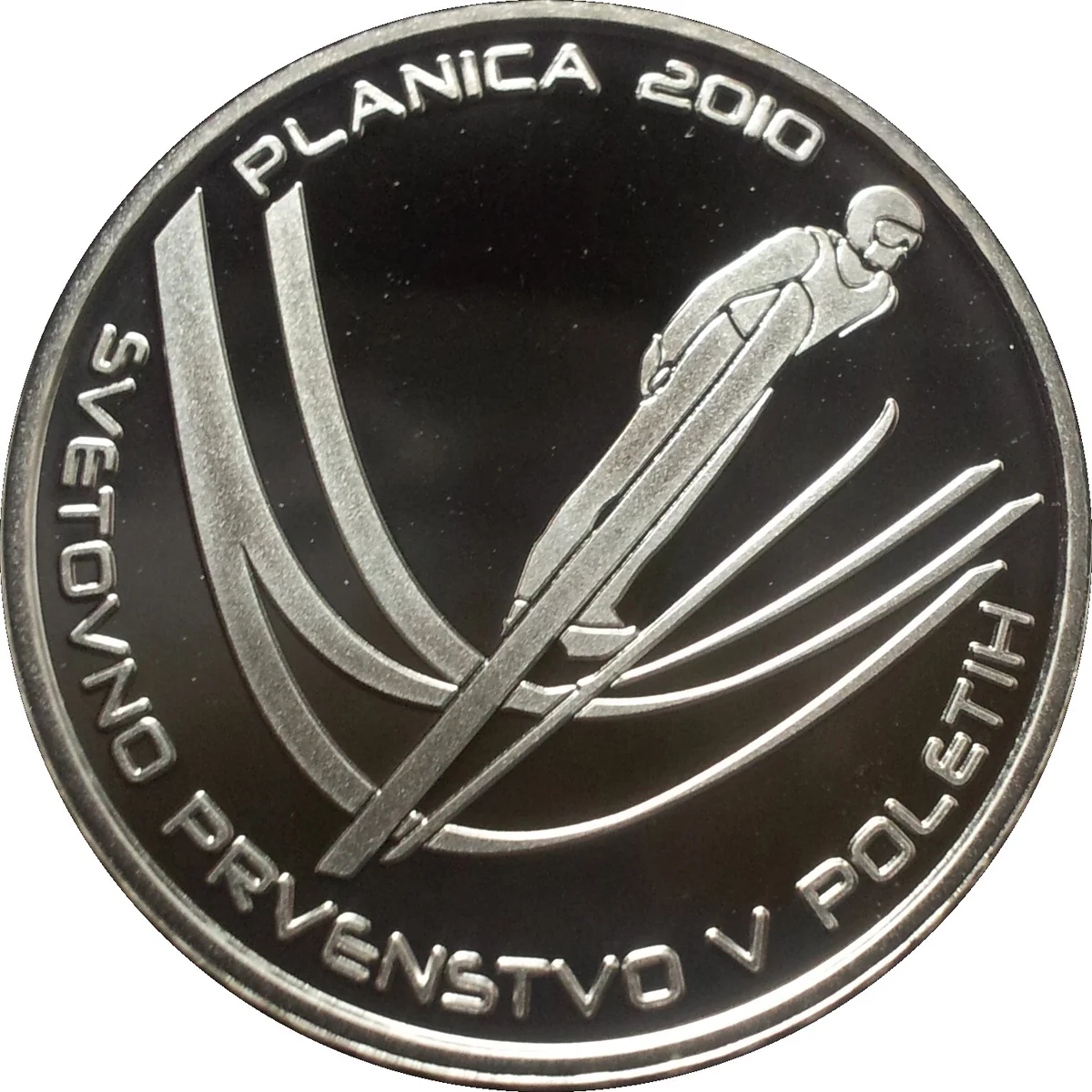
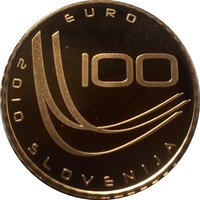
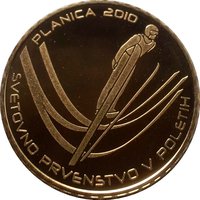
Planica's famous events and world records have elevated both Slovenia's sporting reputation and its global profile, prompting the issuance of commemorative coins for the 21st World Ski Championships. The coins feature a stylized takeoff ramp transforming into lifting winds on the obverse, with a ski jumper hovering over this repeated motif on the reverse.
Inscription:
EURO 30
2010 SLOVENIJA
2010 SLOVENIJA
Translation:
EURO 30
2010 SLOVENIA
2010 SLOVENIA
Script: Latin
Designer: Gorazd Učakar
Reverse
Edge
Mints
| Name | Mark |
|---|---|
| Mint of Finland | — |
Mintings
| Year | Mint Mark | Mintage | Quality | Collection |
|---|---|---|---|---|
| 2010 | — | 7,000 | Proof |
Historical background
In 2010, Slovenia was a member of the European Union but had not yet adopted the euro as its national currency. It was operating under the "third stage" of European Economic and Monetary Union (EMU), having entered the EU's Exchange Rate Mechanism II (ERM II) in June 2004. This meant the Slovenian tolar (SIT) was pegged to the euro with a central rate of 239.64 tolars to the euro, and its value was allowed to fluctuate only within a narrow band of ±15%. This stable exchange rate regime was a crucial prerequisite for the planned adoption of the euro, which had already been successfully achieved by Slovenia on 1 January 2007.
Therefore, by 2010, the currency situation was one of post-transition stability. Slovenia had been a full member of the eurozone for three years, with the euro serving as its sole legal tender. The tolar had ceased to be legal tender in January 2007, though it remained exchangeable at the central bank at the fixed conversion rate. The primary monetary policy for Slovenia was no longer set domestically but by the European Central Bank (ECB) in Frankfurt, as the country had fully ceded control over its interest rates and money supply to the Eurosystem.
The context of 2010, however, was dominated by the aftershocks of the global financial crisis and the burgeoning European sovereign debt crisis. While Slovenia's currency was secure as part of the euro, the country faced significant economic pressures, including a sharp recession in 2009 and growing concerns about the stability of its banking sector, which was heavily exposed to domestic corporate debt. These economic challenges tested the benefits of euro membership, providing a stable currency and lower borrowing costs, against the loss of independent monetary tools to devalue the currency and stimulate exports during a downturn.
Therefore, by 2010, the currency situation was one of post-transition stability. Slovenia had been a full member of the eurozone for three years, with the euro serving as its sole legal tender. The tolar had ceased to be legal tender in January 2007, though it remained exchangeable at the central bank at the fixed conversion rate. The primary monetary policy for Slovenia was no longer set domestically but by the European Central Bank (ECB) in Frankfurt, as the country had fully ceded control over its interest rates and money supply to the Eurosystem.
The context of 2010, however, was dominated by the aftershocks of the global financial crisis and the burgeoning European sovereign debt crisis. While Slovenia's currency was secure as part of the euro, the country faced significant economic pressures, including a sharp recession in 2009 and growing concerns about the stability of its banking sector, which was heavily exposed to domestic corporate debt. These economic challenges tested the benefits of euro membership, providing a stable currency and lower borrowing costs, against the loss of independent monetary tools to devalue the currency and stimulate exports during a downturn.
💎 Very Rare