

1 pardau – Portuguese India
Add to wishlist
India
Context
Years: 1822–1825
Country: India
Issuer: Portuguese India
Ruler: João VI
Currency:
(1706—1880)
Subdivision: 1 pardau = ½ Rupia
Demonetized: Yes
Material
References
KM: #
Numista: #105954
Value
Bullion value: $13.45
Obverse
Description:
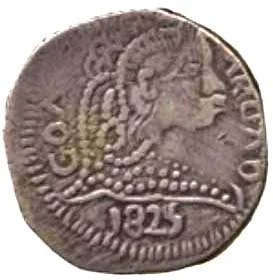
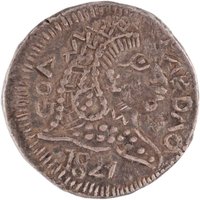
Crowned king's bust over date. Mint mark (GOA) and value (PΛRDΛO) flanking.
Inscription:
GOA___PΛRDΛO
1825
1825
Translation:
Goa and Pardão
1825
1825
Languages: Portuguese, Greek
Reverse
Description:
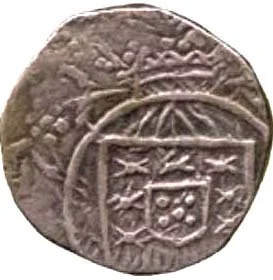
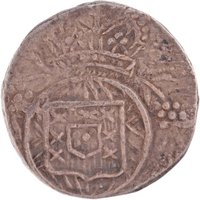
Shield crowned above armillary sphere.
Edge
Mintings
| Year | Mint Mark | Mintage | Quality | Collection |
|---|---|---|---|---|
| 1822 | GOA | — | ||
| 1825 | GOA | — |
Historical background
In 1822, the currency situation in Portuguese India was a complex and fragmented system, reflecting both its colonial status and its deep integration into regional trade networks. The official currency was the Portuguese real, but its circulation was limited and its value unstable. The real economic lifeblood of the territories—primarily Goa, Damão, and Diu—was dominated by a multitude of foreign coins, a legacy of centuries as a commercial hub. The most important of these was the Spanish silver dollar (often called the "piece of eight") and its derivatives, particularly the Mexican silver dollar, which served as the de facto standard for large transactions and external trade due to its consistent silver content and wide acceptance across Asia.
Alongside these major silver coins, a plethora of other currencies circulated freely, creating a chaotic monetary environment. This included other European coins like the French écu and Portuguese cruzado, but more significantly, a vast array of Indian and regional currencies. The British Indian rupee was gaining increasing influence, especially in trade with the neighbouring Presidencies, while local gold hons and silver rupees from various Indian princely states, as well as coins from the Arabian Peninsula, were all common in daily commerce. This proliferation led to constant challenges with exchange rates, counterfeiting, and the valuation of different coins' intrinsic metal content versus their nominal value.
This monetary disorder was exacerbated by the political context of 1822. While Portugal itself was undergoing the liberal revolutions of the Vintismo period, its grip on Indian possessions was weakening, and administrative attention was diverted. The Portuguese authorities in Goa lacked the economic strength to impose a unified currency or to mint substantial quantities of reliable local coinage. Consequently, the monetary system remained a decentralized and practical, albeit inefficient, bazaar system where merchants and money-changers played a more critical role in determining value than any colonial decree, leaving the economy vulnerable to fluctuations in the supply and quality of a dozen different foreign currencies.
Alongside these major silver coins, a plethora of other currencies circulated freely, creating a chaotic monetary environment. This included other European coins like the French écu and Portuguese cruzado, but more significantly, a vast array of Indian and regional currencies. The British Indian rupee was gaining increasing influence, especially in trade with the neighbouring Presidencies, while local gold hons and silver rupees from various Indian princely states, as well as coins from the Arabian Peninsula, were all common in daily commerce. This proliferation led to constant challenges with exchange rates, counterfeiting, and the valuation of different coins' intrinsic metal content versus their nominal value.
This monetary disorder was exacerbated by the political context of 1822. While Portugal itself was undergoing the liberal revolutions of the Vintismo period, its grip on Indian possessions was weakening, and administrative attention was diverted. The Portuguese authorities in Goa lacked the economic strength to impose a unified currency or to mint substantial quantities of reliable local coinage. Consequently, the monetary system remained a decentralized and practical, albeit inefficient, bazaar system where merchants and money-changers played a more critical role in determining value than any colonial decree, leaving the economy vulnerable to fluctuations in the supply and quality of a dozen different foreign currencies.
✨ Legendary