

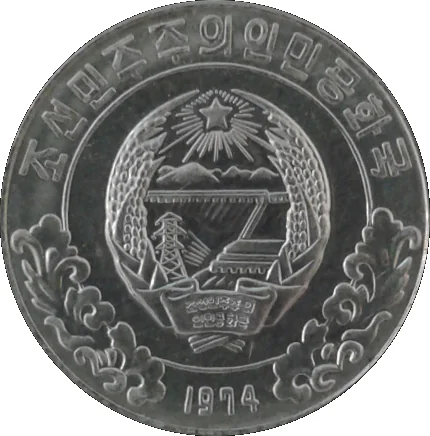
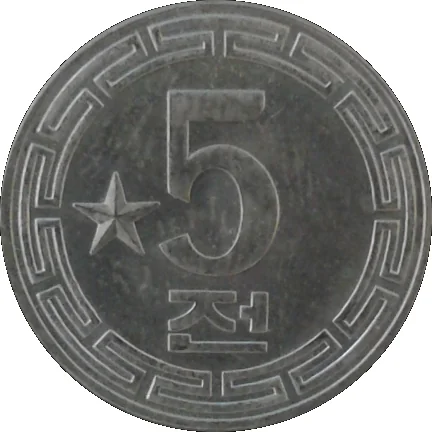
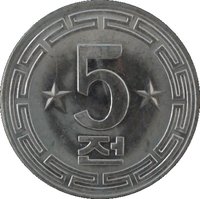
5 chon – North Korea
Add to wishlist
North Korea
Context
Material
References
KM: #
Numista: #16228
Value
Exchange value: 0.05 KPW
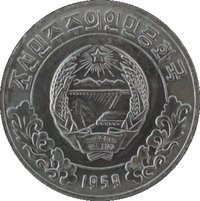
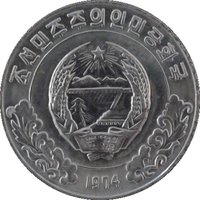
Obverse
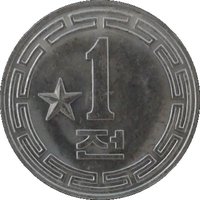
Reverse
Edge
Plain
Categories
| Symbols> Coat of Arms |
Mintings
| Year | Mint Mark | Mintage | Quality | Collection |
|---|---|---|---|---|
| 1974 | — | — |
Historical background
In 1974, North Korea's currency situation was characterized by strict state control and relative stability, but underlying this facade were significant economic strains stemming from the regime's autarkic Juche (self-reliance) ideology. The won (KPW) was a non-convertible currency, entirely isolated from global financial markets and used solely for domestic transactions within the state-planned economy. The government, under Kim Il-sung, maintained a fixed official exchange rate that bore no relation to market value, primarily for the purposes of state accounting and propaganda, presenting an image of strength despite the country's growing economic isolation following the 1973 oil crisis and reduced support from both the Soviet Union and China.
Domestically, the currency functioned within a complex system of rationing and state-set prices for essential goods, which were often in short supply. While the won was used for salaries and some consumer purchases, access to many items, especially luxury or imported goods, was heavily restricted and often required special coupons or connections rather than currency alone. The black market for foreign currency and goods, though suppressed, began to emerge as a necessary shadow economy, particularly as the state's ability to provide a full range of necessities started to wane, hinting at future vulnerabilities.
Overall, the 1974 currency scene reflected a command economy still outwardly stable but beginning to show the early cracks of inefficiency. The state's absolute monopoly over monetary policy and banking prevented hyperinflation or open crisis at that time, but it also masked the declining productivity and foreign debt that would accumulate throughout the 1970s. This rigid system ultimately set the stage for the severe economic hardships and eventual currency revaluations that would confront the country in the decades to follow.
Domestically, the currency functioned within a complex system of rationing and state-set prices for essential goods, which were often in short supply. While the won was used for salaries and some consumer purchases, access to many items, especially luxury or imported goods, was heavily restricted and often required special coupons or connections rather than currency alone. The black market for foreign currency and goods, though suppressed, began to emerge as a necessary shadow economy, particularly as the state's ability to provide a full range of necessities started to wane, hinting at future vulnerabilities.
Overall, the 1974 currency scene reflected a command economy still outwardly stable but beginning to show the early cracks of inefficiency. The state's absolute monopoly over monetary policy and banking prevented hyperinflation or open crisis at that time, but it also masked the declining productivity and foreign debt that would accumulate throughout the 1970s. This rigid system ultimately set the stage for the severe economic hardships and eventual currency revaluations that would confront the country in the decades to follow.
🌱 Common