

20 Paise – India
Circulating commemorative coins
Commemoration: The centennial of Mahatma Gandhi's birth
India
Context

Material
Diameter: 22 mm
Weight: 4.5 g
Thickness: 1.6 mm
Shape: Round
Composition: Aluminium bronze
Magnetic: No
Technique: Milled
Alignment: Medal alignment
flip
References
KM: #Click to copy to clipboard42.1
Numista: #1621
Value
Exchange value: 0.20 INR = $0.00
Inflation-adjusted value: 10.82 INR
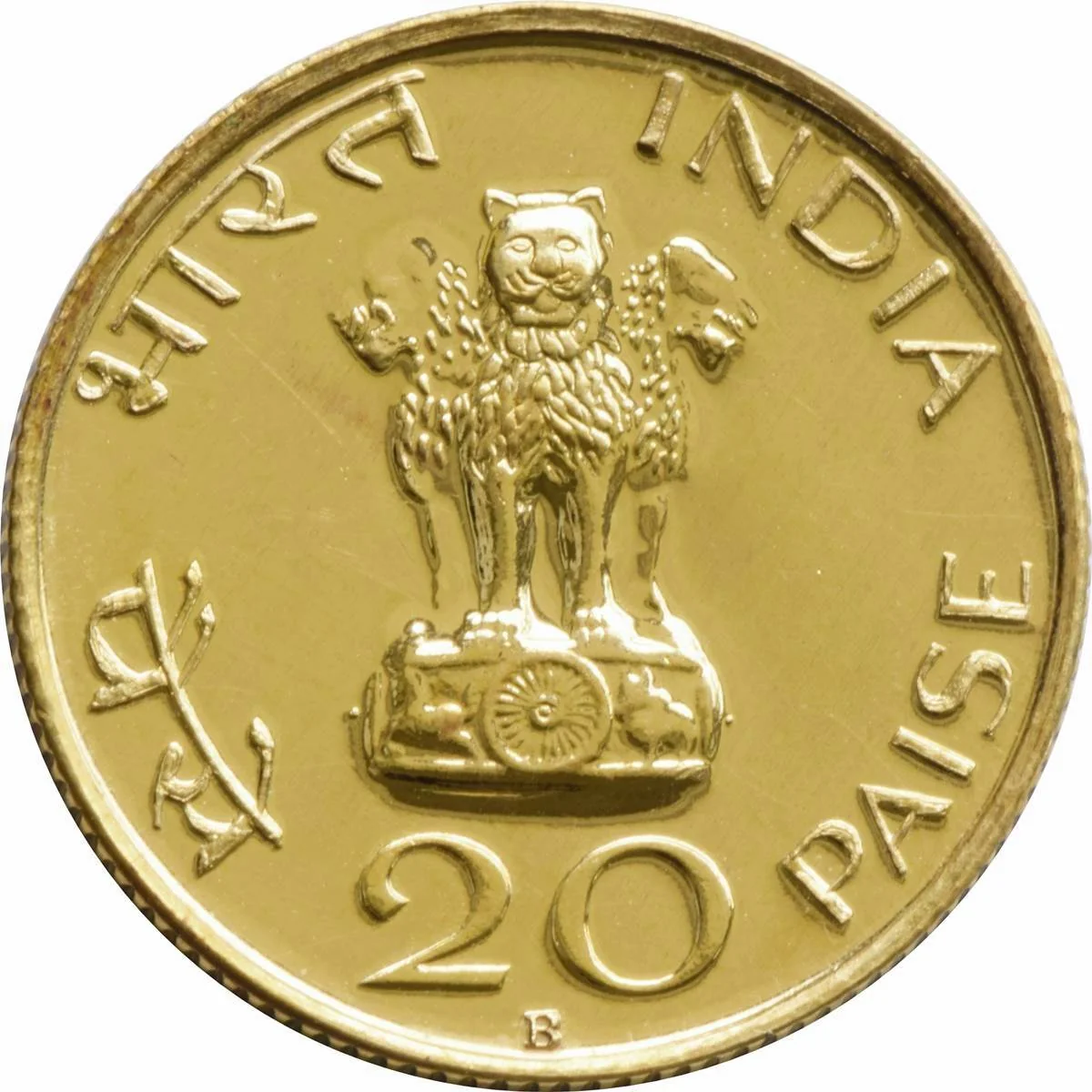
Obverse
Description:
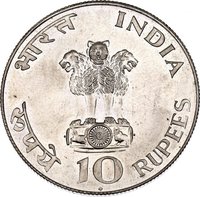
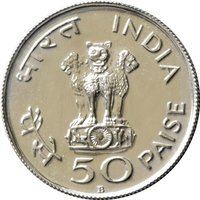
Ashoka pillar with lions, value beneath.
Inscription:
भारत INDIA
पैसे 20 PAISE
पैसे 20 PAISE
Translation:
India
Twenty Paise
Twenty Paise
Scripts: Devanagari, Latin
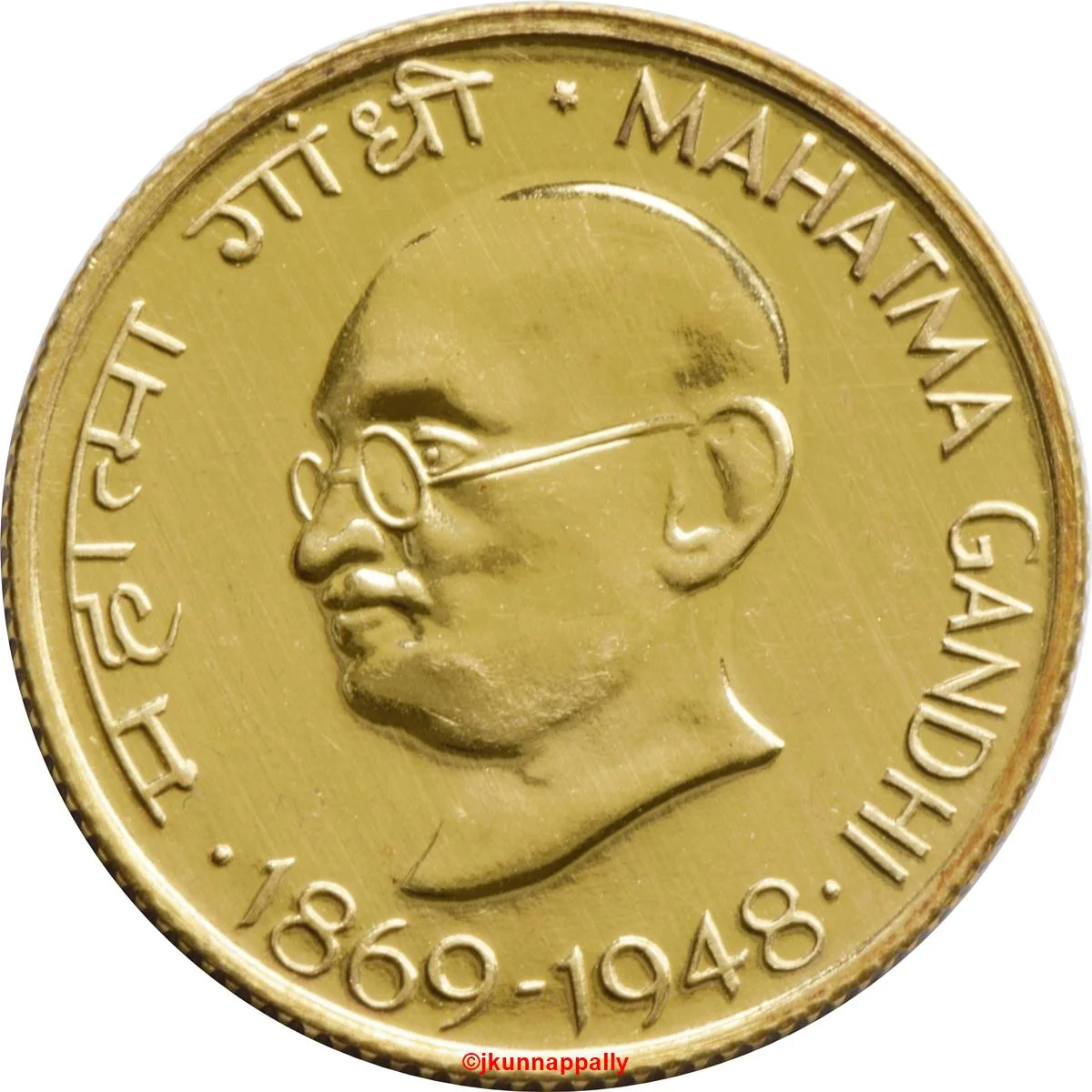
Reverse
Description:
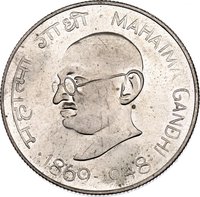
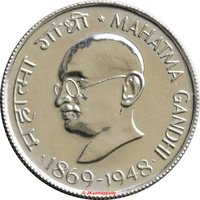
Mahatma Gandhi bust, left profile.
Inscription:
महात्मा गांधी * MAHATMA GANDHI
· 1869-1948
· 1869-1948
Translation:
Mahatma Gandhi * MAHATMA GANDHI
· 1869-1948
· 1869-1948
Scripts: Devanagari, Latin
Edge
Reeded
Mints
| Name | Mark |
|---|---|
| Hyderabad | ★ |
| Mumbai / Bombay | ♦ |
| Kolkata / Calcutta / Murshidabad | No mint mark |
Historical background
In 1969, India's currency situation was fundamentally shaped by the legacy of the 1966 devaluation and the ongoing challenges of a planned economy. The rupee, which had been sharply devalued by 36.5% in June 1966 under pressure from international lenders, remained a controlled and non-convertible currency. Its external value was pegged to the British pound sterling within the Bretton Woods system, while domestically, the economy was characterized by stringent controls, import substitution, and a persistent trade deficit. The devaluation aimed to boost exports and curb imports, but its benefits were slow to materialize, leading to a period of economic stagnation and high inflation that lingered into the late 1960s.
The year itself was politically charged, with Prime Minister Indira Gandhi's government taking the dramatic step of nationalizing 14 major commercial banks in July 1969. While not a direct currency reform, this move had profound implications for the monetary landscape. It aimed to direct credit towards priority sectors like agriculture and small-scale industries, thereby influencing the flow of money within the economy. The government's focus was on using financial institutions as instruments for social and developmental goals, rather than on altering the currency's denomination or external value.
Consequently, there was no major currency event like a demonetization in 1969; that watershed moment would come later in 1978 and 2016. The physical currency in circulation consisted of banknotes issued by the Reserve Bank of India, with the highest denomination being the 100-rupee note (featuring the Ashoka Pillar). The monetary policy of the time was geared towards managing the constraints of a deficit economy, controlling inflation, and supporting the Fourth Five-Year Plan, all within a framework of a tightly regulated and insulated financial system.
The year itself was politically charged, with Prime Minister Indira Gandhi's government taking the dramatic step of nationalizing 14 major commercial banks in July 1969. While not a direct currency reform, this move had profound implications for the monetary landscape. It aimed to direct credit towards priority sectors like agriculture and small-scale industries, thereby influencing the flow of money within the economy. The government's focus was on using financial institutions as instruments for social and developmental goals, rather than on altering the currency's denomination or external value.
Consequently, there was no major currency event like a demonetization in 1969; that watershed moment would come later in 1978 and 2016. The physical currency in circulation consisted of banknotes issued by the Reserve Bank of India, with the highest denomination being the 100-rupee note (featuring the Ashoka Pillar). The monetary policy of the time was geared towards managing the constraints of a deficit economy, controlling inflation, and supporting the Fourth Five-Year Plan, all within a framework of a tightly regulated and insulated financial system.
🌱 Very Common