

1 cent – Hawaii
Add to wishlist
United States
Context
Year: 1847
Country: United States
Issuer: Hawaii
Ruler: Kamehameha III
Currency:
(1847—1898)
Demonetization: 1903
Total mintage: 100,000
Material
References
KM: #
Numista: #16184
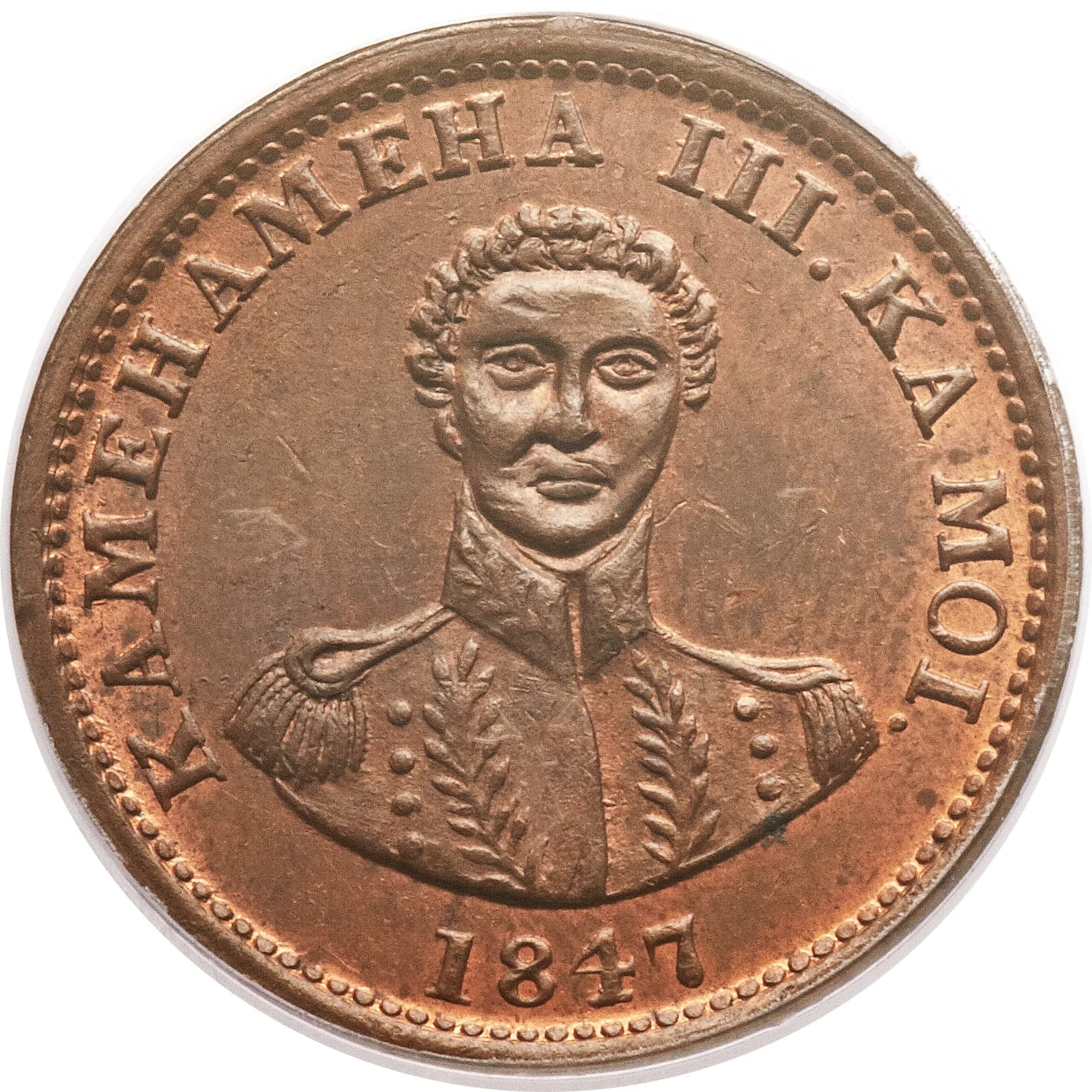
Obverse
Description:
Bust of Kamehameha III with date.
Inscription:
KAMAHAMEHA III. KA MOI.
1847
1847
Translation:
Kamehameha III. The King.
1847
1847
Script: Latin
Language: Hawaiian
Engraver: Edward Hulseman
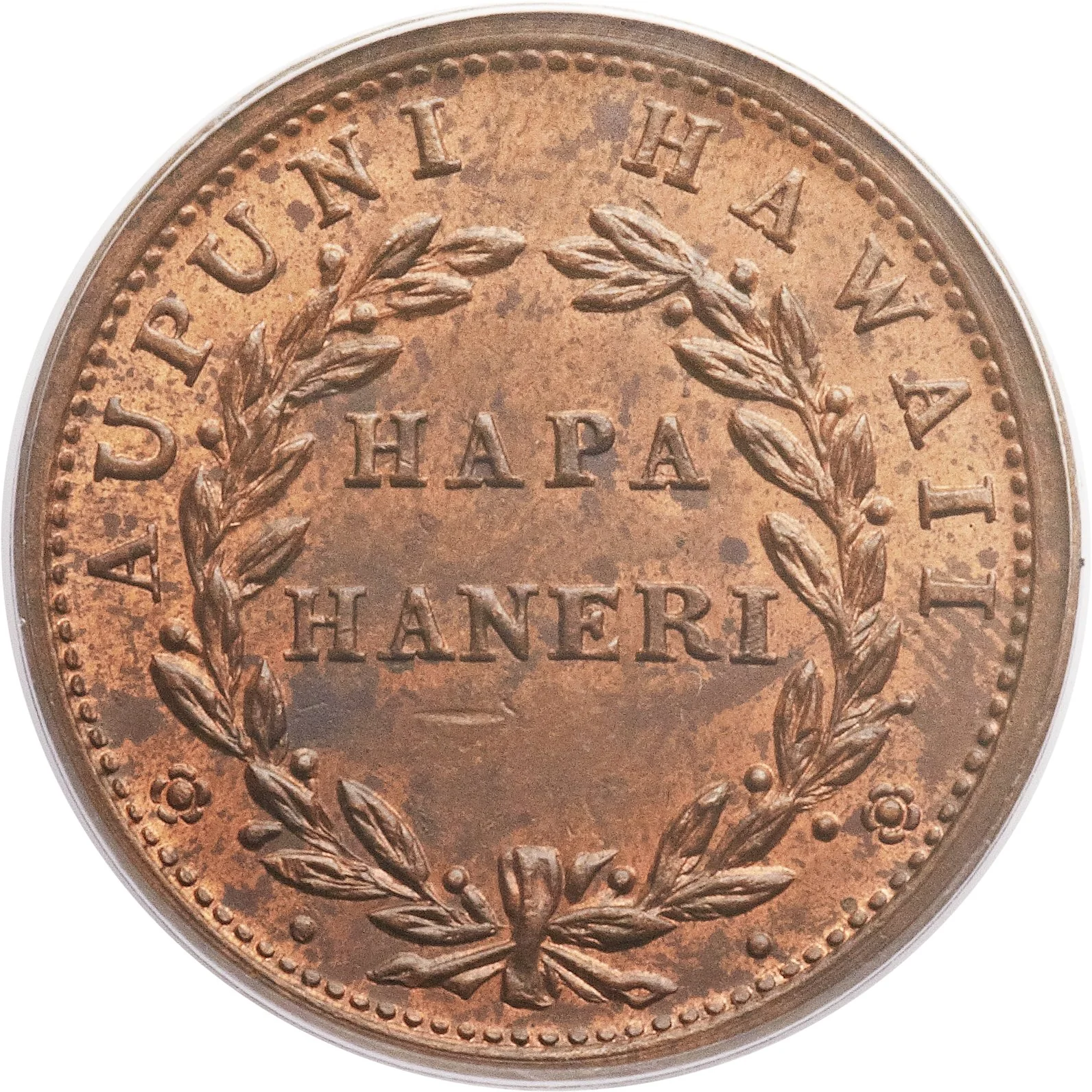
Reverse
Description:
Wreath denomination
Inscription:
AUPUNI HAWAII
HAPA
HANERI
HAPA
HANERI
Translation:
Sovereign Hawaii
Half
Hundred
Half
Hundred
Script: Latin
Engraver: Edward Hulseman
Edge
Categories
| Person> Monarch |
| Mustache/Beard |
| Symbol> Wreath |
Mintings
| Year | Mint Mark | Mintage | Quality | Collection |
|---|---|---|---|---|
| 1847 | — | 100,000 |
Historical background
In 1847, the Kingdom of Hawaii found itself in a complex and challenging monetary situation, characterized by a severe shortage of official coinage. The economy operated on a de facto multi-currency system, heavily reliant on foreign coins that circulated at fluctuating values. Mexican silver dollars (pesos), Spanish colonial pieces, and later Chilean and Peruvian coins were the most common mediums of exchange, alongside a persistent use of barter for everyday transactions. This reliance on imported specie made Hawaii's economy vulnerable to the ebb and flow of global trade and the whims of merchant captains, leading to inconsistency and confusion in commerce.
The root of the problem lay in the absence of a standardized national currency. While the government had issued limited paper "treasury notes," they were not fully trusted and circulated poorly. The real value of transactions was often calculated in the "Mexican dollar," but the actual physical coins in circulation were worn, clipped, and of dubious purity, leading to disputes over their true worth. To bring order, King Kamehameha III and his advisors had begun to take legislative action, passing "Acts to Regulate Currency" in 1846. These laws aimed to define specific foreign coins as legal tender and fix their rates in relation to the U.S. dollar, which was gaining prominence in Pacific trade.
Therefore, 1847 represents a pivotal year of transition within this chaotic backdrop. It was a period of active government intervention to stabilize exchange rates by law, while the fundamental solution—the creation of a distinct Hawaiian coinage—was still in its planning stages. The pressing need for a reliable and uniform medium of exchange would soon lead to the iconic decision to mint Hawaii's own coins, with the first official decimal-based currency, bearing the king's portrait, finally being struck at the Philadelphia Mint in 1847 and put into circulation in the islands later that year and into 1848.
The root of the problem lay in the absence of a standardized national currency. While the government had issued limited paper "treasury notes," they were not fully trusted and circulated poorly. The real value of transactions was often calculated in the "Mexican dollar," but the actual physical coins in circulation were worn, clipped, and of dubious purity, leading to disputes over their true worth. To bring order, King Kamehameha III and his advisors had begun to take legislative action, passing "Acts to Regulate Currency" in 1846. These laws aimed to define specific foreign coins as legal tender and fix their rates in relation to the U.S. dollar, which was gaining prominence in Pacific trade.
Therefore, 1847 represents a pivotal year of transition within this chaotic backdrop. It was a period of active government intervention to stabilize exchange rates by law, while the fundamental solution—the creation of a distinct Hawaiian coinage—was still in its planning stages. The pressing need for a reliable and uniform medium of exchange would soon lead to the iconic decision to mint Hawaii's own coins, with the first official decimal-based currency, bearing the king's portrait, finally being struck at the Philadelphia Mint in 1847 and put into circulation in the islands later that year and into 1848.
⭐ Somewhat Rare