

10 Paise – India
Circulating commemorative coins
Commemoration: FAO - Save for development
India
Context

Material
References
KM: #Click to copy to clipboard31
Numista: #16172
Value
Exchange value: 0.10 INR = $0.00
Inflation-adjusted value: 3.21 INR
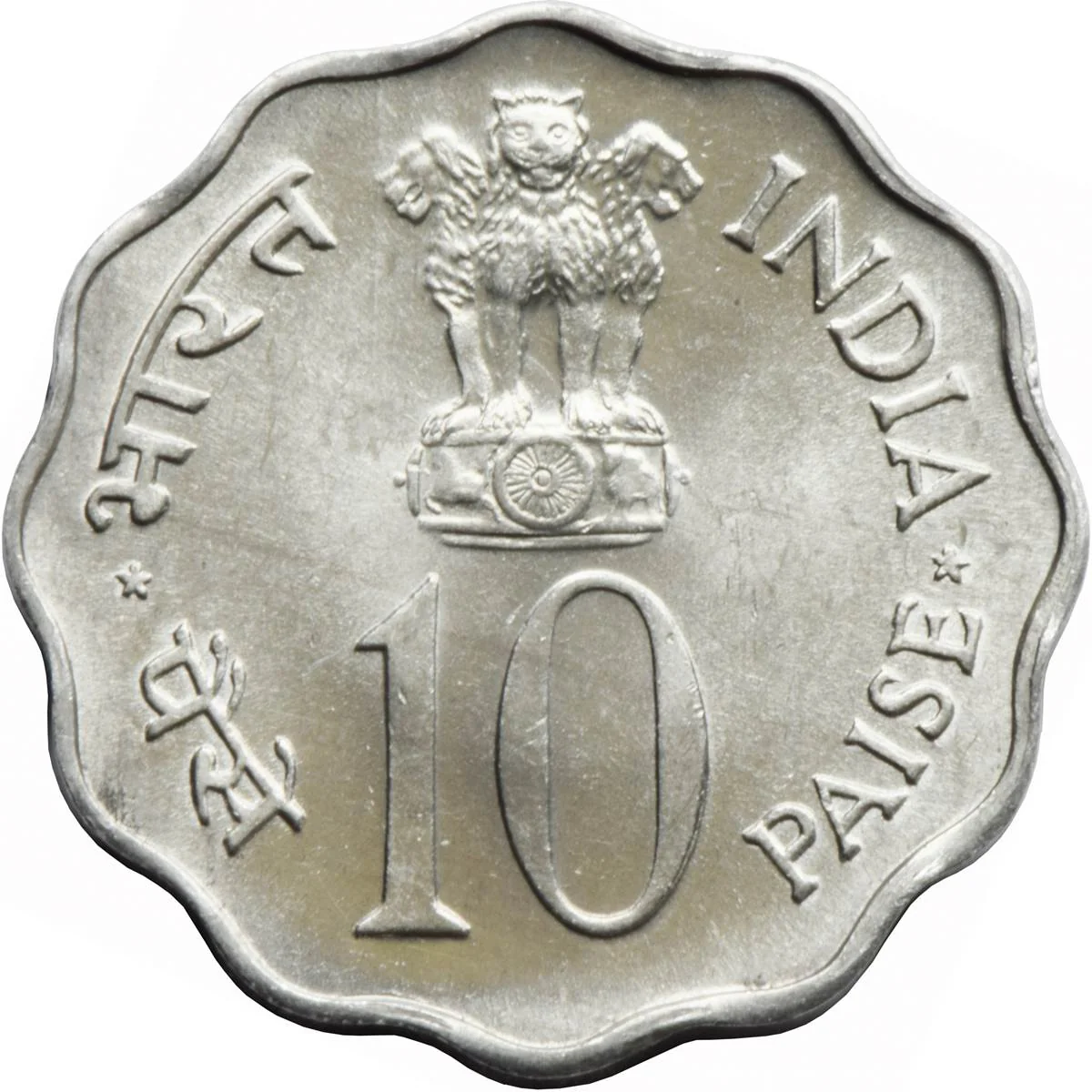
Obverse
Description:
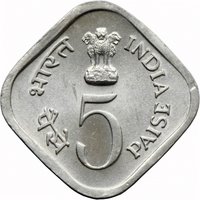
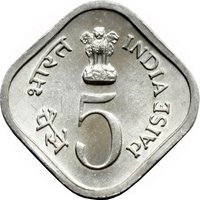
Asoka lion with denomination.
Inscription:
भारत INDIA
पैसे 10 PAISE
पैसे 10 PAISE
Translation:
India
Ten Paise
Ten Paise
Scripts: Devanagari, Latin
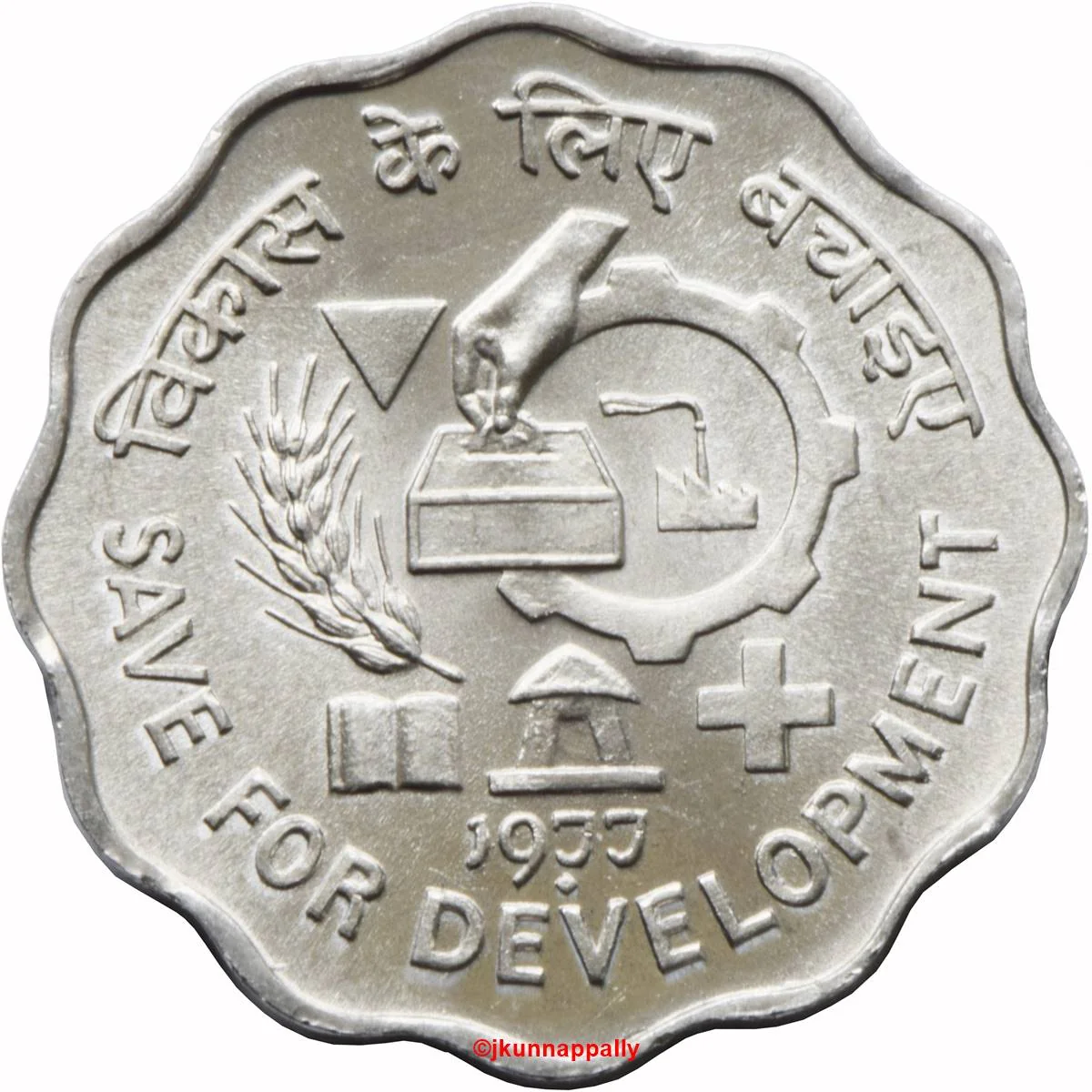
Reverse
Description:
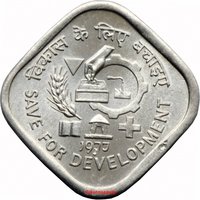
Symbols: factory, health, education, infrastructure. Legend in Devanagari and English. Date below.
Inscription:
विकास के लिए बचाइए
1977
SAVE FOR DEVELOPMENT
1977
SAVE FOR DEVELOPMENT
Translation:
Save for Development
1977
Save for Development
1977
Save for Development
Scripts: Devanagari, Latin
Language: Hindi
Edge
Plain
Categories
| Organization> FAO |
Mints
| Name | Mark |
|---|---|
| Kolkata / Calcutta / Murshidabad | — |
| Mumbai / Bombay | ♦ |
| Mumbai / Bombay | B |
Historical background
In 1977, India's currency situation was marked by the aftermath of the 1975-77 Emergency and the political transition to the Janata Party government led by Morarji Desai. The period was characterized by a legacy of stringent foreign exchange controls and a tightly regulated rupee, which was pegged to a basket of currencies but effectively managed by the Reserve Bank of India. The nation faced persistent challenges of a low foreign exchange reserve position, a large trade deficit, and reliance on external borrowings and aid, which constrained economic policy. The focus remained on import substitution and conserving scarce foreign currency, with the rupee's external value being a matter of administrative decision rather than market forces.
A significant event that year was the high-profile demonetization of high-denomination banknotes in January 1978, a decision approved in late 1977. The government demonetized ₹1,000, ₹5,000, and ₹10,000 notes, officially to curb black money, counterfeit currency, and illegal hoarding of cash from the parallel economy. While this move did not destabilize the everyday currency in circulation for the vast majority (as these notes were held by a tiny fraction), it represented a major surgical strike on the shadow economy and symbolized the new government's break from the policies of the previous regime. The economic impact was debated, but it underscored the state's powerful role in currency management.
Overall, the 1977 currency landscape was one of stability in the official system but underlying vulnerability in external accounts. The rupee was not freely convertible, and citizens faced severe restrictions on foreign exchange holdings and transactions. The period was a pre-liberalization era where the currency regime was an instrument of protectionist economic policy, aimed at self-reliance and control, rather than integration with global financial markets. The demonetization of 1978, conceived in 1977, stood as the most dramatic monetary event, reflecting the government's attempt to use currency as a tool for political and economic cleansing.
A significant event that year was the high-profile demonetization of high-denomination banknotes in January 1978, a decision approved in late 1977. The government demonetized ₹1,000, ₹5,000, and ₹10,000 notes, officially to curb black money, counterfeit currency, and illegal hoarding of cash from the parallel economy. While this move did not destabilize the everyday currency in circulation for the vast majority (as these notes were held by a tiny fraction), it represented a major surgical strike on the shadow economy and symbolized the new government's break from the policies of the previous regime. The economic impact was debated, but it underscored the state's powerful role in currency management.
Overall, the 1977 currency landscape was one of stability in the official system but underlying vulnerability in external accounts. The rupee was not freely convertible, and citizens faced severe restrictions on foreign exchange holdings and transactions. The period was a pre-liberalization era where the currency regime was an instrument of protectionist economic policy, aimed at self-reliance and control, rather than integration with global financial markets. The demonetization of 1978, conceived in 1977, stood as the most dramatic monetary event, reflecting the government's attempt to use currency as a tool for political and economic cleansing.
🌱 Common