

50 toea – Papua New Guinea
Add to wishlist
Circulating commemorative coins
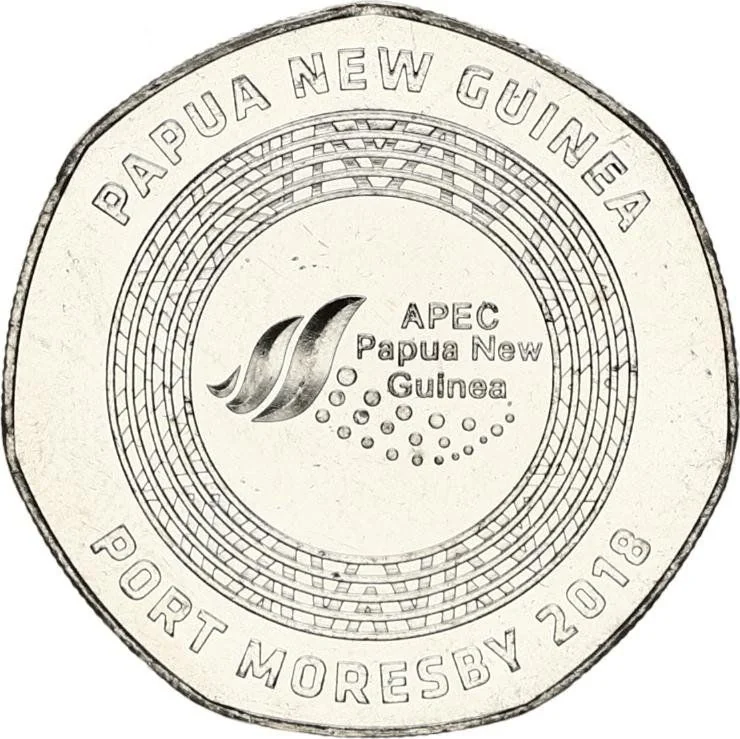
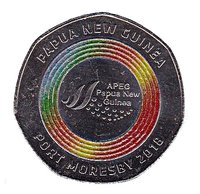
Commemoration: APEC meeting in Port Moresby
Papua New Guinea
Context
Year: 2018
Issuer: Papua New Guinea
Ruler: Elizabeth II
Currency:
(since 1975)
Total mintage: 1,490,000
Material
Diameter: 30 mm
Weight: 13.6 g
Thickness: 2.4 mm
Shape: Heptagonal
Composition: Copper-nickel
Technique: Milled
Alignment: Medal alignment
flip
References
KM: #
Numista: #160502
Value
Exchange value: 0.50 PGK
Obverse
Description:
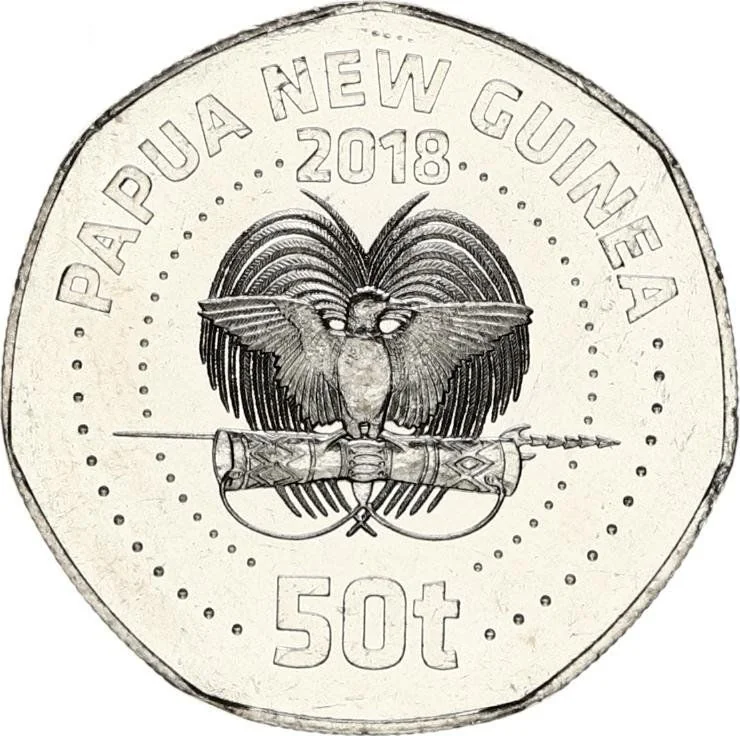
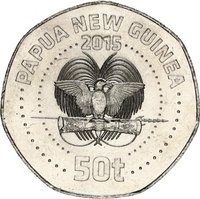
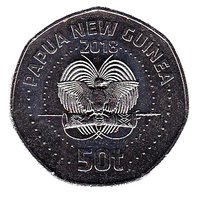
A bird-of-paradise above a spear and kundu drum.
Inscription:
PAPUA NEW GUINEA
2018
50t
2018
50t
Script: Latin
Reverse
Edge
Interrupted Serration
Categories
| Object> Cold weapons |
| Animal> Bird |
| Art> Music |
| Symbols> Coat of Arms |
Mints
| Name | Mark |
|---|---|
| Royal Australian Mint | — |
Mintings
| Year | Mint Mark | Mintage | Quality | Collection |
|---|---|---|---|---|
| 2018 | — | 1,490,000 |
Historical background
In 2018, Papua New Guinea (PNG) faced a persistent and severe foreign exchange (FX) shortage, a structural issue that had been building for several years. The core problem was a significant imbalance between supply and demand for US dollars and Australian dollars. Supply was constrained by lower-than-expected revenues from key commodity exports like liquefied natural gas (LNG), due in part to weaker global prices and project-specific issues. Simultaneously, demand remained high from businesses needing to pay for imports and service foreign debt, creating a backlog of unmet orders. This shortage crippled the private sector, with companies waiting months for banks to fulfill FX requests, hindering their ability to import essential goods, machinery, and spare parts.
The Bank of Papua New Guinea (BPNG) responded with a tightly managed float of the kina. While the official exchange rate was relatively stable, depreciating only slightly against the US dollar, a large and growing disparity emerged with the unofficial or "grey market" rate. Businesses and individuals unable to access dollars through formal banking channels were forced to pay a significant premium on the parallel market, where the kina was much weaker. This effectively created a dual-exchange rate system, distorting the economy, fueling inflation for imported goods, and discouraging foreign investment due to the difficulty of repatriating profits.
The government, under Prime Minister Peter O'Neill, faced pressure to address the crisis. Efforts included seeking a major loan from the International Monetary Fund (IMF) and other international lenders, with negotiations focusing on structural reforms to liberalize the FX regime and improve fiscal discipline. However, political resistance to stringent IMF conditions and a reliance on short-term domestic borrowing to finance budget deficits limited progress. Consequently, by the end of 2018, the FX shortage remained unresolved, acting as a major brake on economic growth and contributing to broader social and budgetary pressures for the state.
The Bank of Papua New Guinea (BPNG) responded with a tightly managed float of the kina. While the official exchange rate was relatively stable, depreciating only slightly against the US dollar, a large and growing disparity emerged with the unofficial or "grey market" rate. Businesses and individuals unable to access dollars through formal banking channels were forced to pay a significant premium on the parallel market, where the kina was much weaker. This effectively created a dual-exchange rate system, distorting the economy, fueling inflation for imported goods, and discouraging foreign investment due to the difficulty of repatriating profits.
The government, under Prime Minister Peter O'Neill, faced pressure to address the crisis. Efforts included seeking a major loan from the International Monetary Fund (IMF) and other international lenders, with negotiations focusing on structural reforms to liberalize the FX regime and improve fiscal discipline. However, political resistance to stringent IMF conditions and a reliance on short-term domestic borrowing to finance budget deficits limited progress. Consequently, by the end of 2018, the FX shortage remained unresolved, acting as a major brake on economic growth and contributing to broader social and budgetary pressures for the state.

🌟 Limited