

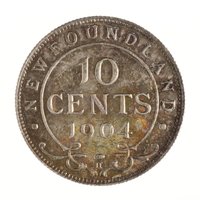
10 Cents – Newfoundland
Canada
Context
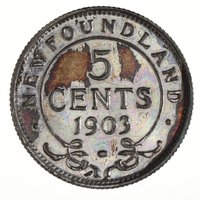
Years: 1903–1904
Country: Canada 
Issuer: Newfoundland
Ruler: Edward VII
Currency:
(1865—1949)
Total mintage: 200,000
Material
References
KM: #Click to copy to clipboard8
Numista: #16039
Value
Exchange value: 0.10 NFD
Bullion value: $6.05
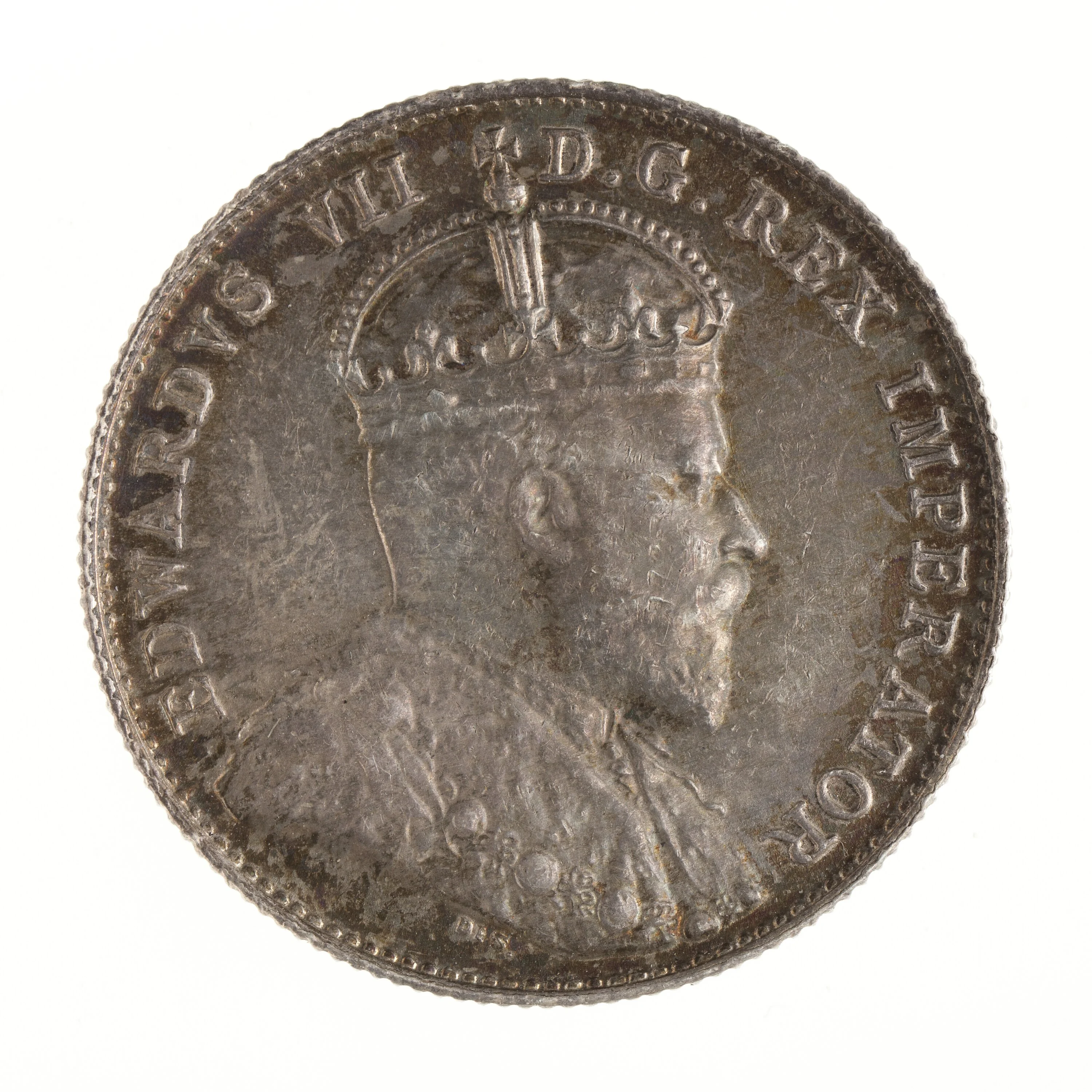
Obverse
Description:
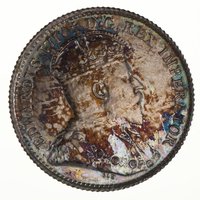
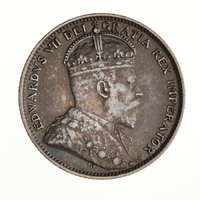
King Edward VII in right-facing profile.
Inscription:
EDWARDVS VII D.G. REX IMPERATOR
Translation:
Edward VII by the Grace of God King Emperor
Script: Latin
Language: Latin
Engraver: George William de Saulles
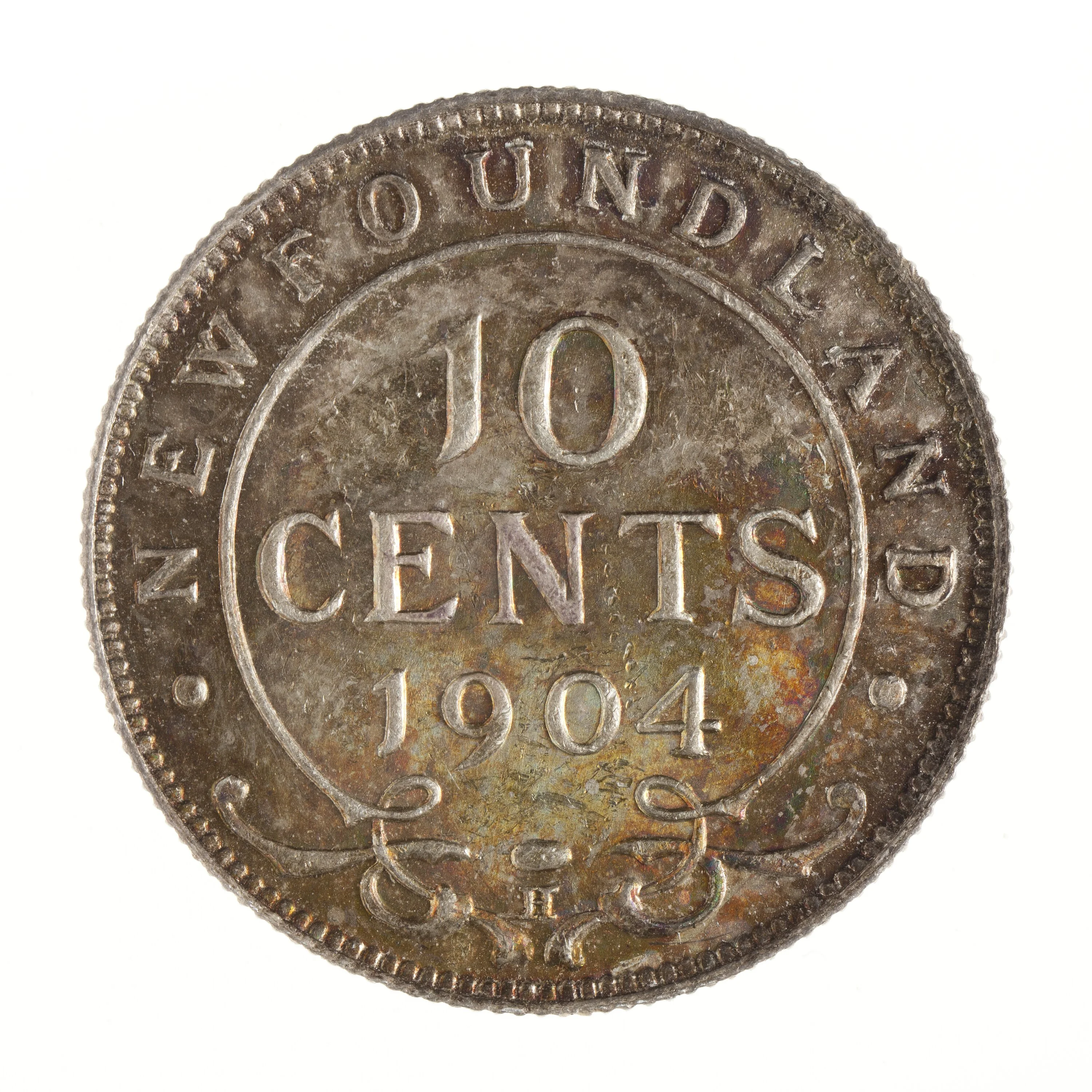
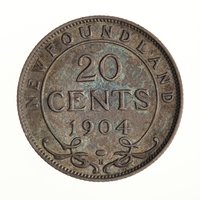
Reverse
Edge
Reeded
Mints
| Name | Mark |
|---|---|
| Royal Mint (Tower Hill) | — |
| Heaton and Sons / The Mint Birmingham | H |
Mintings
| Year | Mint Mark | Mintage | Quality | Collection |
|---|---|---|---|---|
| 1903 | — | 100,000 | ||
| 1904 | H | 100,000 |
Historical background
In 1903, Newfoundland was a self-governing British Dominion grappling with a precarious and complex currency situation. The island’s official currency was the Newfoundland dollar, pegged at par with the Canadian dollar and the U.S. dollar, all following the gold standard. However, the colony’s chronic trade deficits, heavy public debt from railway construction, and a series of bank failures in the 1890s had severely depleted its gold reserves. This created a persistent scarcity of hard currency, undermining public confidence in the local banking system and the government's ability to maintain the peg.
The practical reality was a monetary system reliant on a mix of token coinage, government-issued paper notes, and a significant circulation of foreign currency, particularly Canadian bank notes and British sovereigns. Canadian currency was especially dominant in everyday transactions, as Newfoundland's economy was deeply intertwined with Canada's. This de facto "dollarization" highlighted the weakness of the local currency and the government's limited control over its monetary supply. The situation was a source of political and economic anxiety, as the threat of a broken peg and devaluation loomed.
This unstable environment set the stage for a pivotal political debate that would define the coming decade: the question of currency reform. One faction, led by Prime Minister Sir Robert Bond, advocated for the establishment of a government-controlled central bank to issue legal tender and stabilize the currency. The opposing view, which would ultimately prevail, argued for the more pragmatic solution of formally adopting the Canadian dollar to secure monetary stability and foster closer economic ties. The currency crisis of 1903 was thus a critical prelude to Newfoundland's eventual adoption of the Canadian dollar in 1905.
The practical reality was a monetary system reliant on a mix of token coinage, government-issued paper notes, and a significant circulation of foreign currency, particularly Canadian bank notes and British sovereigns. Canadian currency was especially dominant in everyday transactions, as Newfoundland's economy was deeply intertwined with Canada's. This de facto "dollarization" highlighted the weakness of the local currency and the government's limited control over its monetary supply. The situation was a source of political and economic anxiety, as the threat of a broken peg and devaluation loomed.
This unstable environment set the stage for a pivotal political debate that would define the coming decade: the question of currency reform. One faction, led by Prime Minister Sir Robert Bond, advocated for the establishment of a government-controlled central bank to issue legal tender and stabilize the currency. The opposing view, which would ultimately prevail, argued for the more pragmatic solution of formally adopting the Canadian dollar to secure monetary stability and foster closer economic ties. The currency crisis of 1903 was thus a critical prelude to Newfoundland's eventual adoption of the Canadian dollar in 1905.
🌱 Fairly Common