

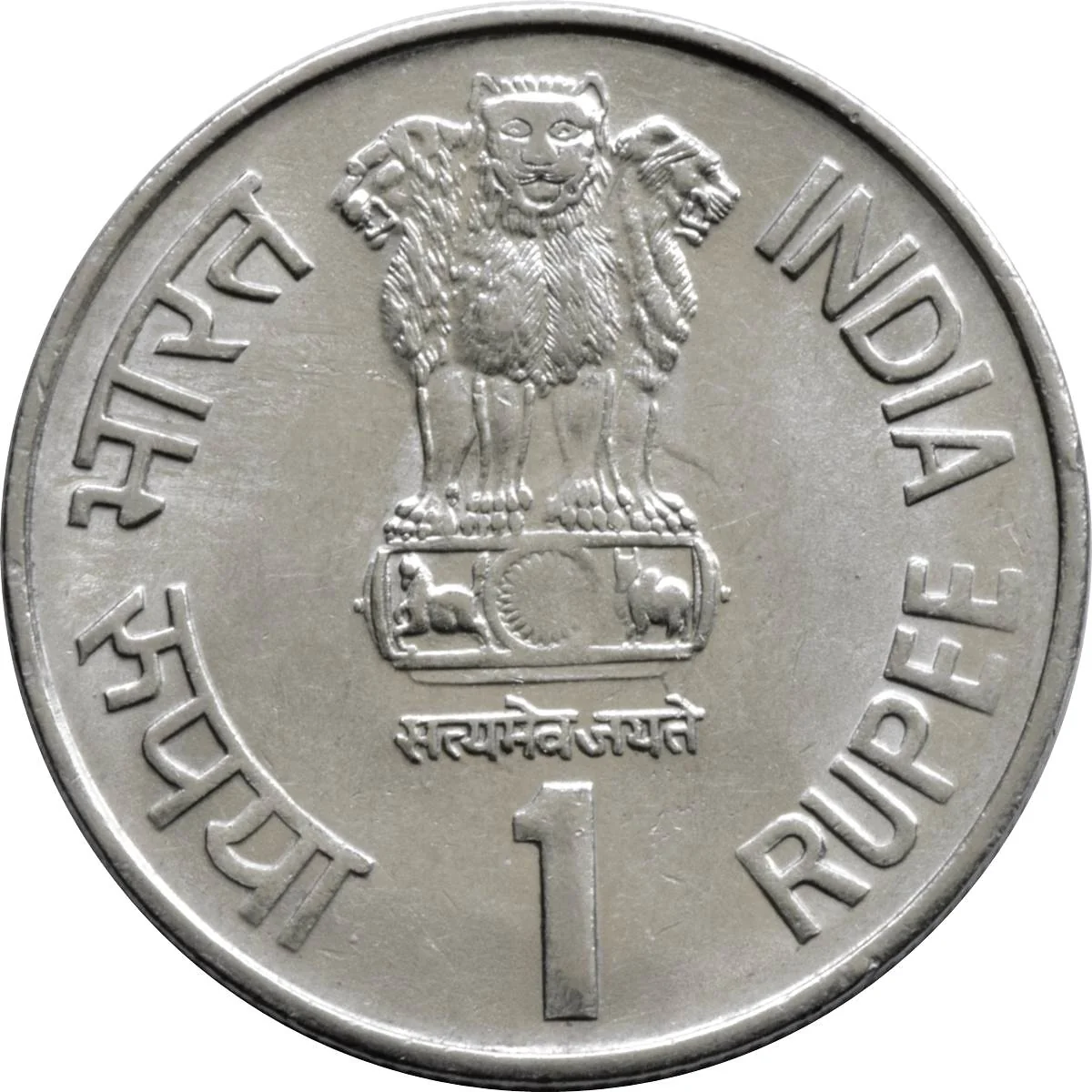
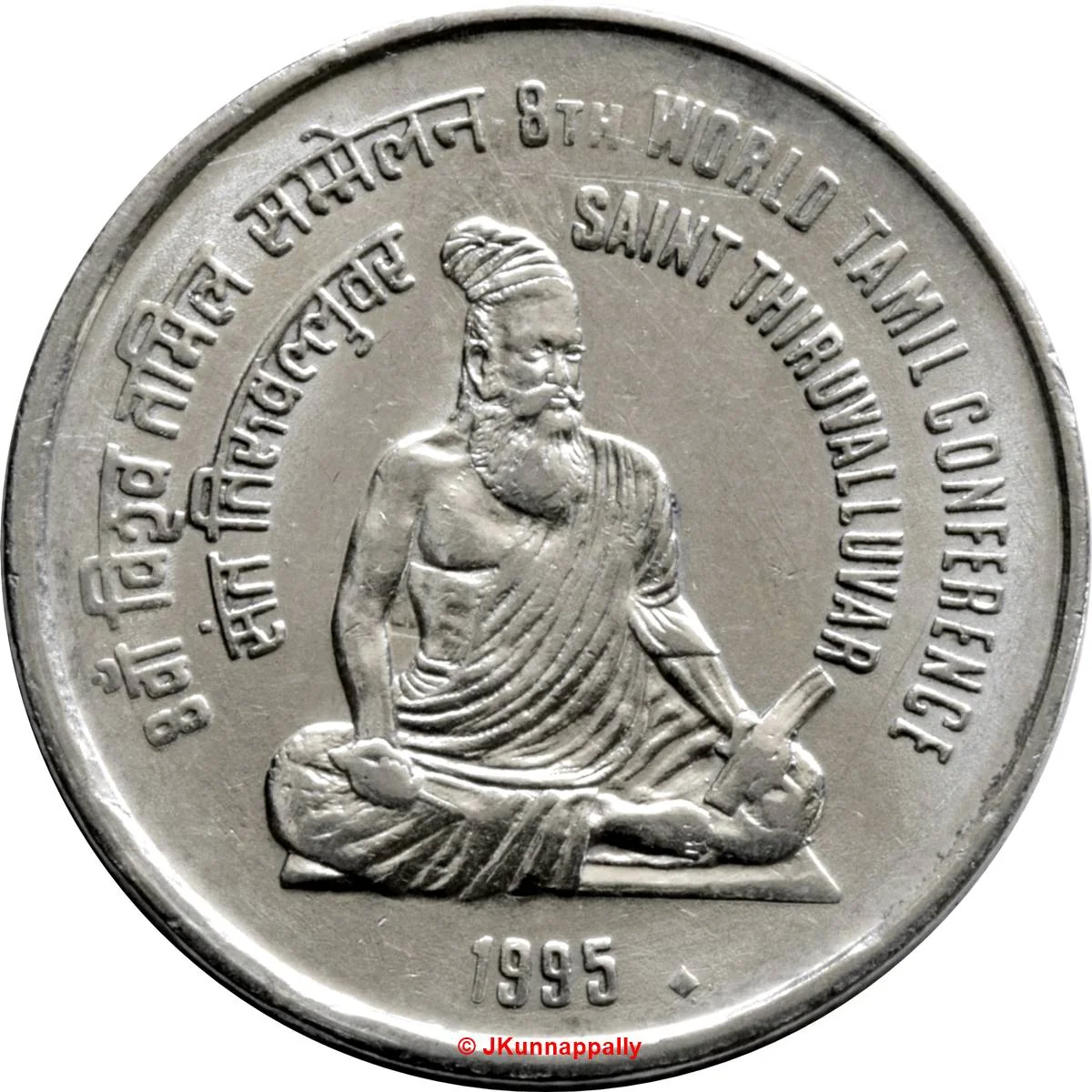
1 rupee – India
Add to wishlist
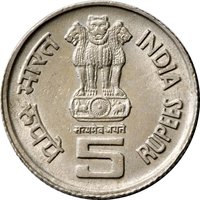
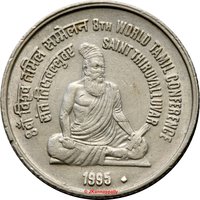
Circulating commemorative coins
Commemoration: World Tamil Conference
India
Material
Diameter: 25 mm
Weight: 5 g
Thickness: 1.5 mm
Shape: Round
Composition: Stainless steel
Technique: Milled
Alignment: Medal alignment
flip
References
KM: #
Numista: #15939
Value
Exchange value: 1 INR
Inflation-adjusted value: 6.95 INR
Obverse
Reverse
Edge
Smooth or reeded
Mintings
| Year | Mint Mark | Mintage | Quality | Collection |
|---|---|---|---|---|
| 1995 | — | — | ||
| 1995 | * | — | ||
| 1995 | ° | — | ||
| 1995 | ♦ | — |
Historical background
In 1995, India's currency situation was characterized by a period of cautious stability and managed exchange rates under the framework of a liberalized economy. Following the profound balance of payments crisis of 1991, the government had initiated sweeping economic reforms, including a two-step devaluation of the rupee and a transition from a fixed to a market-linked exchange rate system. By 1995, the rupee was operating under a Liberalized Exchange Rate Management System (LERMS), a dual-exchange rate mechanism, and was moving towards full convertibility on the current account (which would be achieved in 1994-95). The Reserve Bank of India (RBI) actively managed the currency to prevent excessive volatility, with the rupee trading roughly around ₹31-33 per US dollar, reflecting a controlled depreciation to maintain export competitiveness.
This relative stability occurred amidst a complex economic backdrop. The reforms had spurred growth, but the economy was also grappling with persistent, though moderating, inflation (around 10% in 1994-95) and a rising trade deficit. Capital inflows, both foreign direct investment (FDI) and portfolio investment, were increasing due to the opening of the financial markets, which provided support to the rupee. However, this also introduced new challenges for monetary policy, as the RBI had to balance managing the money supply from these inflows with its exchange rate objectives. The priority was to build foreign exchange reserves, which had been nearly depleted in 1991, to insulate the economy from future external shocks.
Overall, 1995 represented a transitional phase where the immediate crisis had passed, but the architecture of a more open, market-driven currency regime was still being solidified. The focus was on consolidating the gains of reform, maintaining macroeconomic stability, and carefully navigating the integration of the Indian rupee into the global financial system. The situation set the stage for the subsequent move to a unified exchange rate and fuller capital account liberalization in the years to follow, marking a definitive shift away from the stringent controls of the pre-1991 era.
This relative stability occurred amidst a complex economic backdrop. The reforms had spurred growth, but the economy was also grappling with persistent, though moderating, inflation (around 10% in 1994-95) and a rising trade deficit. Capital inflows, both foreign direct investment (FDI) and portfolio investment, were increasing due to the opening of the financial markets, which provided support to the rupee. However, this also introduced new challenges for monetary policy, as the RBI had to balance managing the money supply from these inflows with its exchange rate objectives. The priority was to build foreign exchange reserves, which had been nearly depleted in 1991, to insulate the economy from future external shocks.
Overall, 1995 represented a transitional phase where the immediate crisis had passed, but the architecture of a more open, market-driven currency regime was still being solidified. The focus was on consolidating the gains of reform, maintaining macroeconomic stability, and carefully navigating the integration of the Indian rupee into the global financial system. The situation set the stage for the subsequent move to a unified exchange rate and fuller capital account liberalization in the years to follow, marking a definitive shift away from the stringent controls of the pre-1991 era.
🌱 Common