

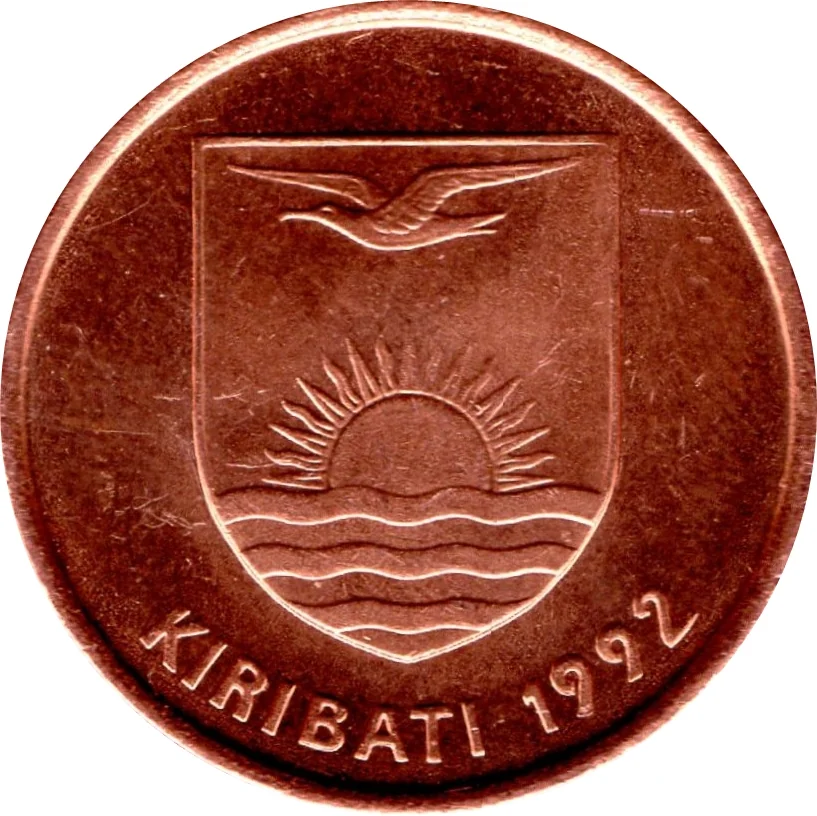
Obverse
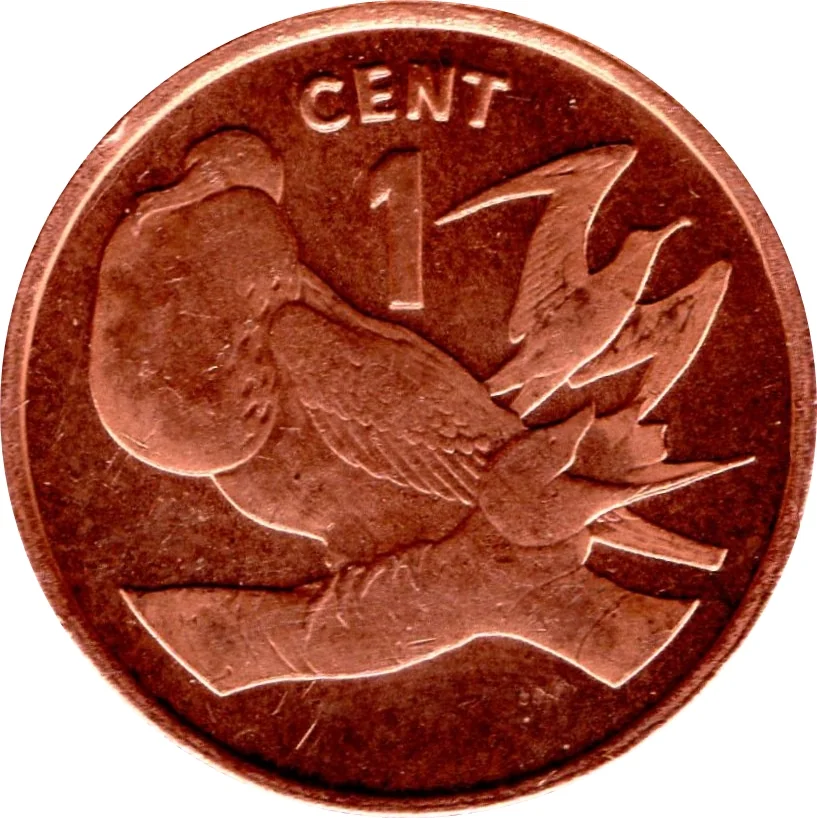
Reverse
Description:
Frigate birds: one perched, one in flight.
Inscription:
CENT
1
1
Script: Latin
Engraver: Michael Hibbit
Edge
Plain
Mintings
| Year | Mint Mark | Mintage | Quality | Collection |
|---|---|---|---|---|
| 1992 | — | — |
Historical background
In 1992, the currency situation in Kiribati was defined by its continued use of the Australian dollar as the nation's sole legal tender, a system established at independence in 1979. This arrangement provided critical monetary stability for the young, geographically dispersed republic, which lacked the infrastructure and economic mass to support an independent central bank or a separate national currency. The Australian dollar offered a credible and internationally convertible monetary anchor, helping to control inflation and facilitate trade, which was vital for an economy heavily dependent on imports and external revenue sources like phosphate royalties (from the nearly exhausted deposits on Banaba) and fishing license fees.
The year 1992 fell within a period of significant economic transition and pressure for Kiribati. The Revenue Equalisation Reserve Fund (RERF), established from phosphate earnings, was a cornerstone of national finances, but its management and the search for sustainable income were ongoing concerns. While the Australian dollar provided stability, it also meant Kiribati had no direct control over its monetary policy, interest rates, or exchange rates, which were all set by the Reserve Bank of Australia according to conditions in the much larger Australian economy. This passive system limited domestic policy tools to respond to local economic shocks.
Consequently, there was no serious move in 1992 to deviate from the Australian dollar. The primary monetary focus for the Kiribati government was not on currency sovereignty but on prudent fiscal management of the RERF and developing the nascent cash sectors of its economy, particularly in the outer islands. The currency situation was thus characterized by a pragmatic dependency, valuing imported stability over autonomous policy, a choice deemed necessary for the nation's economic security in the face of its unique developmental and environmental challenges.
The year 1992 fell within a period of significant economic transition and pressure for Kiribati. The Revenue Equalisation Reserve Fund (RERF), established from phosphate earnings, was a cornerstone of national finances, but its management and the search for sustainable income were ongoing concerns. While the Australian dollar provided stability, it also meant Kiribati had no direct control over its monetary policy, interest rates, or exchange rates, which were all set by the Reserve Bank of Australia according to conditions in the much larger Australian economy. This passive system limited domestic policy tools to respond to local economic shocks.
Consequently, there was no serious move in 1992 to deviate from the Australian dollar. The primary monetary focus for the Kiribati government was not on currency sovereignty but on prudent fiscal management of the RERF and developing the nascent cash sectors of its economy, particularly in the outer islands. The currency situation was thus characterized by a pragmatic dependency, valuing imported stability over autonomous policy, a choice deemed necessary for the nation's economic security in the face of its unique developmental and environmental challenges.
🌱 Very Common