

1 angel – Isle of Man
Add to wishlist
Non-circulating coins
Commemoration: Archangel Michael
Context
Years: 1985–1987
Country: British Crown dependencies
Issuer: Isle of Man
Ruler: Elizabeth II
Currency:
(since 1984)
Total mintage: 31,000
Material
References
KM: #
Numista: #158716
Value
Bullion value: $4776.68
Obverse
Description:
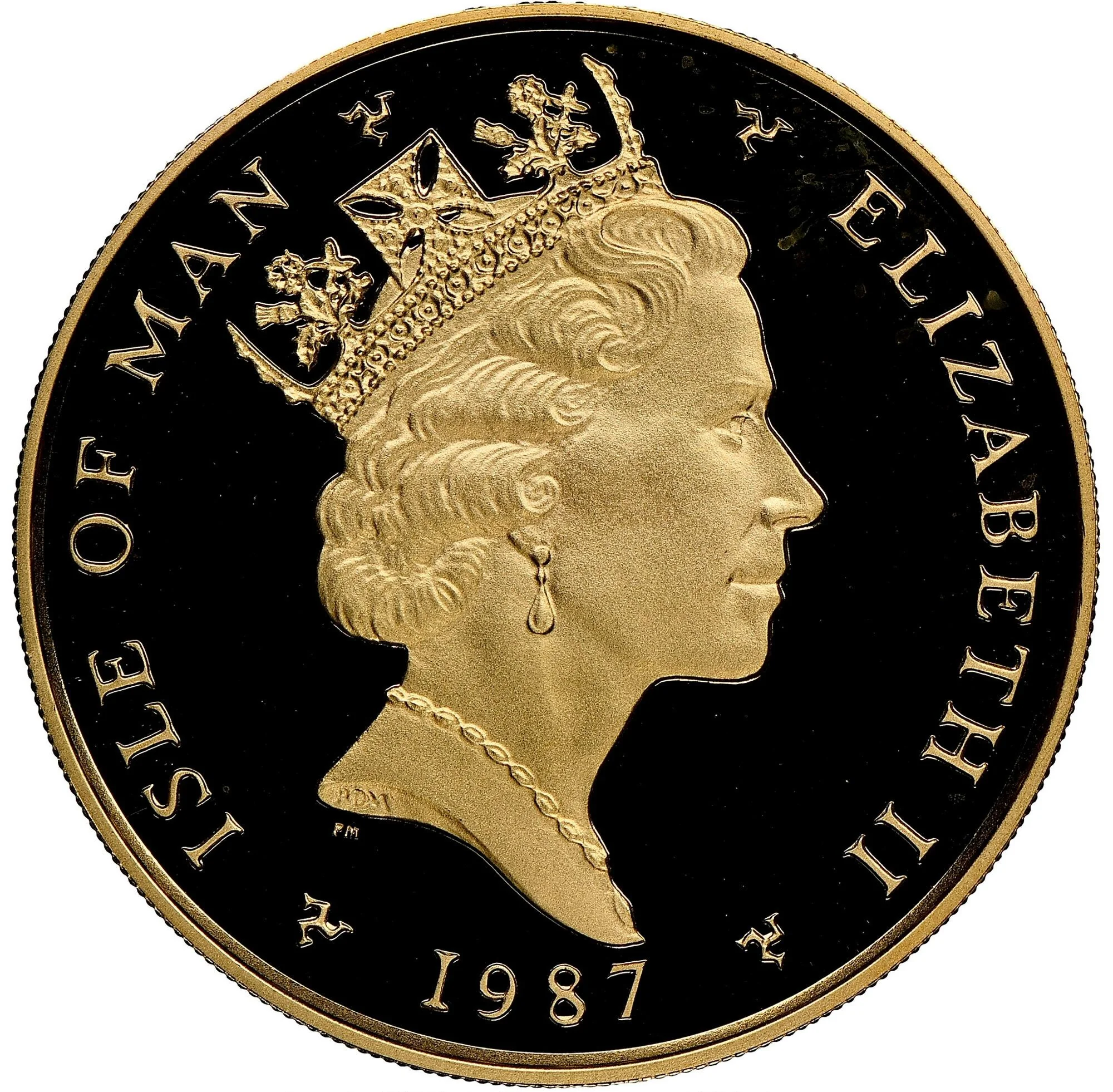
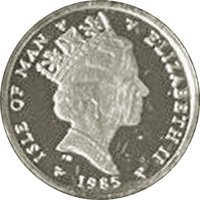
Queen Elizabeth II right-facing bust in George IV State Diadem, legend around, date below.
Inscription:
ISLE OF MAN ELIZABETH II
RDM
PM
1987
RDM
PM
1987
Translation:
ISLE OF MAN ELIZABETH II
RDM
PM
1987
RDM
PM
1987
Script: Latin
Language: English
Designer: Raphael David Maklouf
Reverse
Description:
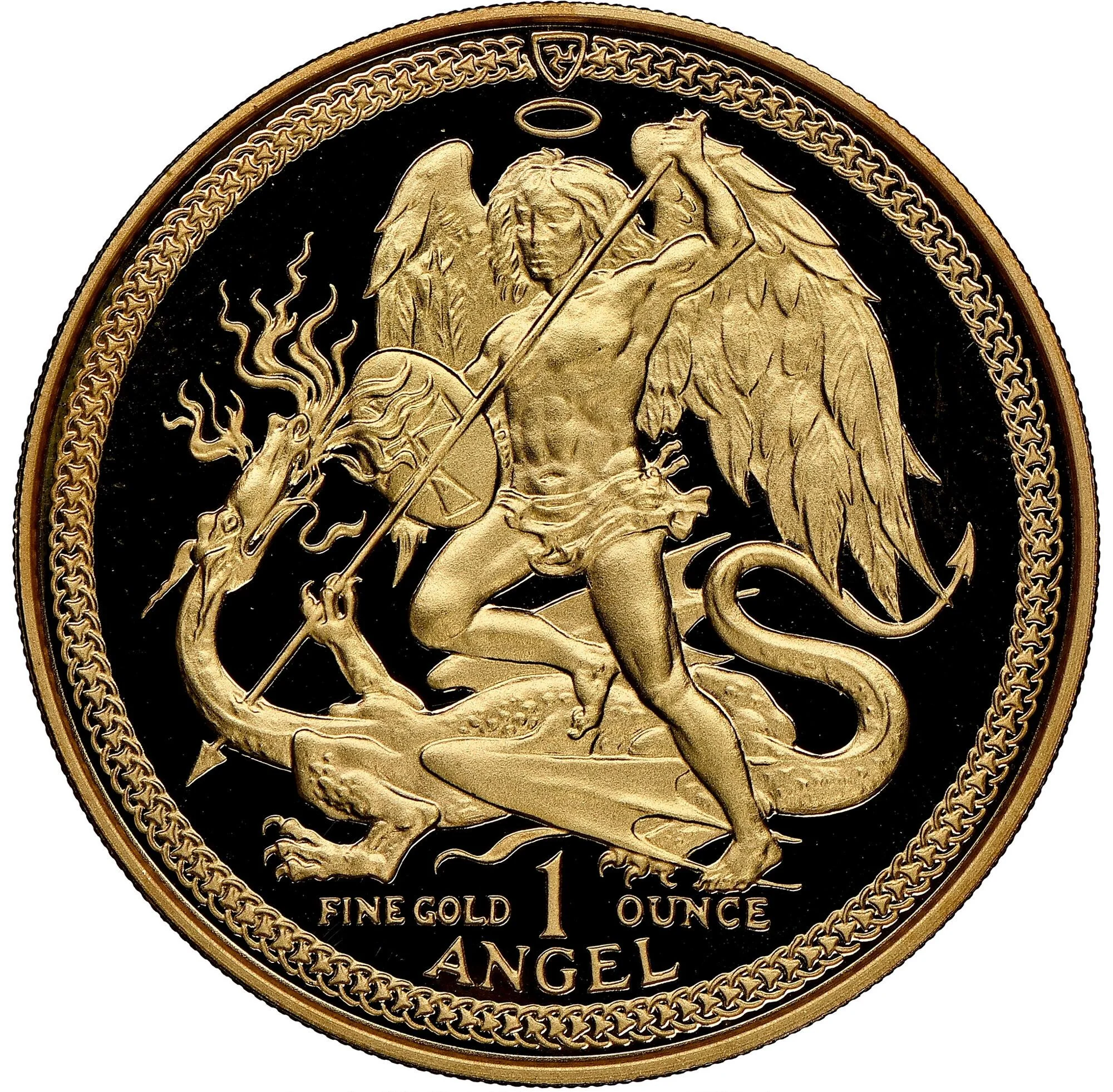
Archangel Michael slaying a left-facing dragon.
Inscription:
FINE GOLD 1 OUNCE
ANGEL
ANGEL
Script: Latin
Engraver: Leslie Lindsay
Edge
Reeded
Categories
| Mythology> Fantastic animal |
| Object> Armour |
| Object> Cold weapons |
Mints
| Name | Mark |
|---|---|
| Pobjoy Mint | (PM) |
Mintings
| Year | Mint Mark | Mintage | Quality | Collection |
|---|---|---|---|---|
| 1985 | PM | 28,000 | ||
| 1985 | PM | 3,000 | Proof | |
| 1985 | PM | — | Prooflike | |
| 1986 | PM | — | ||
| 1986 | PM | — | Proof | |
| 1987 | PM | — | ||
| 1987 | PM | — | Proof |
Historical background
In 1985, the Isle of Man's currency situation was characterised by a unique and complex dual-system, firmly underpinned by its constitutional status as a British Crown Dependency. The Manx government issued its own sterling-denominated currency – the Manx pound – featuring distinct designs and the triskelion symbol. However, this was not a separate currency in the economic sense; it was a local issue of sterling, pegged at par (1:1) with the UK pound sterling and fully backed by Bank of England reserves. UK coins and Bank of England notes also remained legal tender on the island, creating a practical mix of both circulations in daily use.
This arrangement was a key component of the Isle of Man's broader strategy of economic development and increasing fiscal autonomy from the UK, which had accelerated since the 1960s. The ability to issue its own currency was a symbolic assertion of national identity and a practical tool for the Manx authorities. Revenues from currency issuance (seigniorage) contributed to the government's finances, while the fixed parity with sterling provided crucial monetary stability and certainty for trade, given the island's deep economic integration with the United Kingdom.
Therefore, the 1985 currency scene reflected a careful balance. It showcased the Isle of Man's growing self-government and distinctive identity, while its absolute peg to sterling acknowledged the overwhelming reality of its economic dependencies. There was no debate about monetary independence or a floating currency; the system was designed to provide administrative benefit and symbolic distinction without introducing exchange rate risk or complicating financial transactions with its largest partner, the UK mainland.
This arrangement was a key component of the Isle of Man's broader strategy of economic development and increasing fiscal autonomy from the UK, which had accelerated since the 1960s. The ability to issue its own currency was a symbolic assertion of national identity and a practical tool for the Manx authorities. Revenues from currency issuance (seigniorage) contributed to the government's finances, while the fixed parity with sterling provided crucial monetary stability and certainty for trade, given the island's deep economic integration with the United Kingdom.
Therefore, the 1985 currency scene reflected a careful balance. It showcased the Isle of Man's growing self-government and distinctive identity, while its absolute peg to sterling acknowledged the overwhelming reality of its economic dependencies. There was no debate about monetary independence or a floating currency; the system was designed to provide administrative benefit and symbolic distinction without introducing exchange rate risk or complicating financial transactions with its largest partner, the UK mainland.
✨ Legendary