

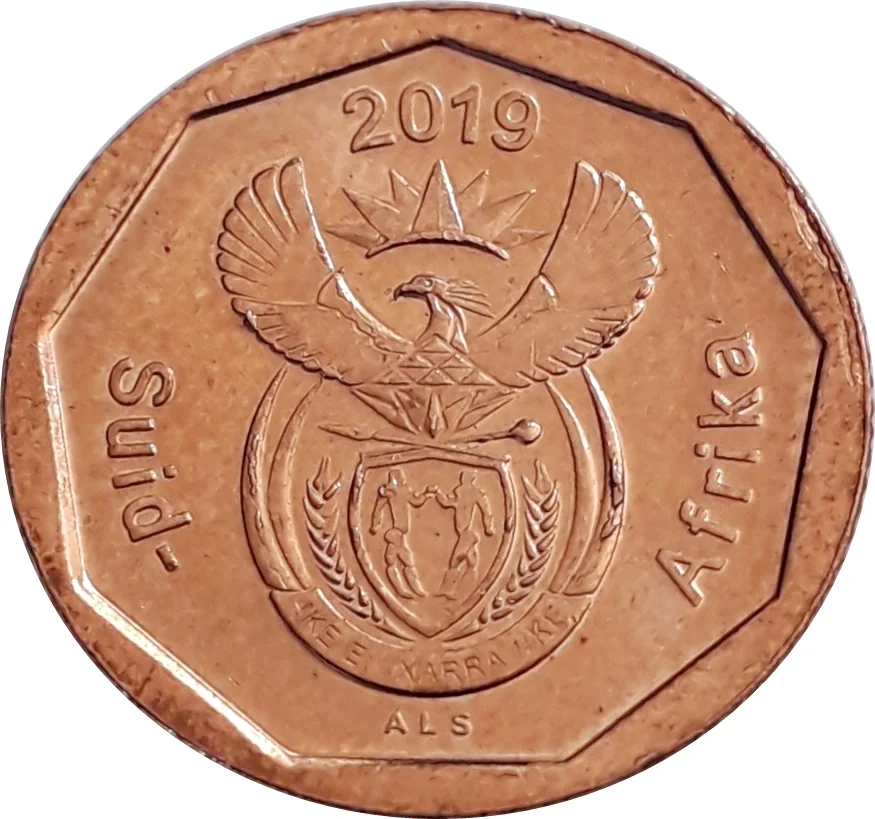
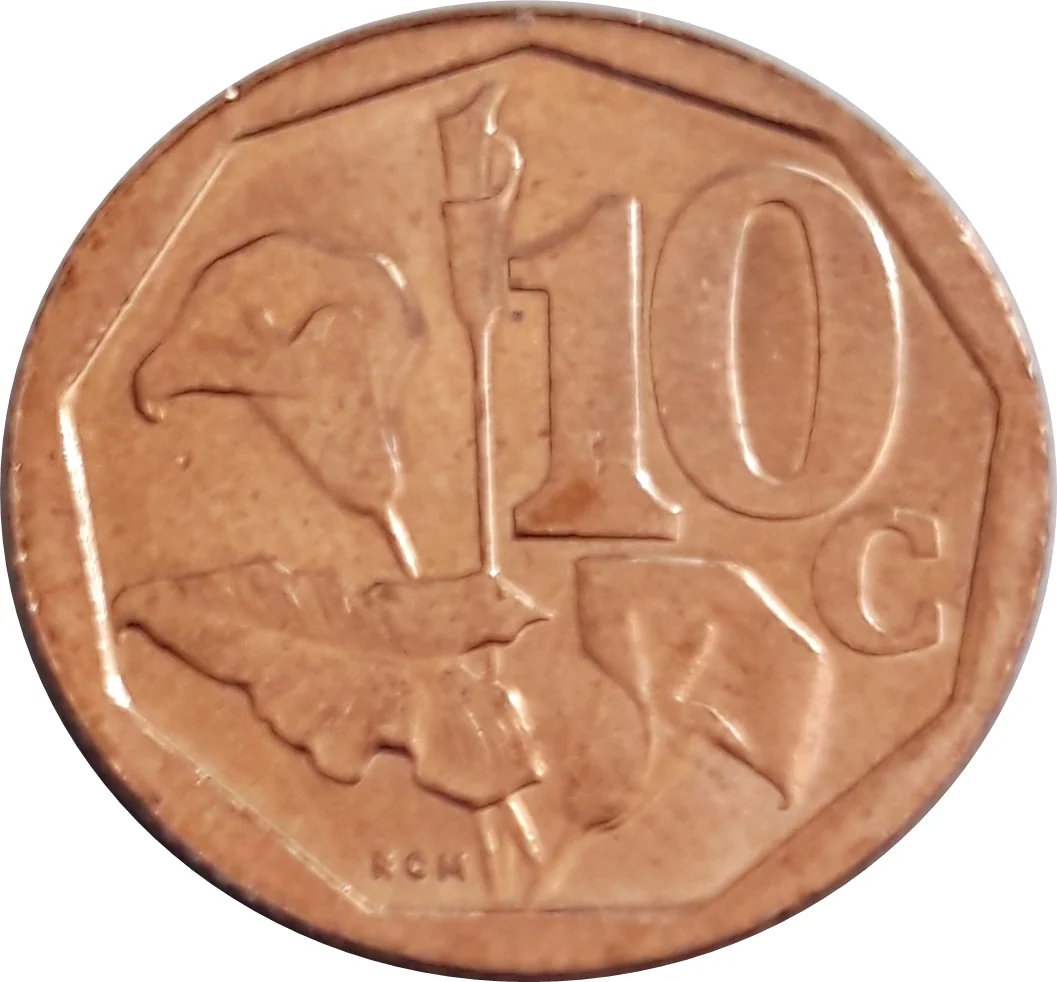
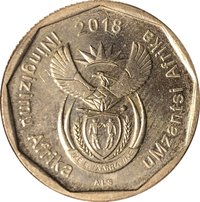
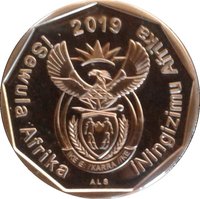
Obverse
Description:
Heraldic emblem
Inscription:
2019
Suid-Afrika
IKE E:/XARRA //KE
ALS
Suid-Afrika
IKE E:/XARRA //KE
ALS
Translation:
South Africa
Diverse People Unite
Diverse People Unite
Script: Latin
Engraver: Arthur Sutherland
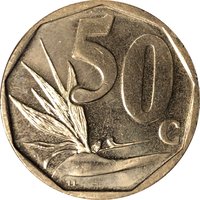
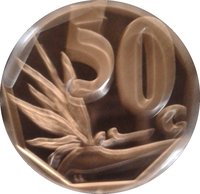
Reverse
Edge
Reeded
Mintings
| Year | Mint Mark | Mintage | Quality | Collection |
|---|---|---|---|---|
| 2019 | — | — | ||
| 2019 | — | — | BU | |
| 2019 | — | — | Proof |
Historical background
In 2019, the South African Rand (ZAR) navigated a challenging year characterized by persistent volatility and weakening pressure. The currency was heavily influenced by a combination of domestic economic stagnation and shifting global risk sentiment. Key internal headwinds included ongoing struggles at state-owned enterprises like Eskom, which implemented severe load-shedding throughout the year, crippling economic activity and investor confidence. Furthermore, concerns over rising government debt, weak GDP growth, and the uncertain pace of structural reforms under President Cyril Ramaphosa continued to weigh on the currency's prospects.
Externally, the Rand was sensitive to broader emerging market dynamics and U.S. monetary policy. While a more dovish turn by the U.S. Federal Reserve provided some relief to emerging market currencies in the first half of the year, the Rand failed to capitalize fully due to its unique domestic woes. The ongoing U.S.-China trade war also created periods of global risk aversion, during which investors retreated from riskier assets like the Rand. These factors combined to keep the currency on the back foot, with it frequently testing and breaching the psychologically significant R15/$ mark, and occasionally weakening beyond R16/$ during periods of peak stress.
By year-end, the Rand had depreciated approximately 8% against the U.S. dollar, reflecting a year of lost momentum. The currency's performance underscored the market's verdict: without tangible progress on the country’s deep-seated economic and institutional challenges, the Rand would remain vulnerable to sell-offs. The 2019 experience set a sobering stage for the following year, highlighting how domestic policy paralysis could exacerbate vulnerability to global shocks, a reality starkly realized with the onset of the COVID-19 pandemic in early 2020.
Externally, the Rand was sensitive to broader emerging market dynamics and U.S. monetary policy. While a more dovish turn by the U.S. Federal Reserve provided some relief to emerging market currencies in the first half of the year, the Rand failed to capitalize fully due to its unique domestic woes. The ongoing U.S.-China trade war also created periods of global risk aversion, during which investors retreated from riskier assets like the Rand. These factors combined to keep the currency on the back foot, with it frequently testing and breaching the psychologically significant R15/$ mark, and occasionally weakening beyond R16/$ during periods of peak stress.
By year-end, the Rand had depreciated approximately 8% against the U.S. dollar, reflecting a year of lost momentum. The currency's performance underscored the market's verdict: without tangible progress on the country’s deep-seated economic and institutional challenges, the Rand would remain vulnerable to sell-offs. The 2019 experience set a sobering stage for the following year, highlighting how domestic policy paralysis could exacerbate vulnerability to global shocks, a reality starkly realized with the onset of the COVID-19 pandemic in early 2020.
🌱 Common