

350 Rupees (Shri Guru Gobind Singh Ji) – India
Non-circulating coins
Commemoration: 350th Birth Anniversary of Shri Guru Gobind Singh Ji
India

Material

References
KM: #Click to copy to clipboard505
Numista: #157822
Value
Exchange value: 350 INR = $3.85
Bullion value: $49.75
Inflation-adjusted value: 560.64 INR
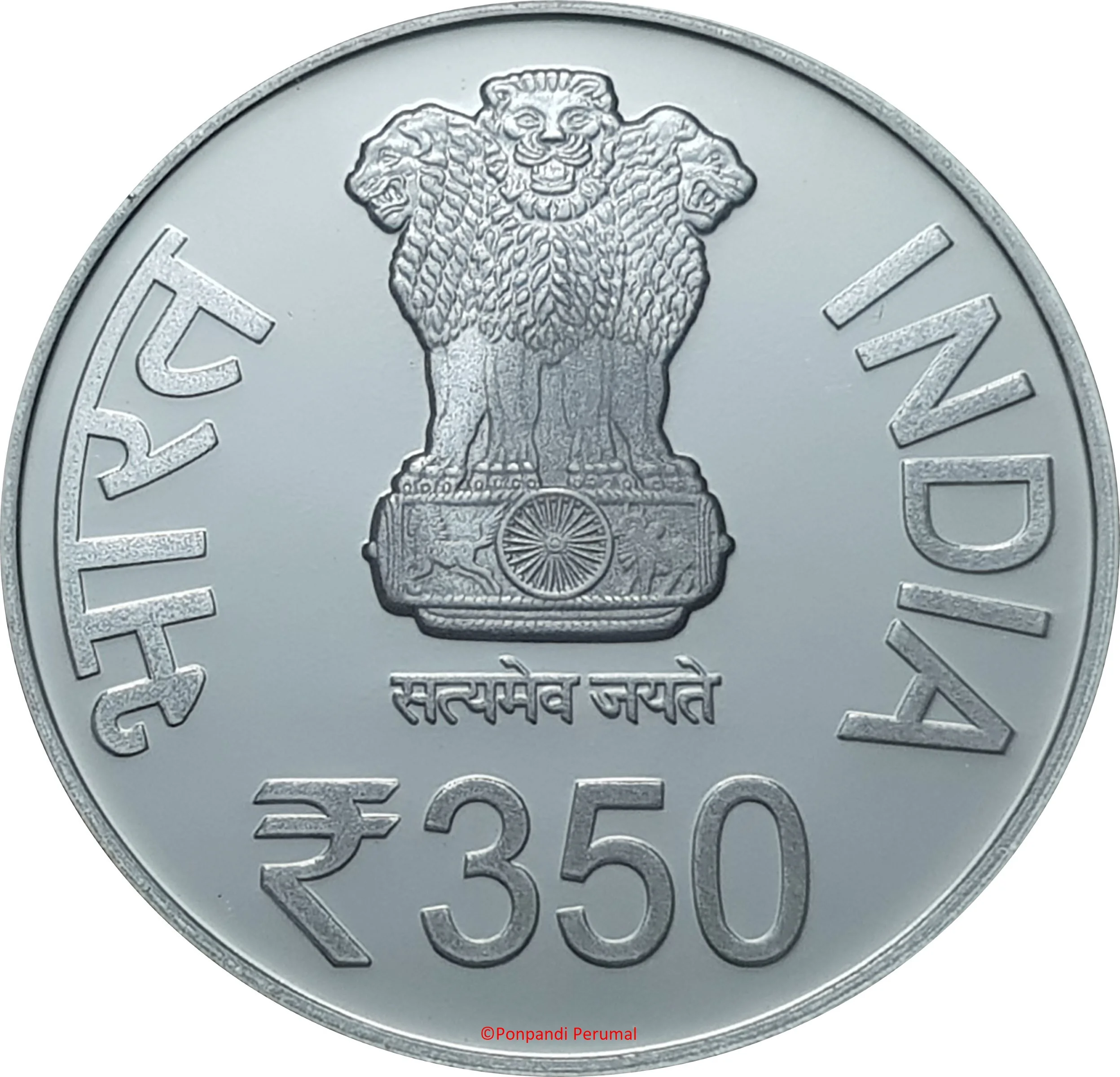
Obverse
Description:
Lion Capital of Ashoka Pillar with denomination below.
Inscription:
भारत INDIA
सत्यमेव जयते
₹350
सत्यमेव जयते
₹350
Translation:
India
Truth Alone Triumphs
350 Rupees
Truth Alone Triumphs
350 Rupees
Scripts: Devanagari, Latin
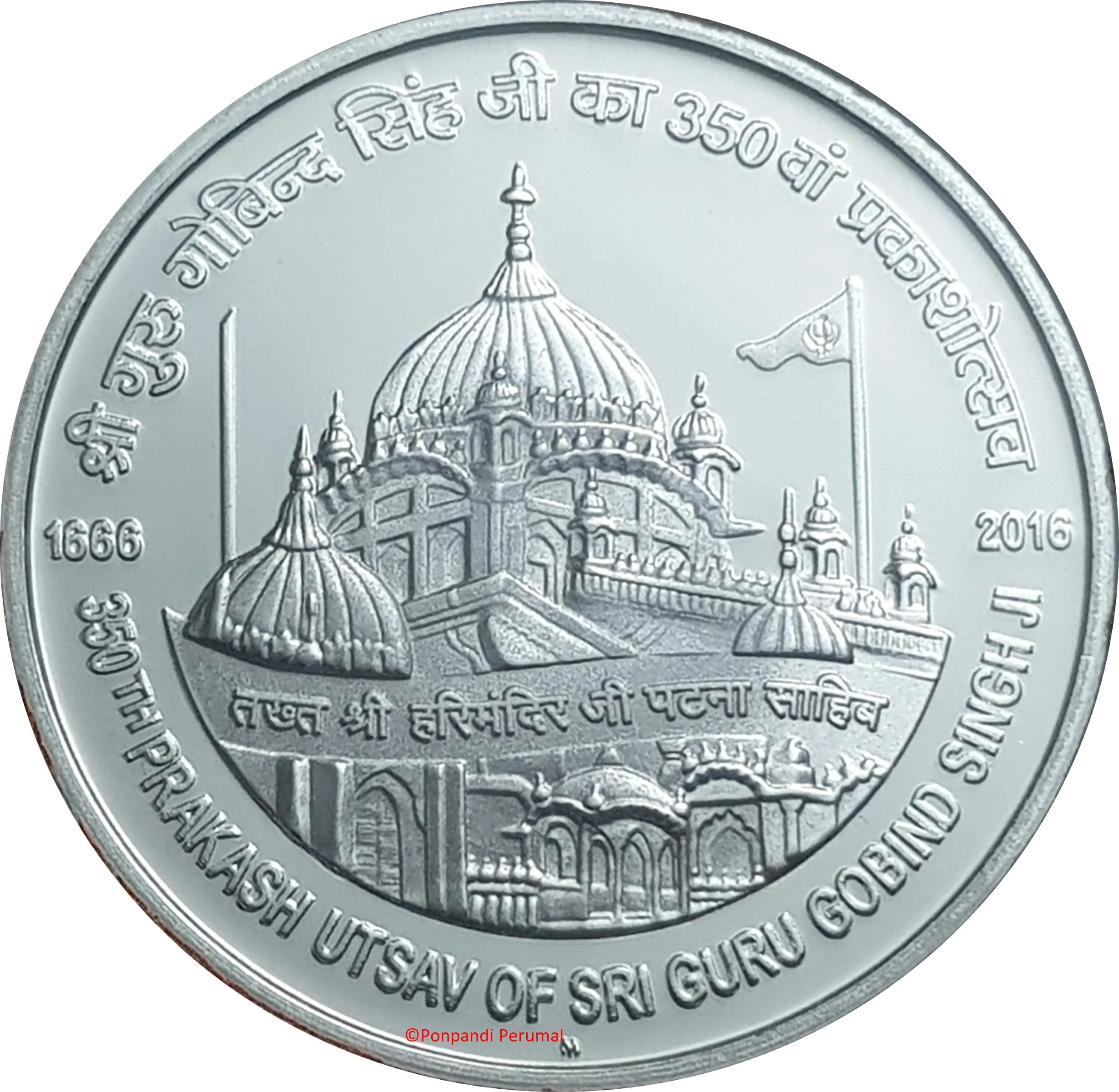
Reverse
Description:
Central image of Takht Shri Harimandir Ji Patna Sahib with Devanagari inscription.
Inscription:
तख्त श्री हरिमंदिर जी पटना साहिब
श्री गुरु गोबिंद सिंह जी का 350 वां प्रकाशोत्सव
350TH PRAKASH UTSAV OF SRI GURU GOBIND SINGH JI
1666 - 2016
श्री गुरु गोबिंद सिंह जी का 350 वां प्रकाशोत्सव
350TH PRAKASH UTSAV OF SRI GURU GOBIND SINGH JI
1666 - 2016
Translation:
Throne of Sri Harimandir Ji, Patna Sahib
350th Prakash Utsav of Sri Guru Gobind Singh Ji
1666 - 2016
350th Prakash Utsav of Sri Guru Gobind Singh Ji
1666 - 2016
Scripts: Devanagari, Latin
Edge
Reeded with 200 Serrations
Categories
| Building> Religious building |
Mints
| Name | Mark |
|---|---|
| Mumbai / Bombay | ♦ & B |
Mintings
| Year | Mint Mark | Mintage | Quality | Collection |
|---|---|---|---|---|
| 2016 | ♦ | — | ||
| 2016 | M | — | Proof |
Historical background
In 2016, India's currency situation was dominated by a single, seismic event: the demonetization of ₹500 and ₹1,000 banknotes, announced by Prime Minister Narendra Modi on November 8th. This policy, which rendered 86% of the currency in circulation by value invalid overnight, was presented as a radical surgical strike against "black money," counterfeit currency, and terror financing. The move aimed to purge illicit cash from the economy, push India towards digital transactions, and widen the tax net by bringing unaccounted wealth into the formal banking system.
The immediate aftermath was one of significant disruption and a severe liquidity crunch. Long queues formed outside banks and ATMs as citizens scrambled to exchange old notes or withdraw the newly introduced ₹500 and ₹2,000 denominations, the supply of which was initially inadequate. The cash-dependent informal sector, which constituted a large part of the economy, was severely impacted, affecting daily wage earners, small traders, and farmers. While the government argued it was a necessary short-term pain for long-term gain, the move sparked intense public debate and criticism over its planning, execution, and the disproportionate burden on ordinary citizens.
By the end of 2016, the economy was still grappling with demonetization's effects. Although a large portion of the invalidated currency was returned to the banking system—raising questions about the primary objective of trapping black money—the government highlighted successes like a surge in digital payments and expanded financial inclusion. However, the full economic impact, including a slowdown in GDP growth in subsequent quarters, was yet to be fully quantified. The year concluded with the currency situation in a state of transition, marked by a profound shock to the system and an uncertain path towards its intended structural benefits.
The immediate aftermath was one of significant disruption and a severe liquidity crunch. Long queues formed outside banks and ATMs as citizens scrambled to exchange old notes or withdraw the newly introduced ₹500 and ₹2,000 denominations, the supply of which was initially inadequate. The cash-dependent informal sector, which constituted a large part of the economy, was severely impacted, affecting daily wage earners, small traders, and farmers. While the government argued it was a necessary short-term pain for long-term gain, the move sparked intense public debate and criticism over its planning, execution, and the disproportionate burden on ordinary citizens.
By the end of 2016, the economy was still grappling with demonetization's effects. Although a large portion of the invalidated currency was returned to the banking system—raising questions about the primary objective of trapping black money—the government highlighted successes like a surge in digital payments and expanded financial inclusion. However, the full economic impact, including a slowdown in GDP growth in subsequent quarters, was yet to be fully quantified. The year concluded with the currency situation in a state of transition, marked by a profound shock to the system and an uncertain path towards its intended structural benefits.


⭐ Somewhat Rare