

1 Pound – Guernsey
Context
Years: 2001–2012
Country: British Crown dependencies
Issuer: Guernsey
Ruler: Elizabeth II
Currency:
(since 1971)
Demonetization: 15 October 2017
Total mintage: 238,250
Material
Diameter: 22.5 mm
Weight: 9.5 g
Thickness: 3 mm
Shape: Round
Composition: Nickel brass
Magnetic: No
Technique: Milled
Alignment: Medal alignment
flip
References
KM: #Click to copy to clipboard110
Numista: #15762
Value
Exchange value: 1 GGP
Obverse
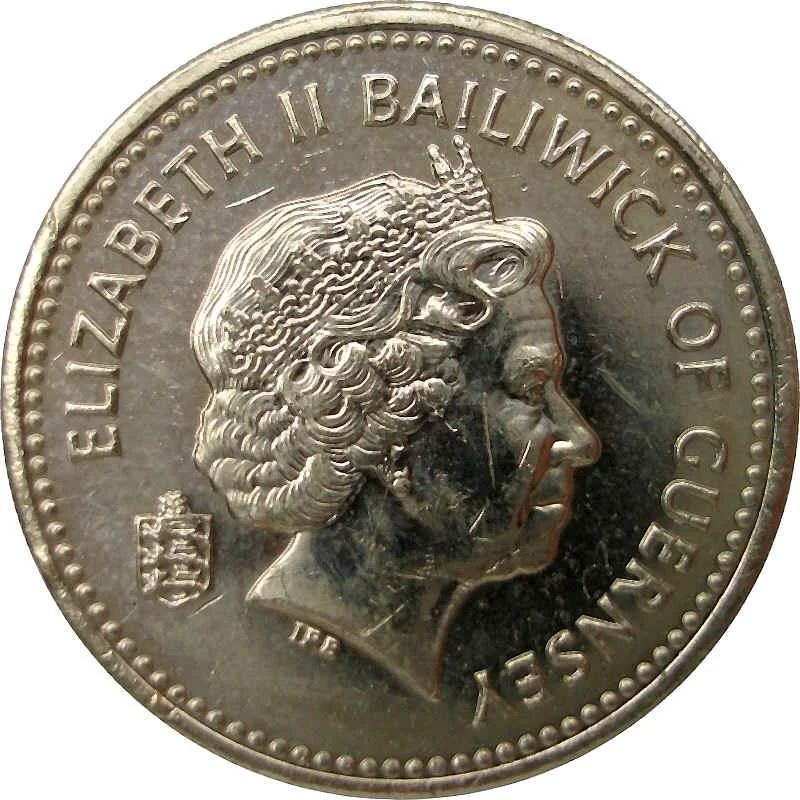
Description:
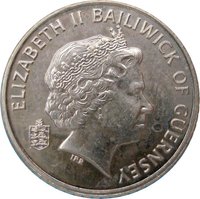
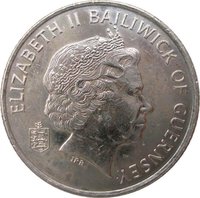
Queen Elizabeth IV facing right, wearing the Girls of Great Britain tiara.
Inscription:
ELIZABETH II BAILIWICK OF GUERNSEY
IRB
IRB
Script: Latin
Engraver: Ian Rank-Broadley
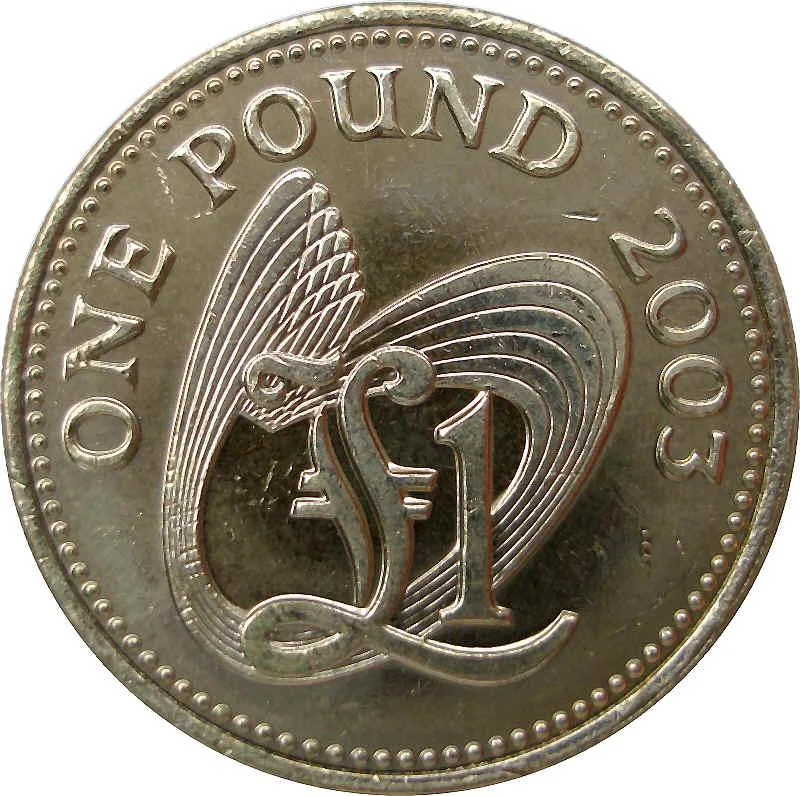
Reverse
Edge
Milled with incuse lettering
Legend:
BAILIWICK OF GUERNSEY
Mintings
| Year | Mint Mark | Mintage | Quality | Collection |
|---|---|---|---|---|
| 2001 | — | 175,000 | ||
| 2003 | — | 44,000 | ||
| 2006 | — | 14,000 | ||
| 2012 | — | 5,250 |
Historical background
In 2001, the currency situation in Guernsey was characterised by a formal and long-standing dependency on the pound sterling, combined with the issuance of distinctive local coinage and banknotes. As a British Crown Dependency, Guernsey was not part of the United Kingdom and thus not a member of the European Union or the Eurozone. However, it operated within a "Sterling Zone," where the States of Guernsey issued its own currency, the Guernsey pound (£), which was pegged at par with and fully backed by UK sterling reserves. This local currency was legal tender only on the island, while UK sterling circulated freely and was universally accepted.
The island's monetary policy was fundamentally linked to the decisions of the Bank of England, meaning interest rates and broader monetary conditions were effectively set in London. This arrangement provided stability and certainty for Guernsey's finance sector, which was (and remains) a cornerstone of its economy. A key feature of the 2001 landscape was the ongoing circulation of Guernsey's own series of banknotes and coins, which featured local iconography, serving as a symbol of the island's political autonomy while being underpinned by the UK's monetary system.
The year passed without any significant monetary upheaval, as the existing system was well-established and functioned smoothly for both residents and businesses. There was no serious public debate about adopting the euro, which was introduced in physical form in neighbouring Eurozone countries that same January. Guernsey's authorities and financial institutions continued to prioritise the benefits of sterling stability, ensuring the island remained an attractive and predictable jurisdiction for banking and investment, insulated from the currency transition occurring on the European continent.
The island's monetary policy was fundamentally linked to the decisions of the Bank of England, meaning interest rates and broader monetary conditions were effectively set in London. This arrangement provided stability and certainty for Guernsey's finance sector, which was (and remains) a cornerstone of its economy. A key feature of the 2001 landscape was the ongoing circulation of Guernsey's own series of banknotes and coins, which featured local iconography, serving as a symbol of the island's political autonomy while being underpinned by the UK's monetary system.
The year passed without any significant monetary upheaval, as the existing system was well-established and functioned smoothly for both residents and businesses. There was no serious public debate about adopting the euro, which was introduced in physical form in neighbouring Eurozone countries that same January. Guernsey's authorities and financial institutions continued to prioritise the benefits of sterling stability, ensuring the island remained an attractive and predictable jurisdiction for banking and investment, insulated from the currency transition occurring on the European continent.
🌱 Common