

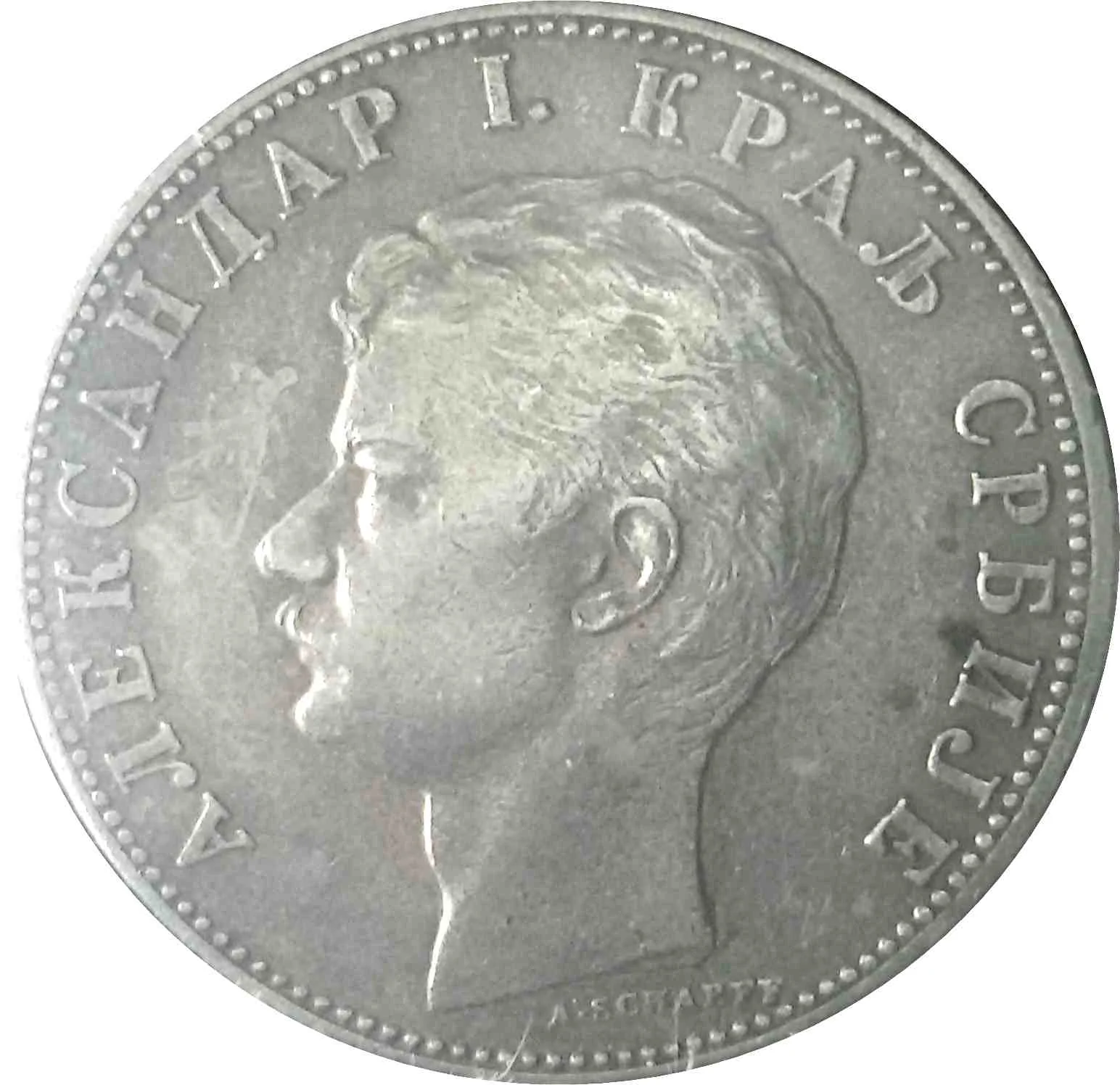
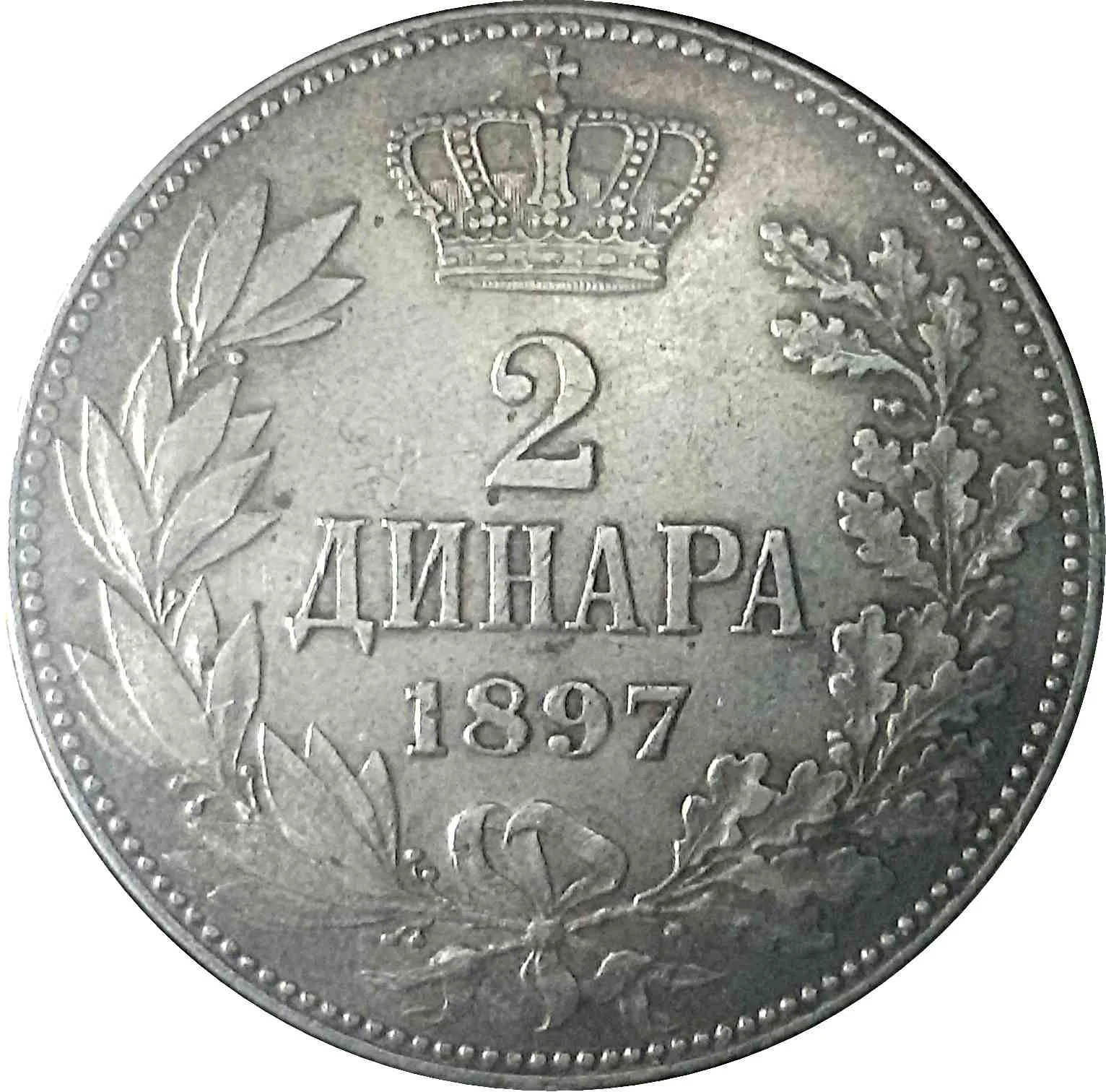
2 dinars – Serbia
Add to wishlist
Serbia
Context
Year: 1897
Issuer: Serbia
Ruler: Alexander I
Currency:
(1868—1918)
Demonetized: Yes
Total mintage: 1,000,000
Material
References
KM: #
Numista: #15750
Value
Bullion value: $20.86
Obverse
Description:
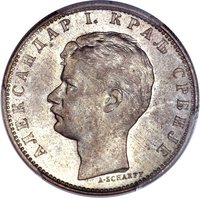
Portrait of Alexander I, left-facing.
Inscription:
АЛЕКСАНДАР I. КРАЉ СРБИЈЕ
Translation:
ALEXANDER I. KING OF SERBIA
Script: Cyrillic
Language: Serbian
Engraver: Anton Scharff
Reverse
Description:
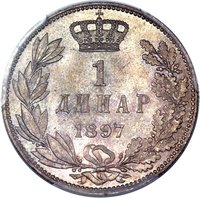
Denomination, date
Inscription:
2
ДИНАРA
1897
ДИНАРA
1897
Translation:
DINARA
1897
1897
Script: Cyrillic
Language: Serbian
Engraver: Anton Scharff
Edge
Reeded
Mintings
| Year | Mint Mark | Mintage | Quality | Collection |
|---|---|---|---|---|
| 1897 | — | 1,000,000 | ||
| 1897 | — | — | Proof |
Historical background
In 1897, Serbia's currency situation was defined by its use of the Serbian dinar, which operated within the Latin Monetary Union system without being a formal member. Following the model of France's bimetallic standard, the dinar was pegged to and freely convertible into silver, with a fixed exchange rate to gold (1 gold dinar = 10 silver dinars). This alignment with a major European monetary bloc facilitated trade and foreign investment, projecting an image of stability and modern financial integration to the outside world, which was a key political goal for the Obrenović dynasty.
However, this external stability masked significant internal fragility. Serbia's economy was still predominantly agricultural and suffered from chronic budget deficits, often financed through foreign loans. The fixed parity placed a strain on state gold reserves, and the currency's value was ultimately underpinned more by confidence than by robust economic fundamentals. Furthermore, the widespread circulation of foreign coins, particularly Austrian crowns and Turkish liras in border regions, highlighted the dinar's incomplete dominance within its own territory.
The year 1897 fell within a period of relative monetary calm before a major crisis. The system's inherent weaknesses—dependence on foreign capital, vulnerability to agricultural price shocks, and political pressures for public spending—would culminate just a few years later. The drastic depletion of gold reserves forced Serbia to officially abandon the gold standard in 1912, revealing the precariousness of the fin-de-siècle arrangement and setting the stage for the monetary challenges of the Balkan Wars and World War I.
However, this external stability masked significant internal fragility. Serbia's economy was still predominantly agricultural and suffered from chronic budget deficits, often financed through foreign loans. The fixed parity placed a strain on state gold reserves, and the currency's value was ultimately underpinned more by confidence than by robust economic fundamentals. Furthermore, the widespread circulation of foreign coins, particularly Austrian crowns and Turkish liras in border regions, highlighted the dinar's incomplete dominance within its own territory.
The year 1897 fell within a period of relative monetary calm before a major crisis. The system's inherent weaknesses—dependence on foreign capital, vulnerability to agricultural price shocks, and political pressures for public spending—would culminate just a few years later. The drastic depletion of gold reserves forced Serbia to officially abandon the gold standard in 1912, revealing the precariousness of the fin-de-siècle arrangement and setting the stage for the monetary challenges of the Balkan Wars and World War I.
🌱 Fairly Common