

1 Falus – Morocco
Morocco
Context
Year: 1810
Islamic (Hijri) Year: 1225
Issuer: Morocco 
Ruler: Moulay Sulayman
Currency:
(1659—1882)
Demonetized: Yes
References
KM: #Click to copy to clipboardB95.1
Numista: #157231
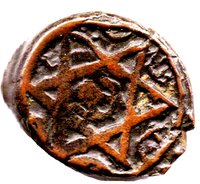
Obverse
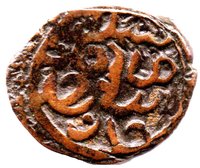
Reverse
Edge
Mintings
| Year | Mint Mark | Mintage | Quality | Collection |
|---|---|---|---|---|
| 1810 | — | — |
Historical background
In 1810, Morocco's currency situation was characterized by a complex and fragmented system, deeply tied to its political and economic condition under the Alaouite Sultan Moulay Slimane. The country operated on a bimetallic standard, primarily using silver dirhams and gold benduqi dinars, but the system was far from unified. Coins were minted in various cities like Fes, Marrakech, and Tetouan, often with differing weights and purities, leading to a lack of standardization that complicated domestic and foreign trade. Furthermore, a multitude of foreign coins—especially Spanish silver reales (pieces of eight), Austrian thalers, and other European currencies—circulated widely, particularly in coastal trading ports, acting as a de facto international medium of exchange.
This monetary fragmentation reflected Morocco’s increasing integration into, and dependence on, Atlantic and Mediterranean trade networks, while also exposing its weakening central control. The state's finances were strained by tribal rebellions, the costly maintenance of a large military, and a decline in traditional trans-Saharan trade routes. Sultan Moulay Slimane’s policies, including his restriction of European trade to a few ports and his general isolationist倾向, paradoxically limited the state's ability to harness economic activity to stabilize its currency. Debasement of coinage was a recurring problem, as the Makhzen (central government) sometimes reduced the silver content to meet short-term fiscal needs, eroding public trust in the official currency.
Consequently, the early 19th-century Moroccan economy functioned with a dual monetary reality. In the interior, traditional coinage and even barter persisted for local transactions, while international commerce and activities in port cities were dominated by more reliable foreign silver coins. This unstable and heterogeneous system highlighted the challenges faced by the Sultanate in asserting economic sovereignty during a period of growing European commercial influence and internal political stress, setting the stage for the profound monetary reforms and foreign financial interventions that would later unfold in the century.
This monetary fragmentation reflected Morocco’s increasing integration into, and dependence on, Atlantic and Mediterranean trade networks, while also exposing its weakening central control. The state's finances were strained by tribal rebellions, the costly maintenance of a large military, and a decline in traditional trans-Saharan trade routes. Sultan Moulay Slimane’s policies, including his restriction of European trade to a few ports and his general isolationist倾向, paradoxically limited the state's ability to harness economic activity to stabilize its currency. Debasement of coinage was a recurring problem, as the Makhzen (central government) sometimes reduced the silver content to meet short-term fiscal needs, eroding public trust in the official currency.
Consequently, the early 19th-century Moroccan economy functioned with a dual monetary reality. In the interior, traditional coinage and even barter persisted for local transactions, while international commerce and activities in port cities were dominated by more reliable foreign silver coins. This unstable and heterogeneous system highlighted the challenges faced by the Sultanate in asserting economic sovereignty during a period of growing European commercial influence and internal political stress, setting the stage for the profound monetary reforms and foreign financial interventions that would later unfold in the century.

✨ Legendary