

1 gulden – Curaçao
Add to wishlist
Netherlands
Context
Year: 1944
Country: Netherlands
Issuer: Curaçao
Ruler: Wilhelmina
Currency:
(since 1828)
Demonetized: Yes
Total mintage: 500,000
Material
References
KM: #
Numista: #15721
Value
Exchange value: 1 ANG
Bullion value: $18.40
Obverse
Description:
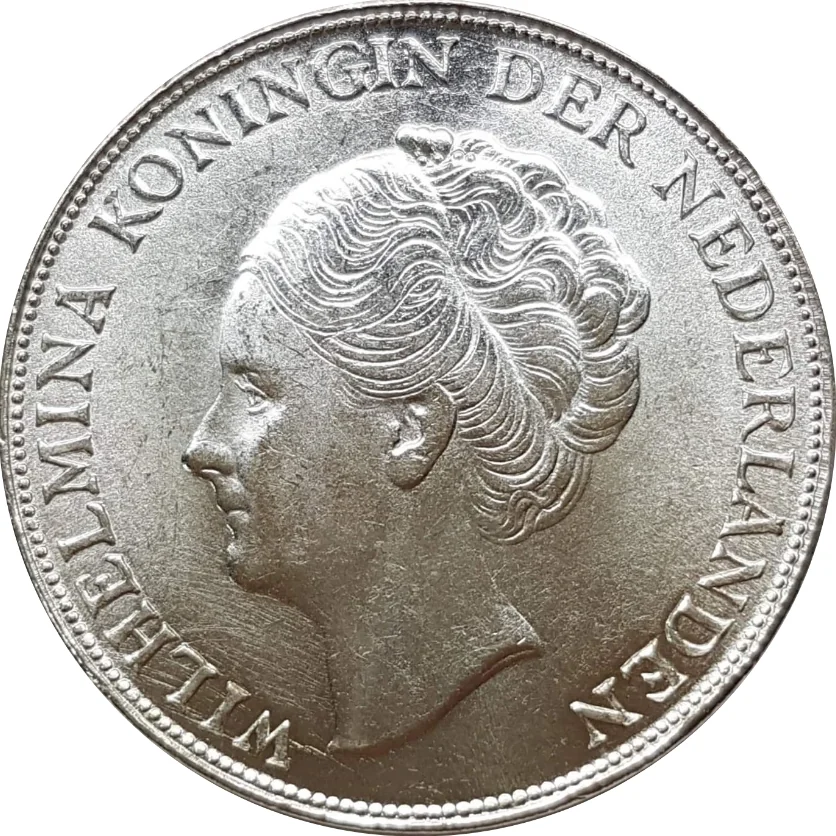
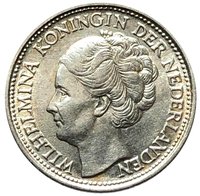
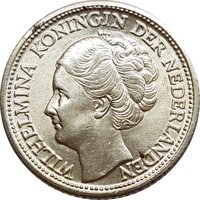
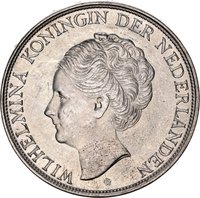
Portrait of Wilhelmina facing left, encircled by Dutch text.
Inscription:
WILHELMINA KONINGIN DER NEDERLANDEN
Translation:
Wilhelmina Queen of the Netherlands
Script: Latin
Language: Dutch
Designer: Johannes Cornelis Wienecke
Reverse
Description:
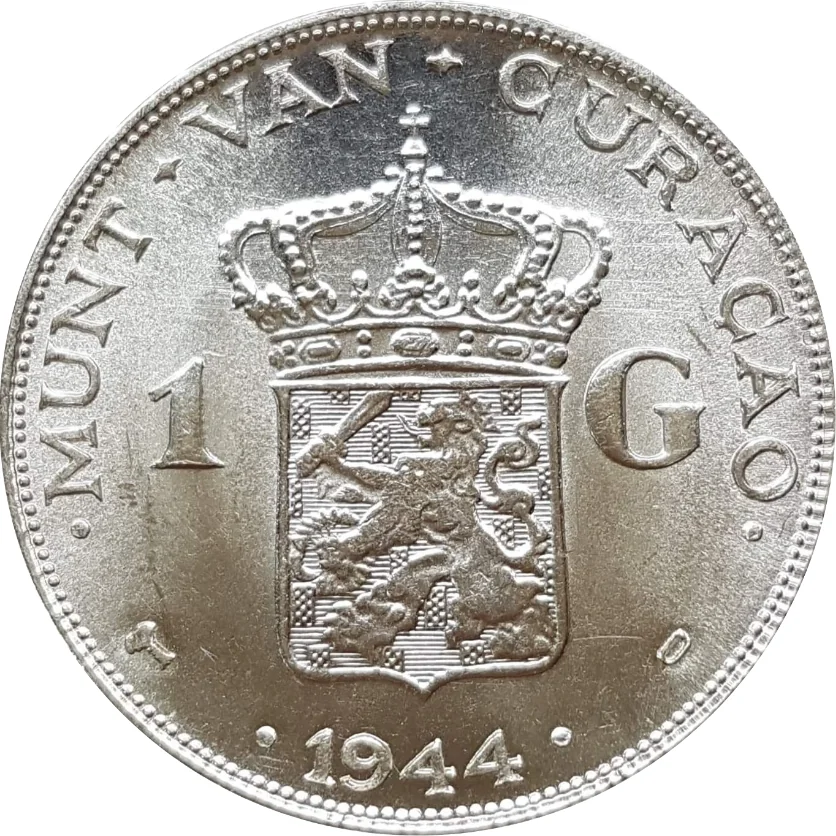
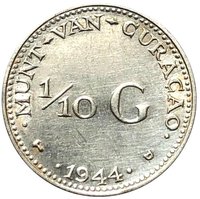
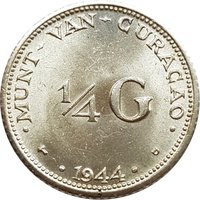
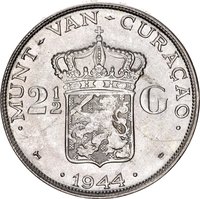
Dutch text above, date below the national coat of arms. Palm tree at 8 o'clock, mint mark at 4 o'clock.
Inscription:
· MUNT VAN CURAÇAO ·
1 G
· 1944 · D
1 G
· 1944 · D
Translation:
Coin of Curaçao
1 Guilder
1944 D
1 Guilder
1944 D
Script: Latin
Languages: Papiamento, Dutch
Designer: Johannes Cornelis Wienecke
Edge
Plain with incused lettering
Legend:
GOD * ZIJ * MET * ONS *
Translation:
God be with us
Language: Dutch
Categories
| Symbol> Crown |
| Symbols> Coat of Arms |
Mints
| Name | Mark |
|---|---|
| United States Mint of Denver | D |
Mintings
| Year | Mint Mark | Mintage | Quality | Collection |
|---|---|---|---|---|
| 1944 | D | 500,000 |
Historical background
In 1944, Curaçao, as part of the Netherlands Antilles, operated under a unique and complex currency system shaped by World War II. The official currency was the Netherlands Antillean guilder (NAf), which was pegged not to the Dutch guilder—the mother country being under Nazi occupation—but directly to the U.S. dollar at a fixed rate of 1.88585 guilders to one dollar. This peg, established in 1939, was crucial due to the island's strategic economic role. The vast Royal Dutch Shell refinery in Willemstad processed Venezuelan crude oil, making the island a vital Allied fuel hub, and its economy was deeply integrated with the U.S. dollar zone for trade and military expenditures.
The war caused significant physical currency complications. With maritime supply lines disrupted and the Netherlands cut off, there was a severe shortage of minted coins and banknotes. To resolve this, the local government issued emergency "zilverbons" (silver certificates) and authorized the use of U.S. and British coins as legal tender alongside the scarce Antillean coins. Furthermore, Curaçao played an indirect role in European financial resistance; in 1944, the Dutch government-in-exile in London arranged for new banknotes to be printed in the United States, some of which were reportedly stockpiled in Curaçao, ready for the liberation of the Netherlands.
Thus, the currency situation in 1944 was one of stable but administratively strained duality. The U.S. dollar peg provided economic stability and facilitated the critical wartime operation of the oil refinery, which financed the local government. Simultaneously, the physical circulation relied on a pragmatic patchwork of local emergency issues and foreign coins. This period solidified the island's financial link to the dollar, a linkage that would define its monetary policy long after the war ended and the temporary emergency measures were phased out.
The war caused significant physical currency complications. With maritime supply lines disrupted and the Netherlands cut off, there was a severe shortage of minted coins and banknotes. To resolve this, the local government issued emergency "zilverbons" (silver certificates) and authorized the use of U.S. and British coins as legal tender alongside the scarce Antillean coins. Furthermore, Curaçao played an indirect role in European financial resistance; in 1944, the Dutch government-in-exile in London arranged for new banknotes to be printed in the United States, some of which were reportedly stockpiled in Curaçao, ready for the liberation of the Netherlands.
Thus, the currency situation in 1944 was one of stable but administratively strained duality. The U.S. dollar peg provided economic stability and facilitated the critical wartime operation of the oil refinery, which financed the local government. Simultaneously, the physical circulation relied on a pragmatic patchwork of local emergency issues and foreign coins. This period solidified the island's financial link to the dollar, a linkage that would define its monetary policy long after the war ended and the temporary emergency measures were phased out.
Series: 1944 Curaçao circulation coins
🌱 Common