

3 Falus – Morocco
Morocco
Context
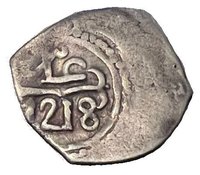
Year: 1803
Islamic (Hijri) Year: 1217
Issuer: Morocco 
Ruler: Moulay Sulayman
Currency:
(1659—1882)
Demonetized: Yes
References
KM: #Click to copy to clipboard100.5
Numista: #157197
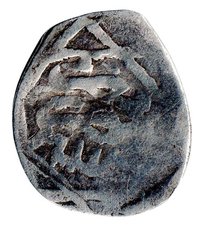
Obverse
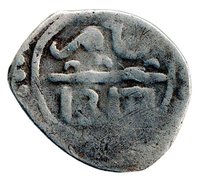
Reverse
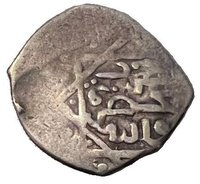
Edge
Mintings
| Year | Mint Mark | Mintage | Quality | Collection |
|---|---|---|---|---|
| 1803 | — | — |
Historical background
In 1803, Morocco's currency situation was characterized by a complex and fragmented system, reflecting both its historic trade networks and internal political pressures. The country operated on a bimetallic standard, with gold benduqi dinars and silver dirhams serving as the primary official coins, minted in cities like Fez and Marrakech. However, the circulation was dominated by a bewildering variety of foreign coins, a legacy of Morocco's key position on Mediterranean and trans-Saharan trade routes. Spanish reales (pieces of eight), Portuguese cruzados, and other European and Ottoman coins circulated freely alongside local issues, their values constantly fluctuating based on metal content and market demand.
This monetary heterogeneity was exacerbated by the political context of the early 19th century. The Alaouite Sultan Moulay Slimane (r. 1792–1822) faced significant challenges in asserting central authority and fiscal control. Regional tribes and powerful qaids often exercised autonomy, including the ability to levy their own duties and manipulate local exchange rates. Furthermore, the Sultan's own policies, including his restriction of European trade and focus on inland empire, strained the treasury and limited the state's capacity to standardize currency or control the money supply effectively.
Consequently, daily transactions for most Moroccans were fraught with uncertainty. Money changers (sarrāfs) held crucial power in the souks, determining exchange rates between the myriad coins. Debasement of coinage was a recurring problem, as both the state and local authorities sometimes reduced the precious metal content to cover shortfalls, eroding public trust. Thus, in 1803, Morocco's currency was less a unified national system and more a practical, if unstable, mosaic of metal, shaped more by global commerce and local power than by centralized monetary policy.
This monetary heterogeneity was exacerbated by the political context of the early 19th century. The Alaouite Sultan Moulay Slimane (r. 1792–1822) faced significant challenges in asserting central authority and fiscal control. Regional tribes and powerful qaids often exercised autonomy, including the ability to levy their own duties and manipulate local exchange rates. Furthermore, the Sultan's own policies, including his restriction of European trade and focus on inland empire, strained the treasury and limited the state's capacity to standardize currency or control the money supply effectively.
Consequently, daily transactions for most Moroccans were fraught with uncertainty. Money changers (sarrāfs) held crucial power in the souks, determining exchange rates between the myriad coins. Debasement of coinage was a recurring problem, as both the state and local authorities sometimes reduced the precious metal content to cover shortfalls, eroding public trust. Thus, in 1803, Morocco's currency was less a unified national system and more a practical, if unstable, mosaic of metal, shaped more by global commerce and local power than by centralized monetary policy.
✨ Legendary