

1 Paisa – Nepal
Nepal
Context
Years: 1892–1907
Issuer: Nepal 
Ruler: Prithvi Bir Bikram Shah
Currency:
(1546—1932)
Demonetized: Yes
Material
References
KM: #Click to copy to clipboard628
Numista: #15686
Obverse
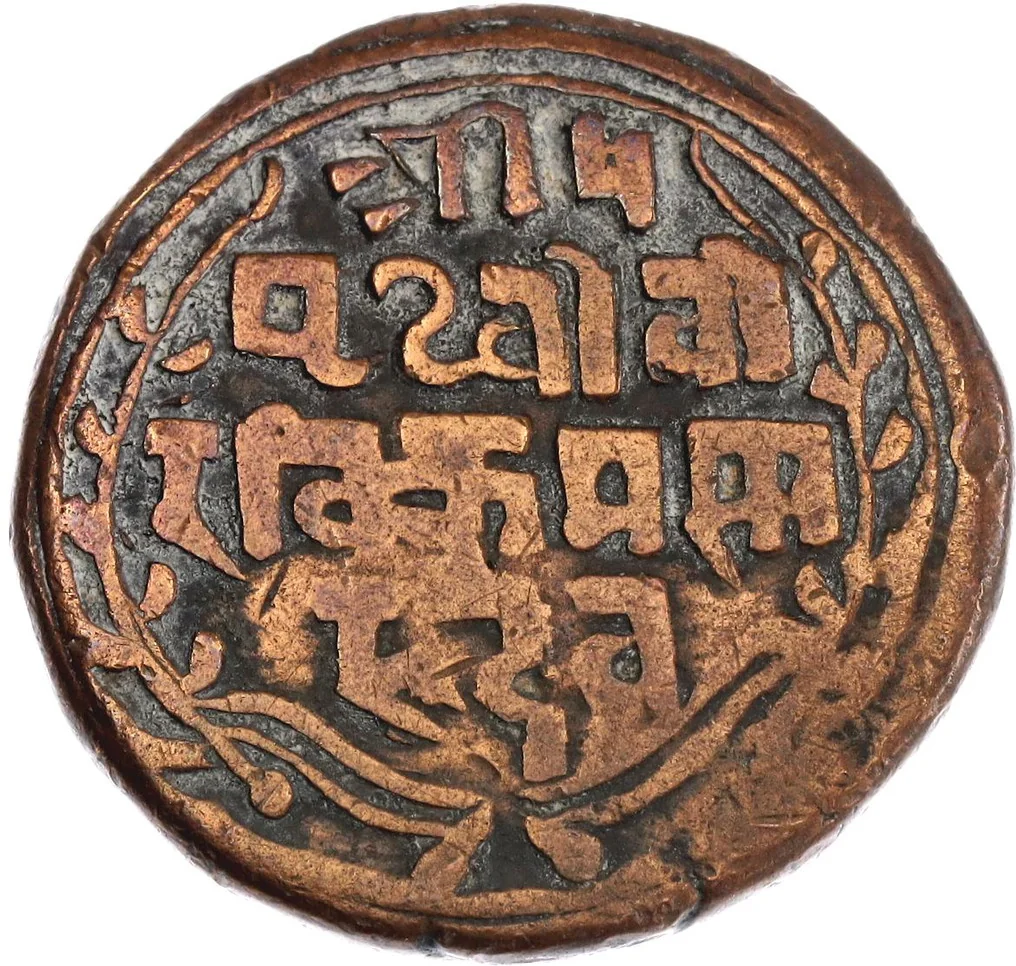
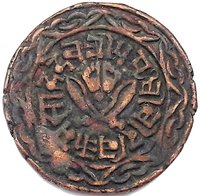
Description:
Shri 5 Pruthviraj Vikram Sahdev
Inscription:
श्री ५
पृथ्वी वी
र विक्रम सा
हदेव
पृथ्वी वी
र विक्रम सा
हदेव
Translation:
Shri 5
Prithvi Veer
Vikram Sah
Dev
Prithvi Veer
Vikram Sah
Dev
Language: Nepali
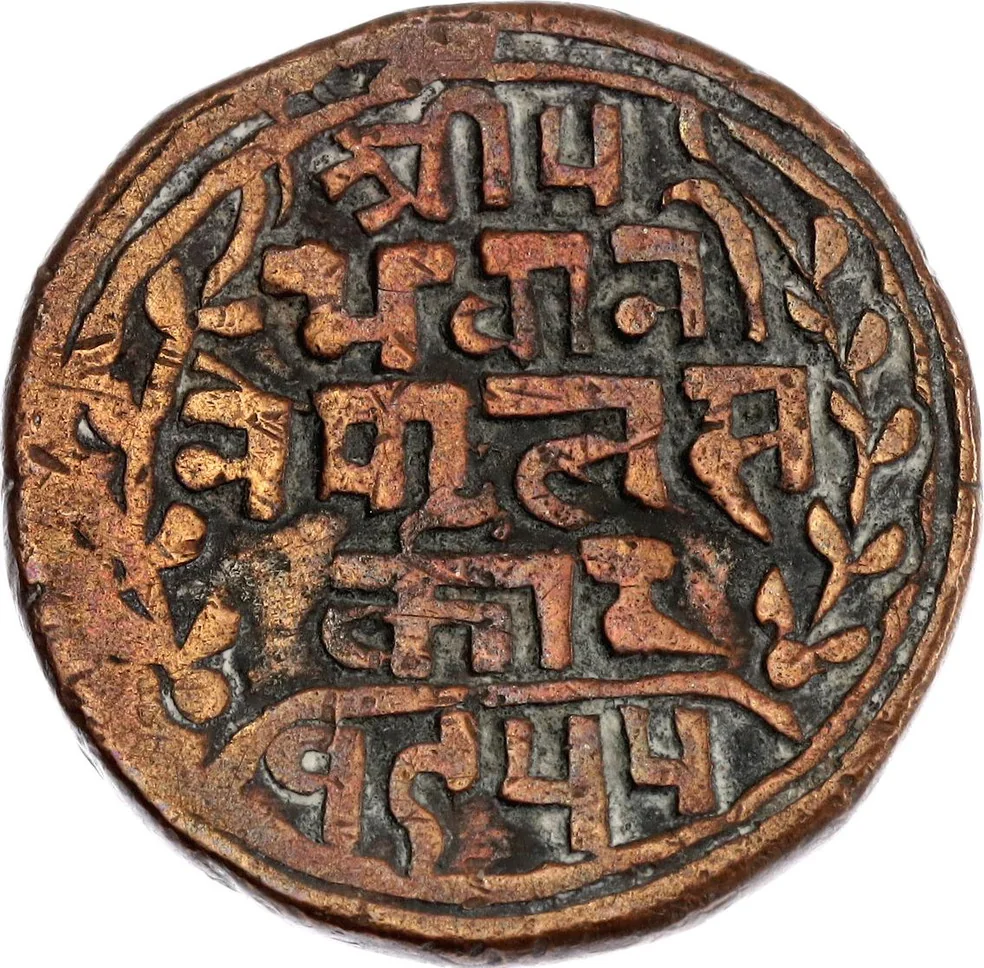
Reverse
Edge
Plain
Mintings
| Year | Mint Mark | Mintage | Quality | Collection |
|---|---|---|---|---|
| 1892 | — | — | ||
| 1893 | — | — | ||
| 1894 | — | — | ||
| 1895 | — | — | ||
| 1896 | — | — | ||
| 1897 | — | — | ||
| 1898 | — | — | ||
| 1899 | — | — | ||
| 1900 | — | — | ||
| 1902 | — | — | ||
| 1903 | — | — | ||
| 1904 | — | — | ||
| 1905 | — | — | ||
| 1906 | — | — | ||
| 1907 | — | — |
Historical background
In 1892, Nepal operated under a complex and fragmented monetary system, a legacy of its feudal past and its economic ties to both British India and Tibet. The official currency was the Mohar, a silver coin minted by the state, but its value and purity were inconsistent. More significantly, the Indian Rupee, a stable and finely milled currency, circulated widely, especially in the southern Tarai region and for significant trade. This created a de facto dual-currency economy where transactions, particularly with British India—Nepal's dominant trading partner—were often conducted in rupees, while the mohar persisted for local and smaller exchanges.
This period was one of transition and attempted reform under the Rana Prime Minister Bir Shumsher Jang Bahadur Rana. Recognizing the economic inefficiencies and the loss of seigniorage (profit from minting coins), his administration took a major step in 1892 by introducing the Nepali Rupee (NRs), pegged at par with the Indian Rupee. This was not a paper currency but a new silver coin intended to standardize the monetary system and reduce dependence on foreign coinage. The government also moved to centralize minting, closing many of the local, hereditary mint houses (Lal Mohar) that had produced debased coins, thereby aiming to establish uniform currency control under the state.
However, the reform of 1892 was only partially successful. The new Nepali Rupee struggled to gain full public confidence and completely displace the older mohars and the entrenched Indian Rupees, which remained trusted for their consistent silver content. The economy was still predominantly agrarian and cash-light, with barter common in remote hills. Thus, while 1892 marks a pivotal attempt at monetary modernization and centralization, Nepal's currency situation remained a hybrid and somewhat chaotic mix of old and new systems, reflecting the country's gradual and negotiated integration into the regional monetary order of the British Empire.
This period was one of transition and attempted reform under the Rana Prime Minister Bir Shumsher Jang Bahadur Rana. Recognizing the economic inefficiencies and the loss of seigniorage (profit from minting coins), his administration took a major step in 1892 by introducing the Nepali Rupee (NRs), pegged at par with the Indian Rupee. This was not a paper currency but a new silver coin intended to standardize the monetary system and reduce dependence on foreign coinage. The government also moved to centralize minting, closing many of the local, hereditary mint houses (Lal Mohar) that had produced debased coins, thereby aiming to establish uniform currency control under the state.
However, the reform of 1892 was only partially successful. The new Nepali Rupee struggled to gain full public confidence and completely displace the older mohars and the entrenched Indian Rupees, which remained trusted for their consistent silver content. The economy was still predominantly agrarian and cash-light, with barter common in remote hills. Thus, while 1892 marks a pivotal attempt at monetary modernization and centralization, Nepal's currency situation remained a hybrid and somewhat chaotic mix of old and new systems, reflecting the country's gradual and negotiated integration into the regional monetary order of the British Empire.
🌱 Common