

2 pounds – Saint Helena and Ascension
Add to wishlist
United Kingdom
Context
Years: 2003–2006
Country: United Kingdom
Issuer: Saint Helena and Ascension
Ruler: Elizabeth II
Currency:
(since 1976)
Material
References
KM: #
Numista: #15645
Obverse
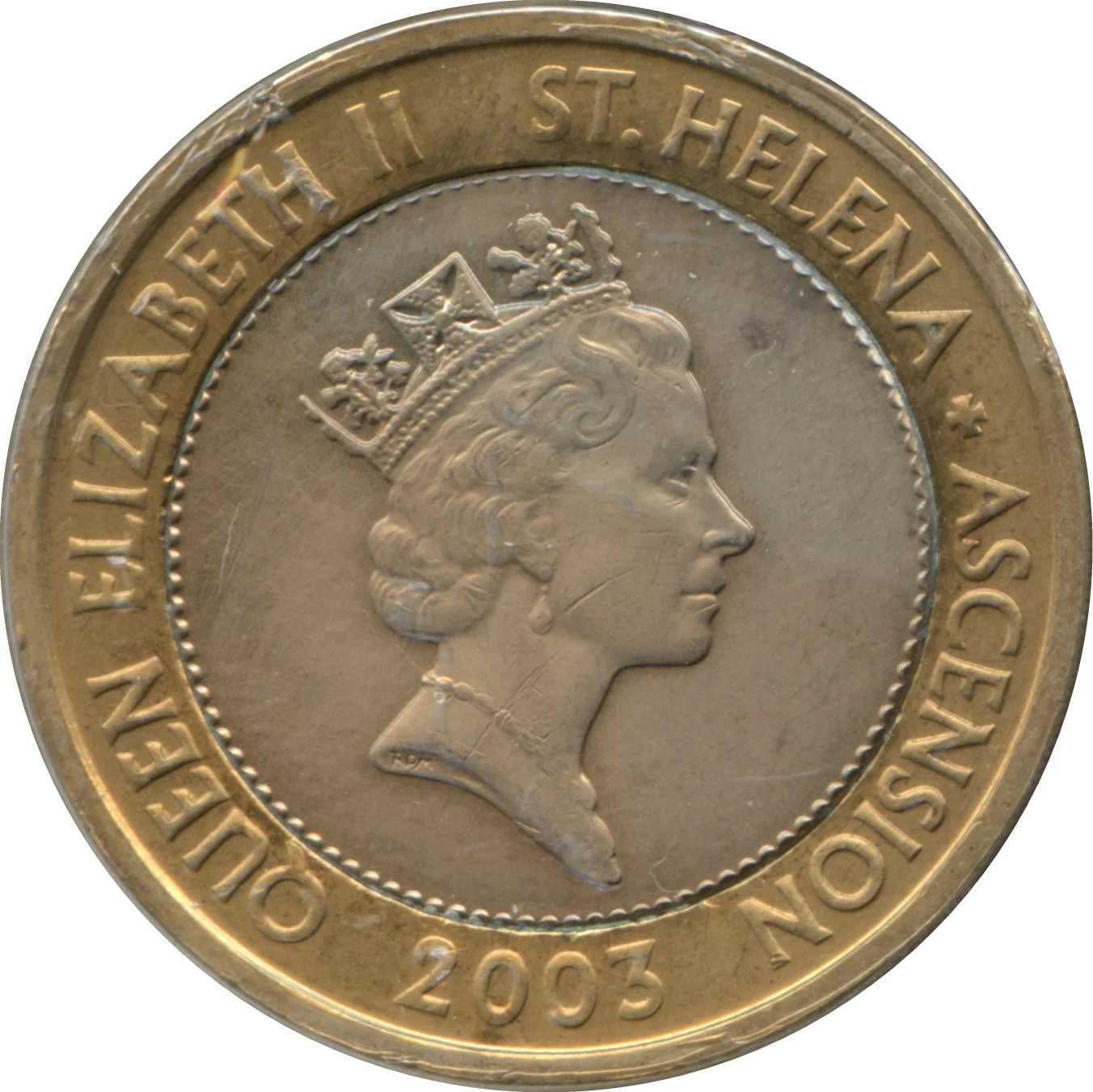
Description:
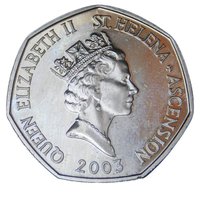
Queen's effigy with beaded circle, inscription, and date below.
Inscription:
QUEEN ELIZABETH II St.HELENA + ASCENSION
RDM
2003
RDM
2003
Script: Latin
Engraver: Raphael David Maklouf
Reverse
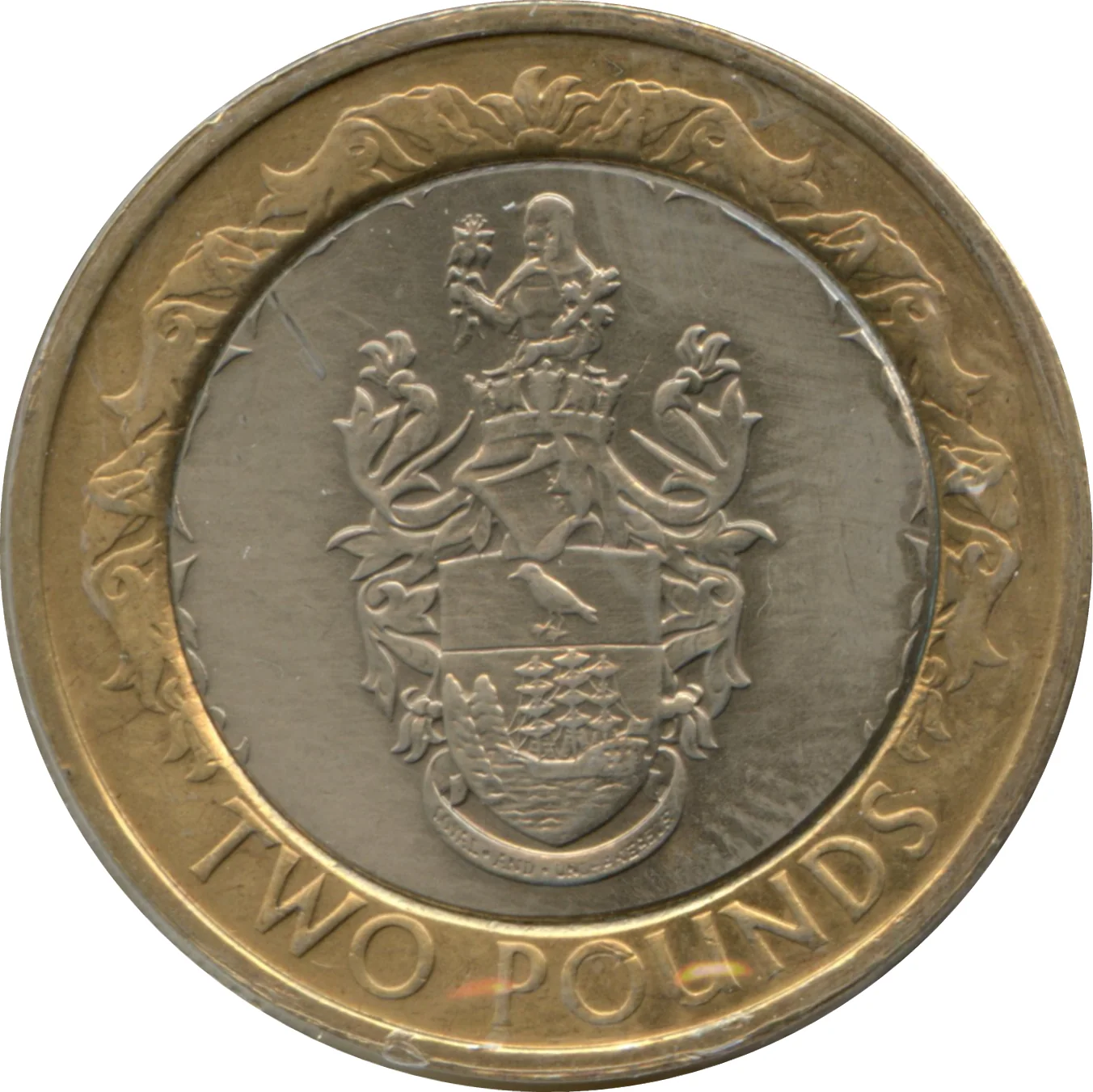
Description:
The St. Helena Coat of Arms with a decorative border, featuring elements from the arms and the national arum lily.
Inscription:
TWO POUNDS
Script: Latin
Edge
With inscription
Legend:
LOYAL AND FAITHFUL
Mintings
| Year | Mint Mark | Mintage | Quality | Collection |
|---|---|---|---|---|
| 2003 | — | — | ||
| 2006 | — | — |
Historical background
In 2003, the currency situation on the islands of Saint Helena and Ascension was defined by their shared use of the Saint Helena pound (SHP), a currency pegged at par to the British pound sterling (GBP). This arrangement provided monetary stability and was administered by the Government of Saint Helena through its Treasury. While sterling banknotes and coins circulated, the local government also issued its own distinct sterling-pegged banknotes, which were the primary paper currency used on Saint Helena. This system underscored the islands' status as a British Overseas Territory, with the UK ultimately responsible for its defense and foreign affairs.
However, a key distinction existed for Ascension Island. Although part of the same territory, Ascension operated largely as a "rocks" dependency and, in practice, functioned with a dual-currency economy. The British military base and many contractors used sterling, while the local bank (a branch of the Bank of St. Helena) dealt in both SHP and US dollars (USD). The US dollar was increasingly prevalent due to the significant presence of the US Air Force at Ascension's Wideawake Airfield and its importance as a staging post. This created a more complex monetary environment than on Saint Helena proper.
The year 2003 fell within a period of ongoing economic challenge and discussion about modernization. Both islands relied heavily on UK financial aid, and the limited circulation of local currency reflected their small, isolated economies. There were no independent monetary policies; interest rates and broad financial stability were directly tied to the Bank of England's decisions. The system in place was functional but highlighted the islands' economic vulnerability and their unique position, straddling the monetary spheres of the UK and the strategic demands of international, particularly US, operations on Ascension.
However, a key distinction existed for Ascension Island. Although part of the same territory, Ascension operated largely as a "rocks" dependency and, in practice, functioned with a dual-currency economy. The British military base and many contractors used sterling, while the local bank (a branch of the Bank of St. Helena) dealt in both SHP and US dollars (USD). The US dollar was increasingly prevalent due to the significant presence of the US Air Force at Ascension's Wideawake Airfield and its importance as a staging post. This created a more complex monetary environment than on Saint Helena proper.
The year 2003 fell within a period of ongoing economic challenge and discussion about modernization. Both islands relied heavily on UK financial aid, and the limited circulation of local currency reflected their small, isolated economies. There were no independent monetary policies; interest rates and broad financial stability were directly tied to the Bank of England's decisions. The system in place was functional but highlighted the islands' economic vulnerability and their unique position, straddling the monetary spheres of the UK and the strategic demands of international, particularly US, operations on Ascension.
🌟 Uncommon