

2 pounds (Saint Helena and Ascension) – Saint Helena and Ascension
Add to wishlist
Circulating commemorative coins
Commemoration: 500th Anniversary of Saint Helena and Ascension
United Kingdom
Context
Year: 2002
Country: United Kingdom
Issuer: Saint Helena and Ascension
Ruler: Elizabeth II
Currency:
(since 1976)
Material
Diameter: 28.3 mm
Weight: 11.81 g
Shape: Round
Composition: Nickel brass
Magnetic: No
Technique: Milled
Alignment: Medal alignment
flip
References
KM: #
Numista: #15644
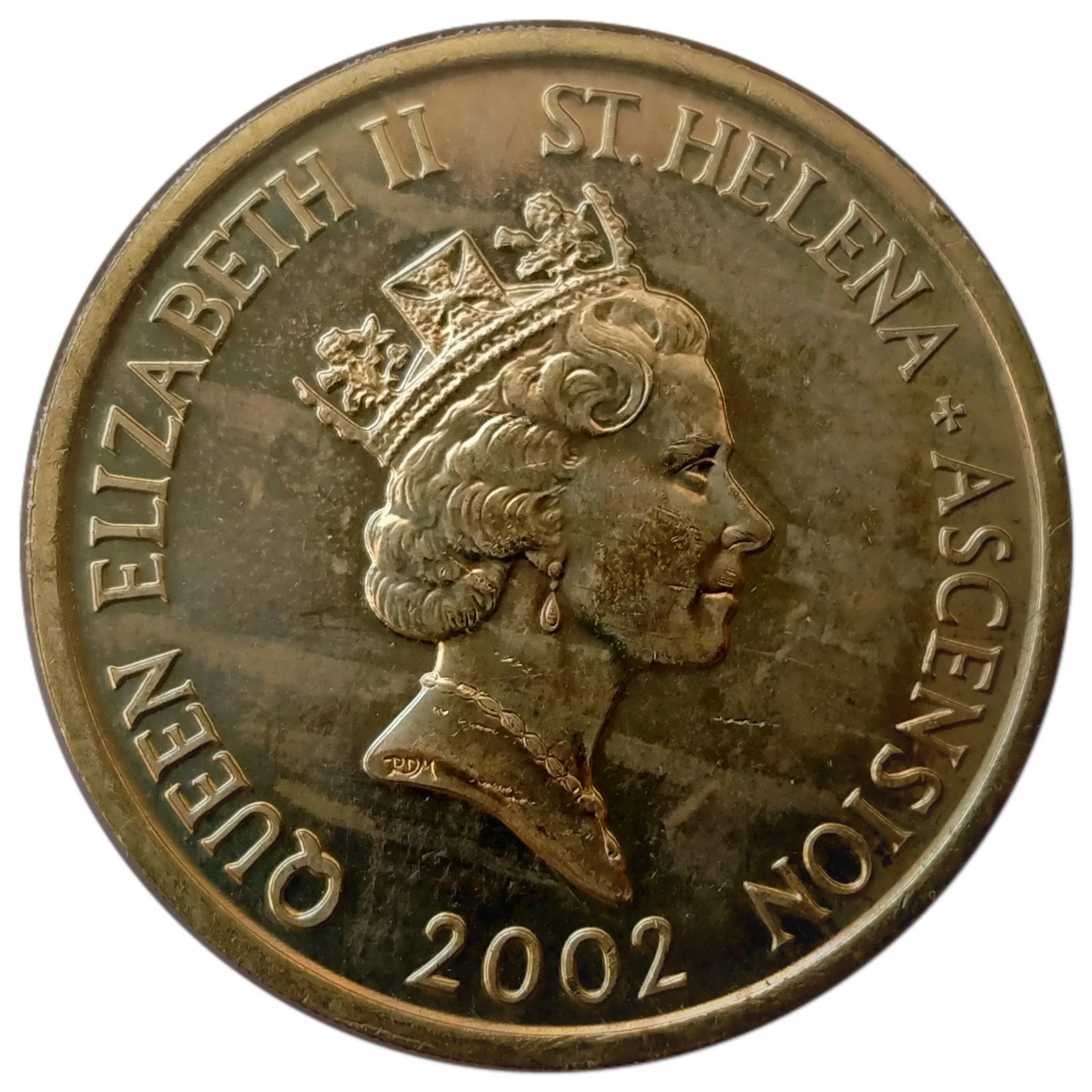
Obverse
Description:
King facing right.
Inscription:
QUEEN ELIZABETH II ST.HELENA + ASCENSION
RDM
2002
RDM
2002
Script: Latin
Engraver: Raphael David Maklouf
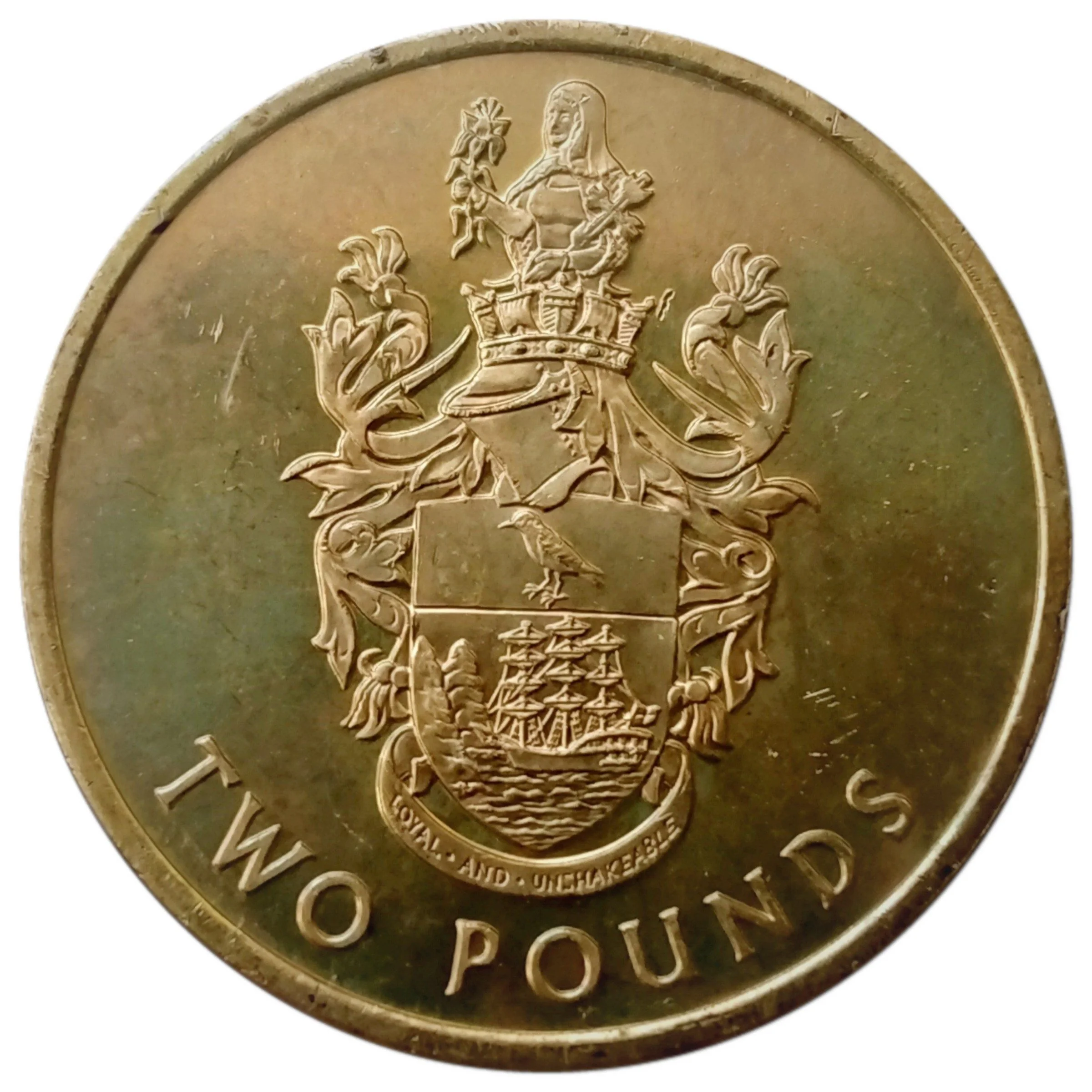
Reverse
Edge
With inscription
Legend:
500TH ANNIVERSARY
Mintings
| Year | Mint Mark | Mintage | Quality | Collection |
|---|---|---|---|---|
| 2002 | — | — |
Historical background
In 2002, the currency situation on Saint Helena and Ascension Island was defined by their status as British Overseas Territories and their shared use of the Saint Helena pound (SHP). This currency was, and remains, pegged at par with the British pound sterling (GBP), meaning one SHP always equals one GBP. However, the SHP was a local issue, meaning sterling banknotes from the UK were not automatically accepted as legal tender on the islands, though they could often be exchanged. Locally issued notes and coins bore distinct designs featuring island iconography, symbolizing a separate monetary identity while maintaining a fixed and stable link to the UK's economy.
The practical currency environment on the two islands differed significantly due to their distinct economic bases. On Saint Helena, the local SHP was the day-to-day currency for a small, isolated population, with the economy heavily reliant on UK aid and limited exports. In contrast, Ascension Island operated a dual-currency system driven by the presence of a large UK and US military facility, Wideawake Airfield, and the BBC Atlantic Relay Station. Alongside the SHP, the US dollar (USD) was widely circulated and accepted, especially within the base and related services, reflecting the international and transient nature of much of its workforce.
Overall, the 2002 currency framework was stable but highlighted the islands' unique challenges. The fixed peg to sterling provided monetary stability and low inflation but also tied the islands' cost of living directly to that of the UK, which was problematic given their geographic isolation and high import costs. Furthermore, the system on Ascension Island demonstrated a pragmatic adaptation to its specific circumstances, accommodating the needs of its significant international community while maintaining its formal monetary link to the United Kingdom through the Saint Helena pound.
The practical currency environment on the two islands differed significantly due to their distinct economic bases. On Saint Helena, the local SHP was the day-to-day currency for a small, isolated population, with the economy heavily reliant on UK aid and limited exports. In contrast, Ascension Island operated a dual-currency system driven by the presence of a large UK and US military facility, Wideawake Airfield, and the BBC Atlantic Relay Station. Alongside the SHP, the US dollar (USD) was widely circulated and accepted, especially within the base and related services, reflecting the international and transient nature of much of its workforce.
Overall, the 2002 currency framework was stable but highlighted the islands' unique challenges. The fixed peg to sterling provided monetary stability and low inflation but also tied the islands' cost of living directly to that of the UK, which was problematic given their geographic isolation and high import costs. Furthermore, the system on Ascension Island demonstrated a pragmatic adaptation to its specific circumstances, accommodating the needs of its significant international community while maintaining its formal monetary link to the United Kingdom through the Saint Helena pound.
🌟 Uncommon