

200 rupees (Paika Bidroha) – India
Add to wishlist
Non-circulating coins
Commemoration: Bicentenary of Paika Bidroha
India
Material
References
KM: #
Numista: #155611
Value
Exchange value: 200 INR
Bullion value: $44.87
Inflation-adjusted value: 297.87 INR
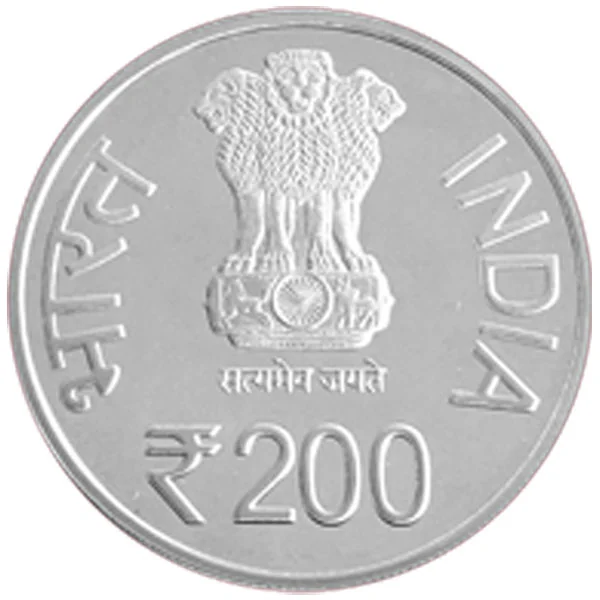
Obverse
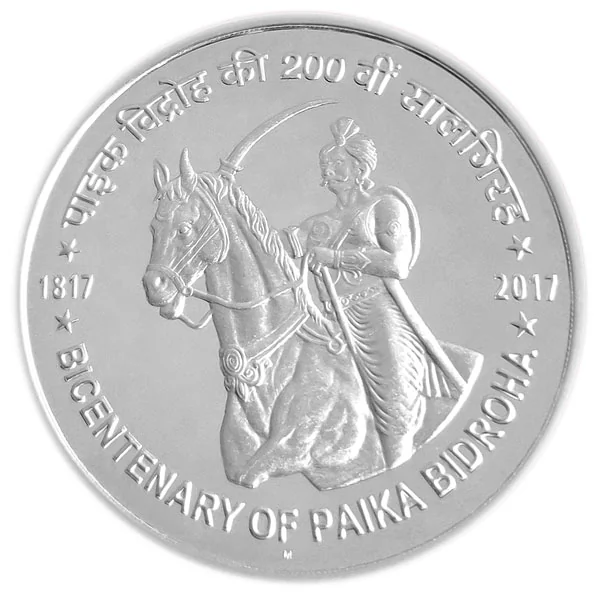
Reverse
Description:
Bakshi Jagbandhu on horseback, with "1817" and "2017" on either side.
Inscription:
पाइक बिद्रोह की 200 वी सालगिरह
BICENTENARY OF PAIKA BIDROHA
1817 - 2017
BICENTENARY OF PAIKA BIDROHA
1817 - 2017
Translation:
Bicentenary of Paika Rebellion
1817 - 2017
1817 - 2017
Language: Hindi
Edge
Mints
| Name | Mark |
|---|---|
| Mumbai / Bombay | ♦ & B |
Mintings
| Year | Mint Mark | Mintage | Quality | Collection |
|---|---|---|---|---|
| 2018 | ♦ | — | ||
| 2018 | M | — | Proof |
Historical background
In 2018, India's currency situation was characterized by a period of stabilization and recovery following the significant disruptions of the 2016 demonetization. The immediate cash crunch had largely subsided, and the circulation of the new ₹500 and ₹2,000 banknotes was normalized. However, the economy was still grappling with the longer-term aftershocks, including a slowdown in the informal sector and ongoing adjustments in the digital payments landscape, which had received a major impetus from the cash shortage. The year saw the Reserve Bank of India (RBI) focusing on ensuring adequate liquidity and managing inflation, which remained within its target band.
A major development was the escalating tension between the RBI and the Government of India over central bank autonomy and the use of its substantial reserves. The government, concerned about stimulating growth and addressing liquidity issues in the non-banking financial company (NBFC) sector following the collapse of Infrastructure Leasing & Financial Services (IL&FS) in late 2018, was keen for the RBI to ease lending restrictions and share a larger portion of its capital. This conflict highlighted debates about the appropriate management of currency stability and economic policy.
Overall, the Indian rupee faced significant external pressure in 2018, depreciating by nearly 10% against the US dollar between January and October. This was driven by global factors such as rising crude oil prices (India being a major importer), tightening US monetary policy, and strong capital outflows from emerging markets. The RBI intervened periodically in the foreign exchange market to curb excessive volatility, but largely allowed the rupee to find its market-driven level, reflecting a managed float regime. Thus, the year was marked by a confluence of domestic institutional friction and challenging international headwinds affecting the currency's value.
A major development was the escalating tension between the RBI and the Government of India over central bank autonomy and the use of its substantial reserves. The government, concerned about stimulating growth and addressing liquidity issues in the non-banking financial company (NBFC) sector following the collapse of Infrastructure Leasing & Financial Services (IL&FS) in late 2018, was keen for the RBI to ease lending restrictions and share a larger portion of its capital. This conflict highlighted debates about the appropriate management of currency stability and economic policy.
Overall, the Indian rupee faced significant external pressure in 2018, depreciating by nearly 10% against the US dollar between January and October. This was driven by global factors such as rising crude oil prices (India being a major importer), tightening US monetary policy, and strong capital outflows from emerging markets. The RBI intervened periodically in the foreign exchange market to curb excessive volatility, but largely allowed the rupee to find its market-driven level, reflecting a managed float regime. Thus, the year was marked by a confluence of domestic institutional friction and challenging international headwinds affecting the currency's value.
⭐ Rare