

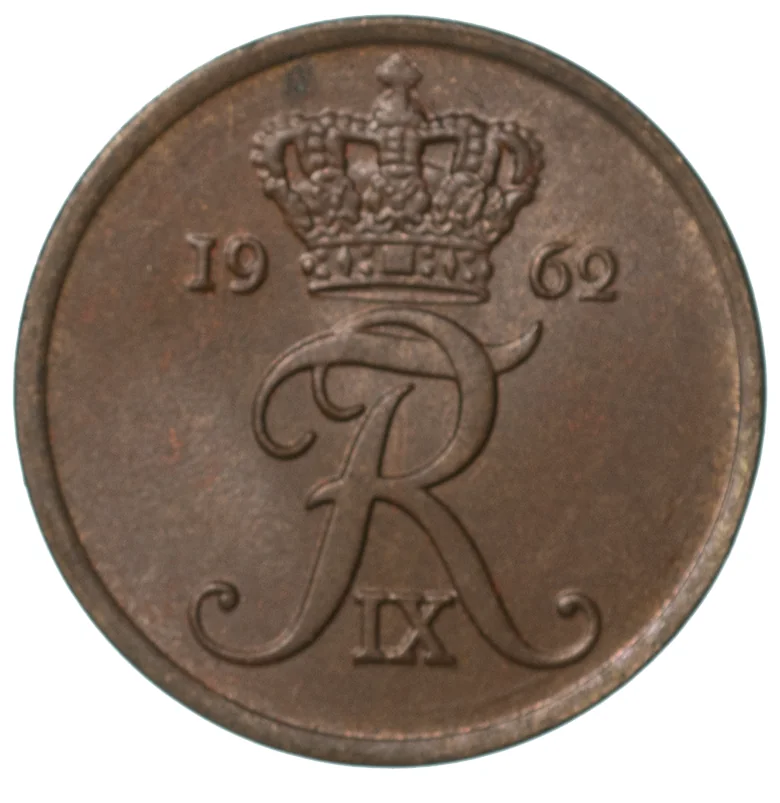
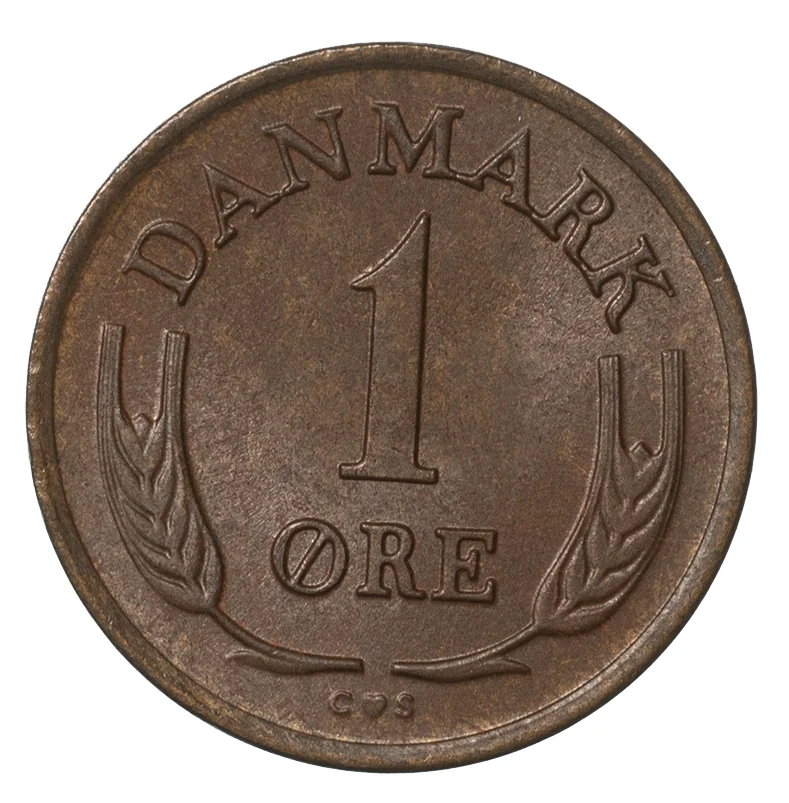
1 øre – Denmark
Add to wishlist
Denmark
Context
Years: 1960–1964
Issuer: Denmark
Ruler: Frederick IX
Currency:
(since 1873)
Demonetization: 31 March 1973
Total mintage: 21,960,000
Material
References
KM: #
Numista: #15560
Value
Exchange value: 0.01 DKK
Inflation-adjusted value: 0.16 DKK
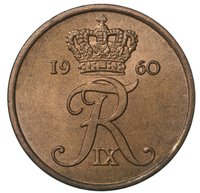
Obverse
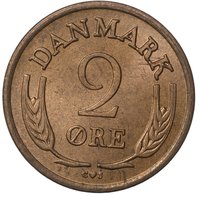
Reverse
Edge
Plain
Mints
| Name | Mark |
|---|---|
| Royal Danish Mint | — |
Mintings
| Year | Mint Mark | Mintage | Quality | Collection |
|---|---|---|---|---|
| 1960 | C♥S | 8,990,000 | ||
| 1962 | C♥S | — | ||
| 1963 | C♥S | 9,980,000 | ||
| 1964 | C♥S | 2,990,000 |
Historical background
In 1960, Denmark's currency situation was defined by its participation in the Bretton Woods system, which pegged the Danish krone (DKK) to the US dollar at a fixed rate of 6.907 kroner per dollar. This arrangement, established after World War II, provided monetary stability and facilitated international trade by linking currencies to the dollar, which was itself convertible to gold. For Denmark, a small, open economy heavily reliant on exports, particularly agricultural goods to European markets, this fixed exchange rate was crucial for predictable pricing and economic planning in the post-war reconstruction and growth period.
Domestically, the krone was managed by the independent central bank, Danmarks Nationalbank, which was legally obligated to maintain the fixed parity. This required careful management of foreign exchange reserves and interest rates to defend the peg, especially as Denmark frequently faced trade deficits and pressure on its balance of payments during this era. The economy was characterized by strict capital controls, limiting the flow of money across borders to prevent speculative attacks on the krone and to support the fixed exchange rate regime. Monetary policy was therefore largely subordinate to the imperative of maintaining the dollar peg.
The stability of the early 1960s, however, belied underlying tensions. Denmark's persistent current account deficits and inflationary pressures would gradually strain the fixed parity in the coming decade, foreshadowing the challenges that would culminate in the breakdown of the Bretton Woods system itself in the early 1970s. Thus, the currency situation in 1960 represented a period of relative calm within a rigid international framework, one that supported Denmark's export-led growth but also constrained its independent economic policy.
Domestically, the krone was managed by the independent central bank, Danmarks Nationalbank, which was legally obligated to maintain the fixed parity. This required careful management of foreign exchange reserves and interest rates to defend the peg, especially as Denmark frequently faced trade deficits and pressure on its balance of payments during this era. The economy was characterized by strict capital controls, limiting the flow of money across borders to prevent speculative attacks on the krone and to support the fixed exchange rate regime. Monetary policy was therefore largely subordinate to the imperative of maintaining the dollar peg.
The stability of the early 1960s, however, belied underlying tensions. Denmark's persistent current account deficits and inflationary pressures would gradually strain the fixed parity in the coming decade, foreshadowing the challenges that would culminate in the breakdown of the Bretton Woods system itself in the early 1970s. Thus, the currency situation in 1960 represented a period of relative calm within a rigid international framework, one that supported Denmark's export-led growth but also constrained its independent economic policy.
🌱 Common