

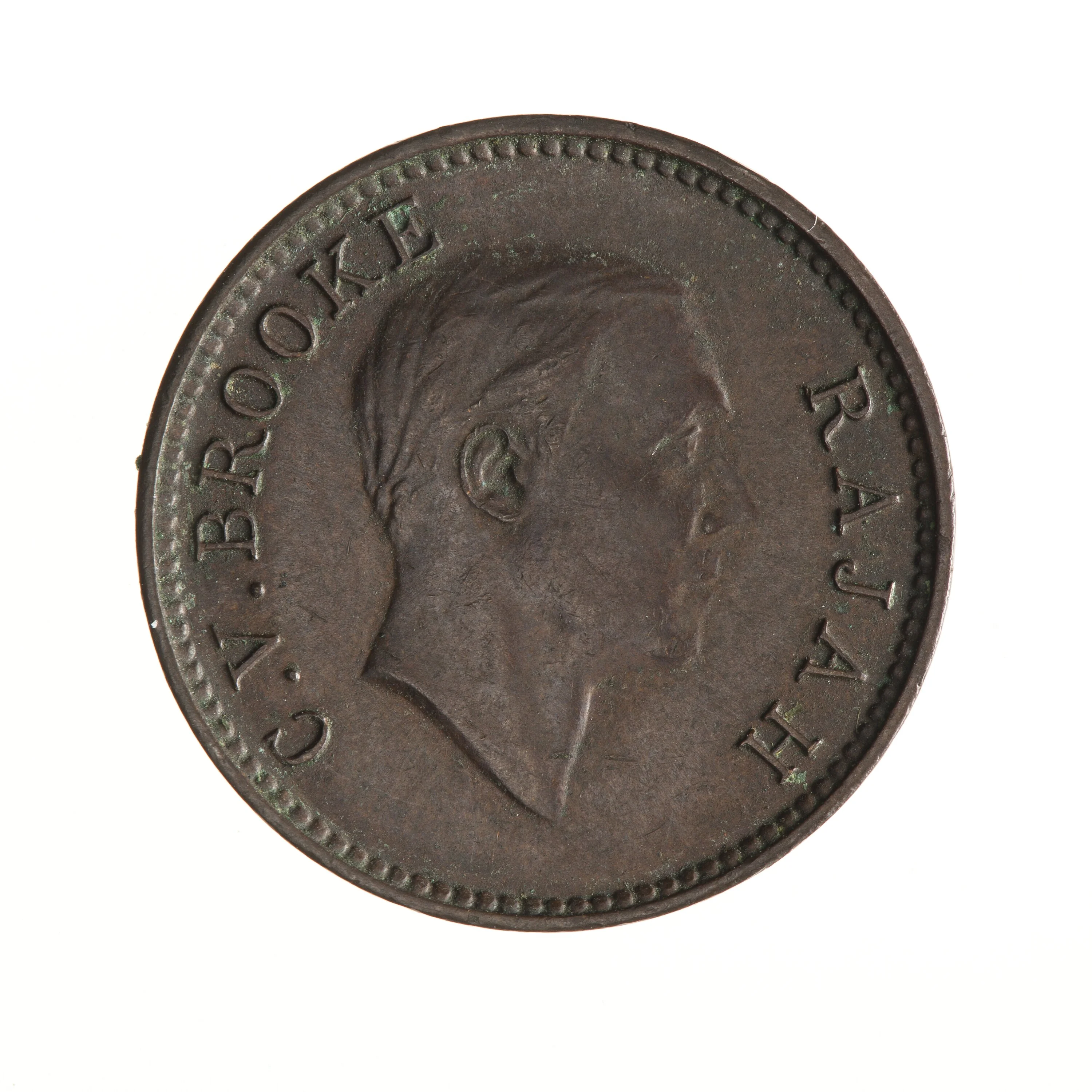
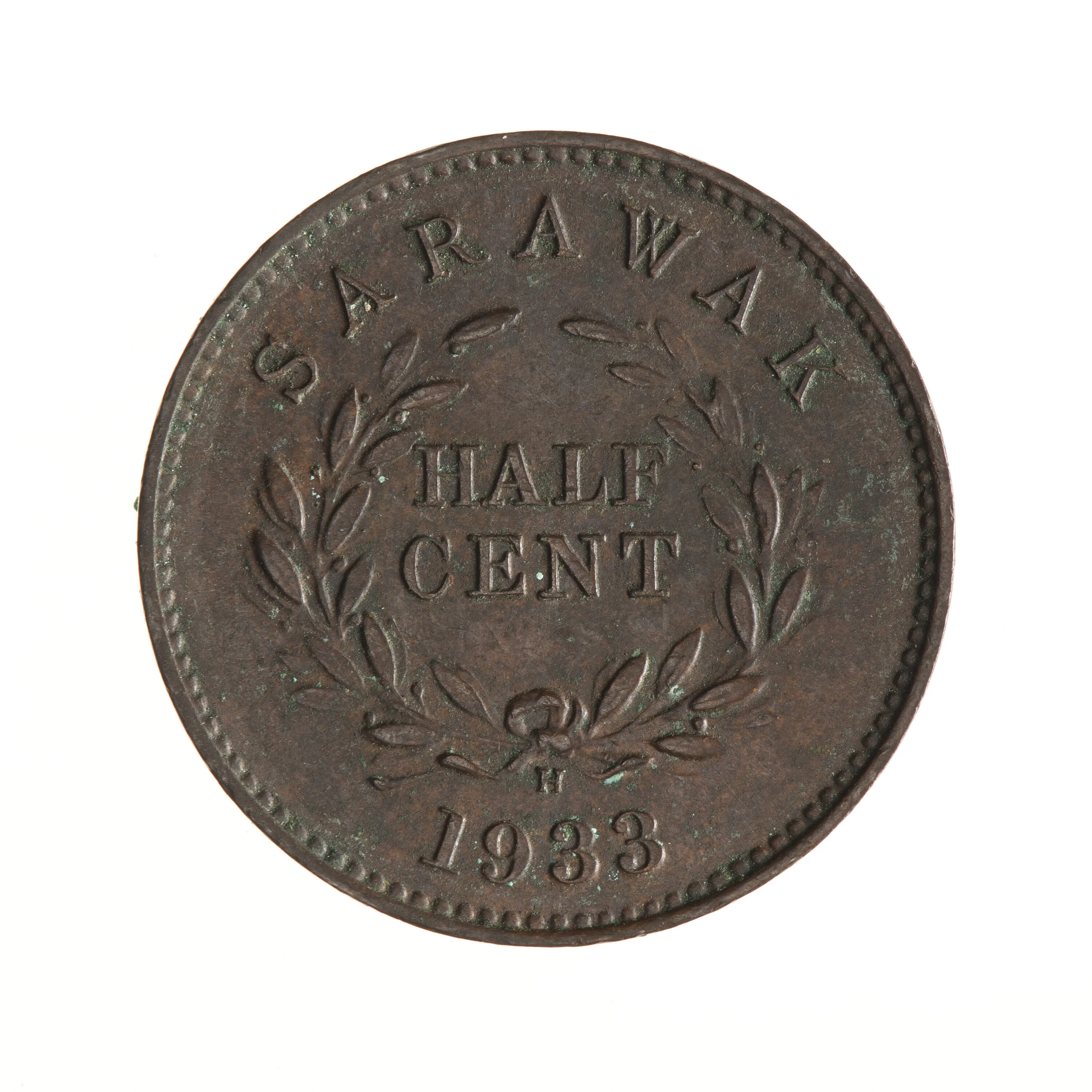
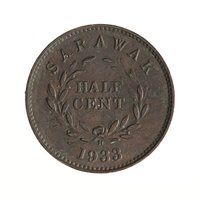
½ Cent – Sarawak
Malaysia
Context
Year: 1933
Country: Malaysia 
Issuer: Sarawak
Ruler: Charles Vyner Brooke
Currency:
(1868—1946)
Demonetized: Yes
Total mintage: 2,000,000
Material
References
KM: #Click to copy to clipboard20
Numista: #15552
Obverse
Reverse
Edge
Plain
Mints
| Name | Mark |
|---|---|
| Heaton and Sons / The Mint Birmingham | H |
Historical background
In 1933, Sarawak was a unique polity as an independent kingdom under the White Rajahs of the Brooke family, rather than a British colony. Its currency situation was a direct reflection of this semi-autonomous status and its economic ties. While the British Straits Settlements dollar was the dominant trade currency throughout the region, Sarawak issued its own distinct coinage and banknotes, known as the Sarawak dollar. This currency was pegged at par with the Straits dollar and was backed by, and interchangeable with, the British sterling held in reserves in London, ensuring monetary stability.
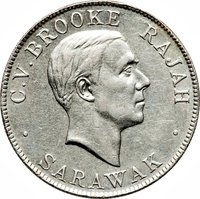
The year 1933 fell within the global Great Depression, which impacted commodity prices for Sarawak’s key exports like rubber and pepper. This placed economic strain on the Rajah’s government. Notably, 1933 was the final year of coinage production under Rajah Charles Vyner Brooke before a hiatus until 1937. The coins in circulation, bearing the Rajah’s portrait, were a symbol of sovereignty but operated within a de facto sterling area. Paper money was issued by the Sarawak Government Treasury, not a central bank, further emphasizing the personalist rule of the Brooke administration.
This monetary system served to balance Sarawak’s practical need for integration into regional British-led trade networks with the Brooke dynasty’s desire to maintain visible symbols of its independent authority. The Sarawak dollar remained stable and functional, but its fate was ultimately tied to the political future of the Rajah’s rule, which would end with Japanese occupation in 1941 and subsequent cession to Britain in 1946.
The year 1933 fell within the global Great Depression, which impacted commodity prices for Sarawak’s key exports like rubber and pepper. This placed economic strain on the Rajah’s government. Notably, 1933 was the final year of coinage production under Rajah Charles Vyner Brooke before a hiatus until 1937. The coins in circulation, bearing the Rajah’s portrait, were a symbol of sovereignty but operated within a de facto sterling area. Paper money was issued by the Sarawak Government Treasury, not a central bank, further emphasizing the personalist rule of the Brooke administration.
This monetary system served to balance Sarawak’s practical need for integration into regional British-led trade networks with the Brooke dynasty’s desire to maintain visible symbols of its independent authority. The Sarawak dollar remained stable and functional, but its fate was ultimately tied to the political future of the Rajah’s rule, which would end with Japanese occupation in 1941 and subsequent cession to Britain in 1946.
🌟 Uncommon