

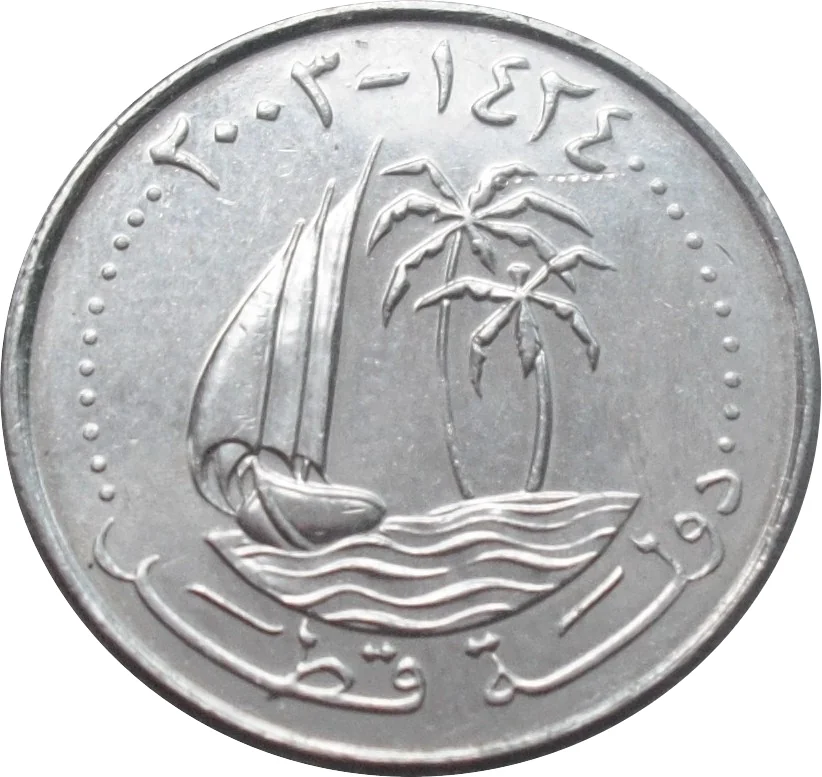
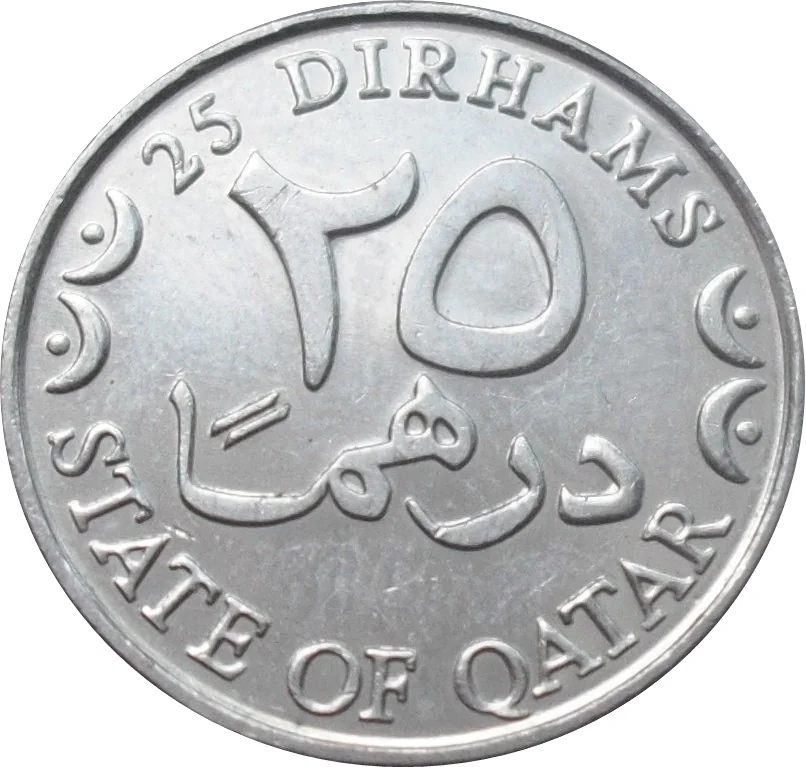
25 dirhams – Qatar
Add to wishlist
Qatar
Context
Material
Diameter: 20 mm
Weight: 3.5 g
Thickness: 1.59 mm
Shape: Round
Composition: Copper-nickel
Technique: Milled
Alignment: Medal alignment
flip
References
KM: #
Numista: #15522
Value
Exchange value: 0.25 QAR
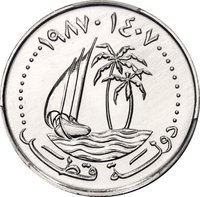
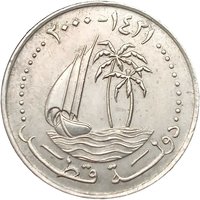
Obverse
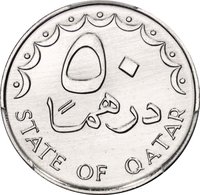
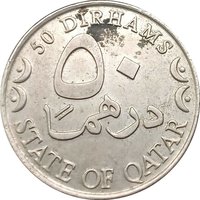
Reverse
Edge
Reeded
Categories
| Transportation> Watercraft |
| Plant> Tree |
| Symbols> Coat of Arms |
Mints
| Name | Mark |
|---|---|
| Royal Mint | — |
Mintings
| Year | Mint Mark | Mintage | Quality | Collection |
|---|---|---|---|---|
| 2000 | — | — | ||
| 2003 | — | — |
Historical background
In the year 2000, Qatar's currency, the Qatari riyal (QAR), was operating under a long-standing and stable peg to the U.S. dollar. This fixed exchange rate regime, established in July 1980, set the riyal at a rate of QR 3.64 per USD 1.00. This policy was a cornerstone of Qatar's economic strategy, providing crucial stability for an economy heavily dependent on hydrocarbon exports, which were priced in dollars. The peg minimized exchange rate risk for foreign investment and trade, fostering a predictable environment for the burgeoning energy sector and large-scale infrastructure projects.
The currency's stability was underpinned by Qatar's robust economic position, driven by significant revenues from liquefied natural gas (LNG) and crude oil exports. The late 1990s saw the country embark on its massive North Field gas expansion projects, positioning it to become a global LNG leader. This growing economic strength provided ample foreign exchange reserves, which the Qatar Central Bank (QCB) used to confidently maintain the dollar peg without strain. Inflation was moderate, and there was no serious market pressure or speculation against the riyal's fixed value during this period.
Consequently, the currency situation in Qatar in 2000 was characterized by remarkable calm and confidence. The monetary policy focus was squarely on maintaining the peg and managing domestic liquidity, rather than on addressing any currency crisis or considering a regime change. This stability stood in stark contrast to the volatility experienced in some other emerging markets at the time and provided a solid financial foundation for the rapid economic transformation that Qatar would undergo in the following decades.
The currency's stability was underpinned by Qatar's robust economic position, driven by significant revenues from liquefied natural gas (LNG) and crude oil exports. The late 1990s saw the country embark on its massive North Field gas expansion projects, positioning it to become a global LNG leader. This growing economic strength provided ample foreign exchange reserves, which the Qatar Central Bank (QCB) used to confidently maintain the dollar peg without strain. Inflation was moderate, and there was no serious market pressure or speculation against the riyal's fixed value during this period.
Consequently, the currency situation in Qatar in 2000 was characterized by remarkable calm and confidence. The monetary policy focus was squarely on maintaining the peg and managing domestic liquidity, rather than on addressing any currency crisis or considering a regime change. This stability stood in stark contrast to the volatility experienced in some other emerging markets at the time and provided a solid financial foundation for the rapid economic transformation that Qatar would undergo in the following decades.
🌱 Common