

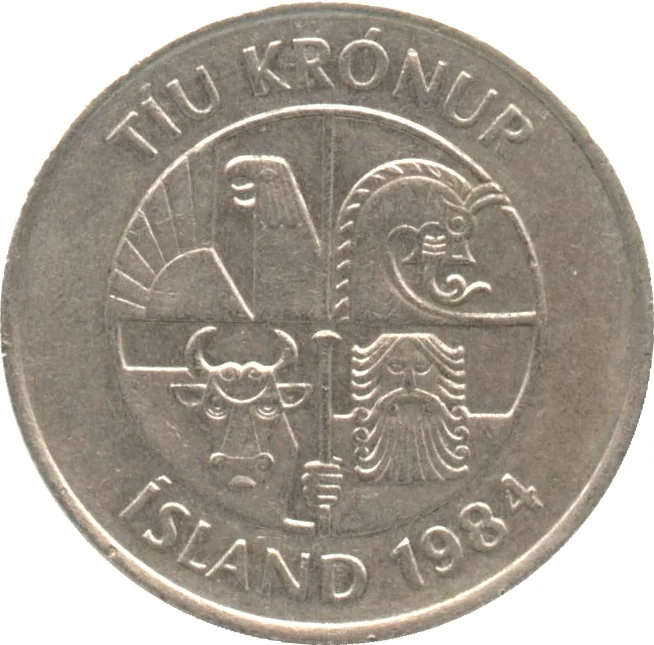
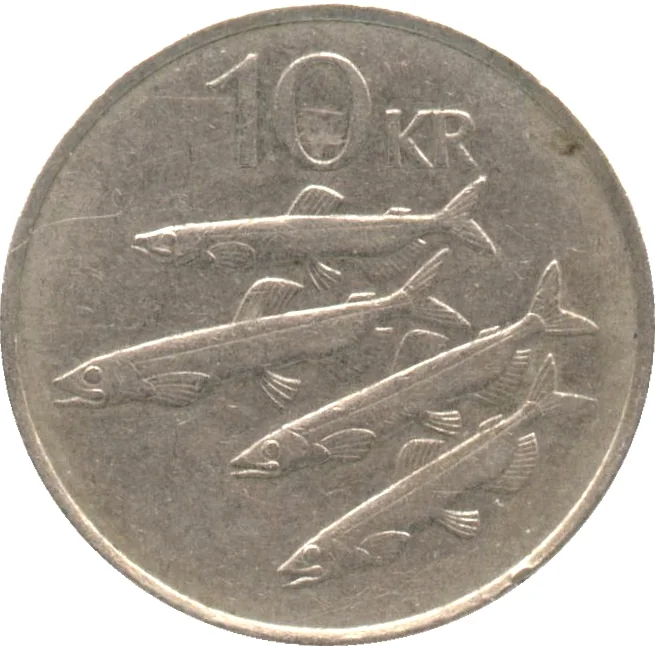
10 Krónur – Iceland
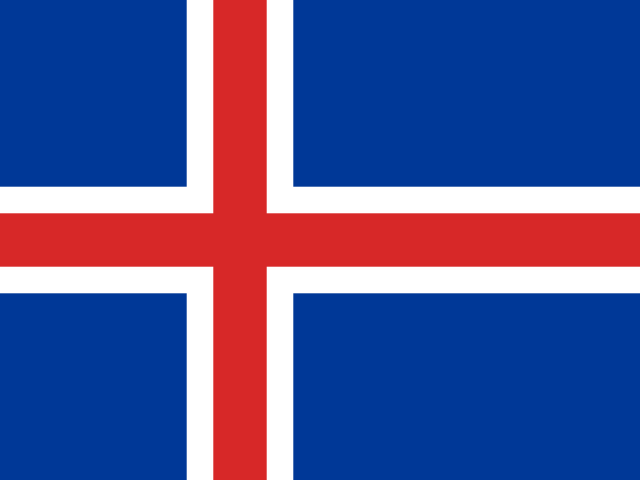
Iceland
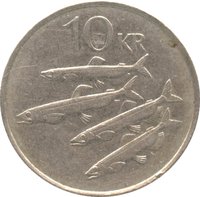
Obverse
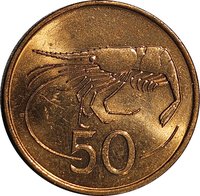
Reverse
Edge
Milled
Mints
| Name | Mark |
|---|---|
| Royal Mint | — |
Mintings
| Year | Mint Mark | Mintage | Quality | Collection |
|---|---|---|---|---|
| 1984 | — | 10,000,000 | ||
| 1987 | — | 7,500,000 | ||
| 1994 | — | 2,500,000 |
Historical background
In 1984, Iceland's currency situation was characterized by a tightly controlled and complex system of exchange restrictions, a legacy of the economic turbulence of the 1970s. The country operated a dual exchange rate regime, dividing the Icelandic króna (ISK) into two distinct markets: an "official" rate used for essential imports like fuel and medicine, and a much less favorable "commercial" rate for most other foreign transactions. This system, managed by the Central Bank of Iceland, was designed to conserve scarce foreign currency reserves, manage the balance of payments, and shield specific sectors from the full force of the króna's weakness.
The underlying pressure stemmed from persistently high inflation, which had plagued Iceland for over a decade, eroding the króna's value and leading to frequent devaluations. Despite efforts at stabilization, inflation remained in the high double digits in the early 1980s, fueled by indexation mechanisms, expansive fiscal policies, and powerful wage-price spirals. This chronic inflation made maintaining a fixed but realistic exchange rate exceptionally difficult, as the króna was consistently overvalued, harming export competitiveness and encouraging capital flight.
Consequently, strict capital controls were enforced, limiting the ability of both residents and businesses to move money abroad or hold foreign currency accounts. The financial sector was heavily regulated, with interest rates set administratively rather than by the market. By 1984, this restrictive framework was increasingly seen as unsustainable, creating distortions and inefficiencies. It set the stage for the gradual but significant financial liberalization that would begin in the late 1980s, moving Iceland away from isolation and toward a more open, market-based economy.
The underlying pressure stemmed from persistently high inflation, which had plagued Iceland for over a decade, eroding the króna's value and leading to frequent devaluations. Despite efforts at stabilization, inflation remained in the high double digits in the early 1980s, fueled by indexation mechanisms, expansive fiscal policies, and powerful wage-price spirals. This chronic inflation made maintaining a fixed but realistic exchange rate exceptionally difficult, as the króna was consistently overvalued, harming export competitiveness and encouraging capital flight.
Consequently, strict capital controls were enforced, limiting the ability of both residents and businesses to move money abroad or hold foreign currency accounts. The financial sector was heavily regulated, with interest rates set administratively rather than by the market. By 1984, this restrictive framework was increasingly seen as unsustainable, creating distortions and inefficiencies. It set the stage for the gradual but significant financial liberalization that would begin in the late 1980s, moving Iceland away from isolation and toward a more open, market-based economy.
🌱 Very Common