

4 Lariat – Maldives
Maldives
Context
Year: 1913
Islamic (Hijri) Year: 1331
Issuer: Maldives 
Ruler: Muhammad Shamsuddeen III
Currency:
(1660—1947)
Demonetized: Yes
Total mintage: 20,000
Material
References
KM: #Click to copy to clipboard42
Numista: #15448
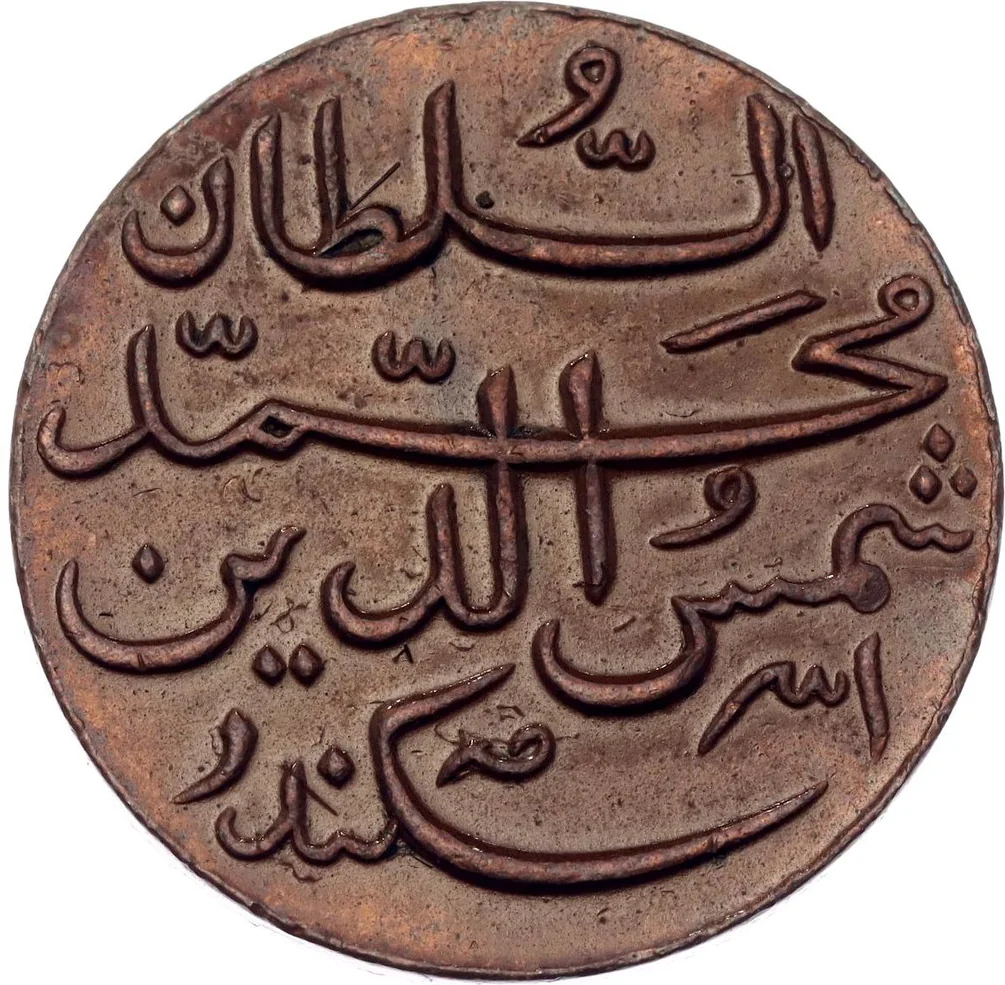
Obverse
Inscription:
السلطان
محمد
شمس الدين
إسكندر
محمد
شمس الدين
إسكندر
Translation:
The Sultan
Muhammad
Shams al-Din
Iskandar
Muhammad
Shams al-Din
Iskandar
Language: Arabic
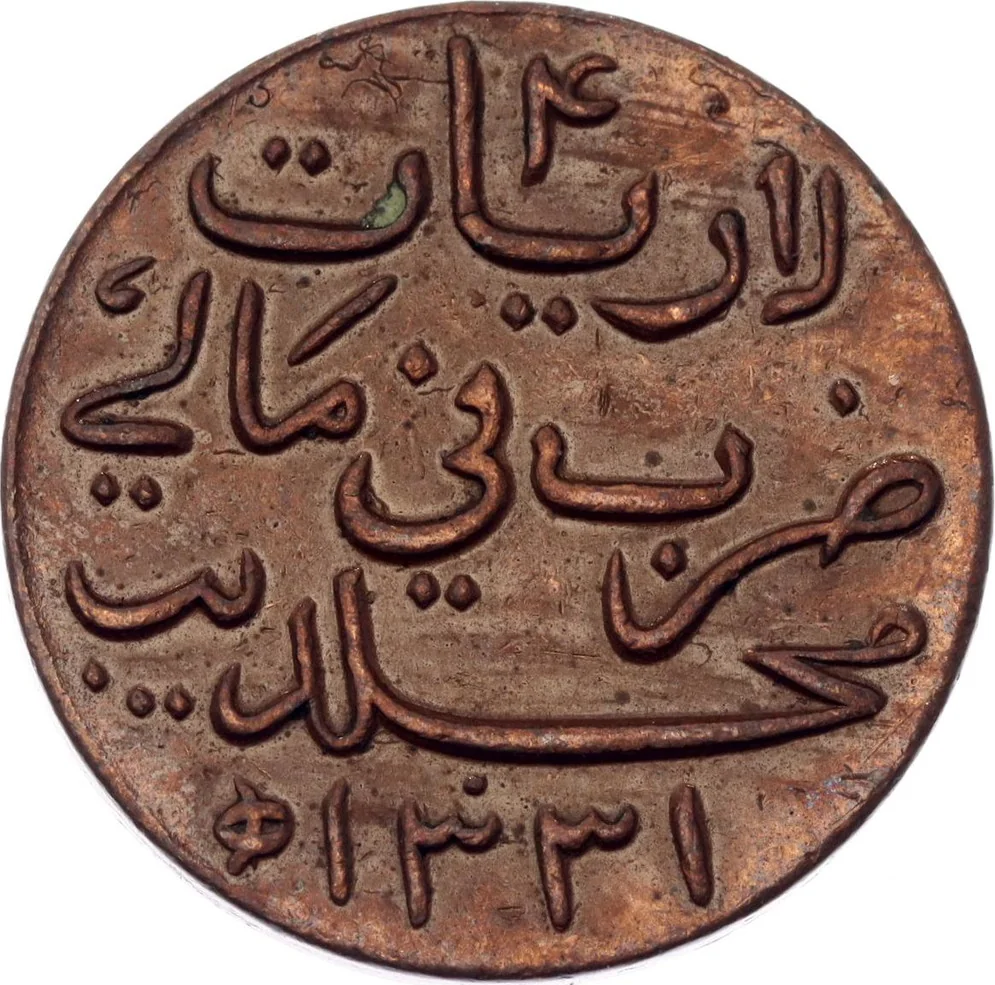
Reverse
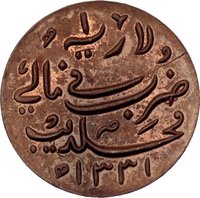
Inscription:
۴
لاريات
ضرب في مالي
محلديب
١٣٣١ ه
لاريات
ضرب في مالي
محلديب
١٣٣١ ه
Translation:
Lariyat
Struck in Mali
Muhammad al-Habib
1331 AH
Struck in Mali
Muhammad al-Habib
1331 AH
Language: Arabic
Edge
Plain
Mints
| Name | Mark |
|---|---|
| Heaton and Sons / The Mint Birmingham | — |
Mintings
| Year | Mint Mark | Mintage | Quality | Collection |
|---|---|---|---|---|
| 1913 | — | 20,000 |
Historical background
In 1913, the Maldives operated under a complex and informal currency system, heavily influenced by its status as a British protectorate. The official and most valued medium of exchange was the British Indian rupee, introduced and regulated by the British colonial administration in India. This silver rupee, along with its fractional annas and pice coins, was essential for external trade, government accounts, and transactions with the British political agent stationed in Colombo.
Alongside the rupee, the traditional Maldivian larin—a small, bent silver wire coin—continued to circulate domestically, particularly in local and regional trade. More significantly, however, a chronic shortage of official coinage led to the widespread use of cowrie shells (cypraea moneta) as small change, especially in the outer atolls. This created a multi-tiered system where high-value transactions used rupees, while everyday local purchases were often conducted with cowries, requiring a fluctuating and locally determined exchange rate between the two.
The monetary situation was therefore characterized by dependency and fragmentation. The Maldivian economy and its currency were not sovereign but tied to the British Indian monetary system, which itself was on the gold exchange standard. This linkage meant that the Maldives' purchasing power and inflation were indirectly subject to decisions made in Bombay and London. The coexistence of modern coinage and ancient shell money underscored the islands' transitional economy, caught between its traditional Indian Ocean trade patterns and the integrating forces of the British Empire.
Alongside the rupee, the traditional Maldivian larin—a small, bent silver wire coin—continued to circulate domestically, particularly in local and regional trade. More significantly, however, a chronic shortage of official coinage led to the widespread use of cowrie shells (cypraea moneta) as small change, especially in the outer atolls. This created a multi-tiered system where high-value transactions used rupees, while everyday local purchases were often conducted with cowries, requiring a fluctuating and locally determined exchange rate between the two.
The monetary situation was therefore characterized by dependency and fragmentation. The Maldivian economy and its currency were not sovereign but tied to the British Indian monetary system, which itself was on the gold exchange standard. This linkage meant that the Maldives' purchasing power and inflation were indirectly subject to decisions made in Bombay and London. The coexistence of modern coinage and ancient shell money underscored the islands' transitional economy, caught between its traditional Indian Ocean trade patterns and the integrating forces of the British Empire.
🌟 Uncommon